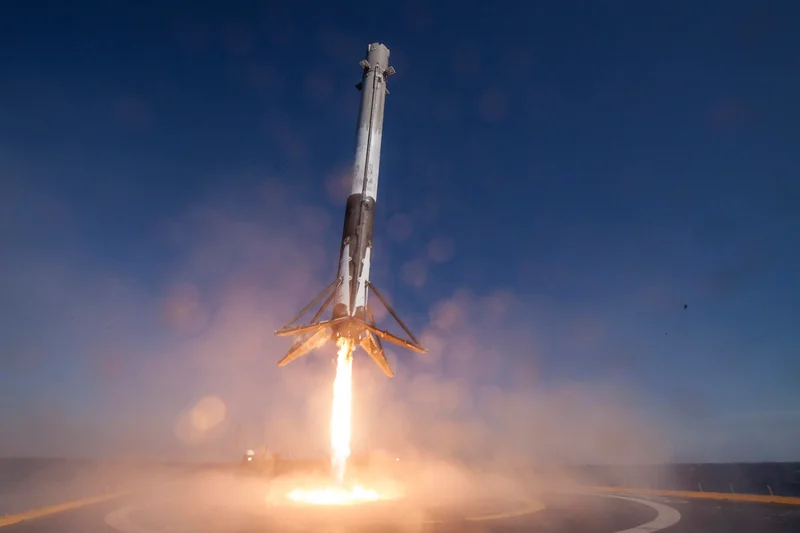
In January last year, SpaceX launched a Falcon 9 rocket with NASA and Firefly Aerospace’s Blue Ghost lunar lander. The Blue Ghost went on to become the first commercially built lunar vehicle to land on the moon, and the reusable lower stage of the SpaceX Falcon 9 landed back on Earth. But the discarded upper stage of the Falcon 9 spent 18 months drifting in space before slamming into the surface of the moon at approximately 2:35 a.m. ET on Wednesday.
NASA, astronomers and other space agencies knew this was coming and have spent weeks preparing to see the rocket’s violent descent to the moon’s surface. That included tasking the Lunar Reconnaissance Orbiter and South Korea’s Korea Pathfinder Lunar Orbiter with photographing the impact site before and after the crash to check out the moon’s newest crater.
The Falcon 9’s upper stage is the size of a five-story building and weighs as much as a heavy-duty pickup truck. NASA believes the resulting crater should be around 60 feet wide and 12 feet deep.
The upper stage of the rocket is believed to have hit the Einstein Crater on the western side of the moon, which is difficult to see from Earth’s surface. If you had been watching, it was more likely that you would have seen the giant plume of moon dust after the fact than the actual impact.
No imagery exists as of the publishing of this article. NASA says it could take a few days to receive images from the orbiters and get everything put together for public consumption.
Not SpaceX’s first choice
The descent and crash into the moon were not the intended final destination for the rocket’s upper stage. Like many other missions before it, the upper stage was originally left to drift in space, locked in Earth’s orbit. However, a series of gravitational tugs from the sun and moon, along with solar wind and other factors, gently nudged the upper stage toward the lunar surface.
The crash has prompted all sorts of discussions about space junk. It’s no secret that low Earth orbit is full of the stuff, and it’s not getting any better with a record number of space launches over the last few years, following the rise of SpaceX. A piece of that junk accidentally crashing into the moon has potentially large implications, especially with NASA planning to put a whole base on the moon. Some experts are calling for better space junk regulations in the wake of SpaceX’s crash.
For now, NASA says that this doesn’t matter much in the grand scheme of things. The moon doesn’t have an atmosphere and therefore gets pelted by meteorites all the time.
“Although unplanned in this instance, disposing of upper stages on the lunar surface is a technically accepted and safe method and, in some cases, can be the only practical option for missions in low lunar orbit,” NASA said in a statement. “Many operators choose controlled impacts because they provide predictable and trackable end-of-life outcomes.”
The Falcon 9’s upper stage joins a few dozen other spacecraft built by humans to crash land on the moon.