Metro Cebu LGUs urged to craft own flood control plans
LAPU-LAPU CITY, Cebu — Local government units (LGUs) across Metro Cebu will need to take a more active role in flood control and mitigation under a new cluster-based system the Cebu Provincial Government adopted.
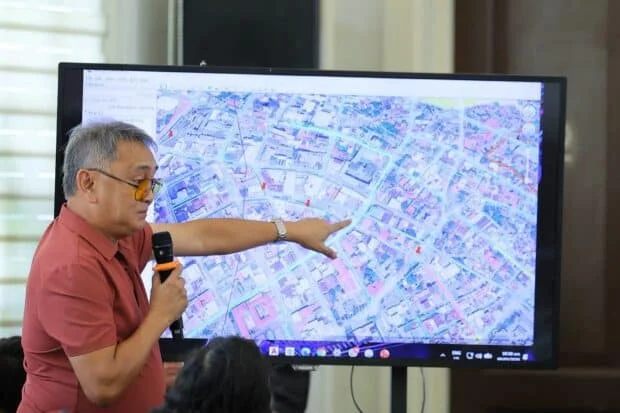
The Metro Cebu Flood Control and Drainage System Implementation Task Force discussed the approach during its first official meeting on Wednesday, August 5.
Created through Executive Order No. 74 in November 2025, the task force will coordinate and implement flood control and drainage projects across Metro Cebu.
Provincial Planning and Development Office head Elizar Sabinay Jr. said that the body will focus on implementation rather than simply producing another plan.
“The role of the task force is not just to come up with a plan, but it’s really the implementation of drainage and flood control,” Sabinay said.
LGUs to identify and implement projects
Under the framework, officials divided Metro Cebu into northern, southern, and central clusters. The central cluster covers Cebu City, Mactan Island, and the municipality of Cordova.
Each LGU will establish its own drainage and flood control task force that will report to its cluster before elevating projects to the provincial task force.
Barangays, municipalities, and cities will need to identify flood mitigation measures that they can implement using local resources.
READ: Mananga, Cotcot, Butuanon dams eyed in Cebu by 2027
These may include simple interventions such as drainage clearing, improving water absorption areas, and reducing the use of concrete surfaces that increase runoff.
Projects beyond the capacity of local governments may be endorsed to the Provincial Government, the Department of Public Works and Highways, or other national agencies for funding.
“What can be done at the barangay, sitio, or purok level should be identified by the LGU level, reported to their cluster, and then reported to the overall task force,” Sabinay said.
Flood control projects
The task force also agreed to classify projects according to immediate, short-term, and long-term timelines.
Immediate interventions can be completed within weeks or months. Short-term projects will take three to six months.
As an example of an immediate intervention, Sabinay cited the ongoing redevelopment of People’s Park at the Capitol compound. Officials have designed this to function as a public green space and water catchment area.
The ₱10.3-million project incorporates permeable surfaces, rainwater storage facilities, and drainage features that provincial planners hope other LGUs can eventually replicate.
Long-term projects include major flood control infrastructure such as dams. Sabinay said these could take five to seven years to complete after officials have secured funding.
Part of the short-term strategy, he added, is ensuring that funding for major projects receives government approval.
Proposed flood-control projects include revetment works, diversion channels, drainage mains, drainage lateral improvements, and flow control systems.
The task force is also considering larger interventions such as retention basins, lagoons, recharge areas, infiltration beds, and rainwater harvesting facilities.
Mega Cebu revival
The meeting also renewed discussions on reviving the Mega Cebu framework to strengthen coordination among neighboring local governments on flood management.
Sabinay said that several LGUs have expressed support for bringing back Mega Cebu as a platform for regional planning and governance.
“Flooding requires cooperation from other local government units because flooding does not respect political boundaries,” he said.
The task force also expanded its coverage to include Toledo City, Asturias, and Balamban, citing their role in the Mananga River watershed that affects downstream flooding.
From planning to implementation
The task force is the first official body created under Executive Order No. 74 to oversee the implementation of flood control and drainage initiatives across Metro Cebu.
Sabinay said that previous discussions focused on flood management planning, while the current effort centers on putting projects into action.
“How do we implement it, and what would be our mechanism of implementing it? That’s how it transpired,” he said.
Governor Pamela Baricuatro chaired the meeting. Vice Governor Glenn Soco, Provincial Board Members Stanley Caminero and Red Duterte, Capitol department heads led by Provincial Administrator Ace Durano, and representatives from national government agencies attended the meeting.
The task force’s technical working group will finalize the work plan and define the specific roles of participating LGUs and cluster organizations before the next meeting.
Disclaimer: The comments uploaded on this site do not necessarily represent or reflect the views of management and owner of Cebudailynews. We reserve the right to exclude comments that we deem to be inconsistent with our editorial standards.