Your support helps us to tell the story
From reproductive rights to climate change to Big Tech, The Independent is on the ground when the story is developing. Whether it's investigating the financials of Elon Musk's pro-Trump PAC or producing our latest documentary, 'The A Word', which shines a light on the American women fighting for reproductive rights, we know how important it is to parse out the facts from the messaging.
At such a critical moment in US history, we need reporters on the ground. Your donation allows us to keep sending journalists to speak to both sides of the story.
The Independent is trusted by Americans across the entire political spectrum. And unlike many other quality news outlets, we choose not to lock Americans out of our reporting and analysis with paywalls. We believe quality journalism should be available to everyone, paid for by those who can afford it.
Your support makes all the difference.
Read more
In recent years, it has become commonplace to see people selecting potential partners with the same gestures (and enthusiasm) they use to scroll through videos on TikTok or browse products in an online store. Swipe right for interest; swipe left to move on. What once involved the drama of meeting someone — glances, hesitation, approaching, rejection, discovery — has been compressed into almost “gamified” interfaces. Dating apps have expanded the possibilities for meeting people, but research in social psychology indicates that more options do not always mean greater satisfaction, more stable relationships, or better outcomes for all users.
Dating apps like Tinder didn’t invent desire or casual sex, social comparison, or the fantasy that there might be someone better just around the corner. Their innovation was to turn all of this into a search engine. But what happens when a human dynamic as old as romantic encounters begins to operate under the rules of a digital platform?
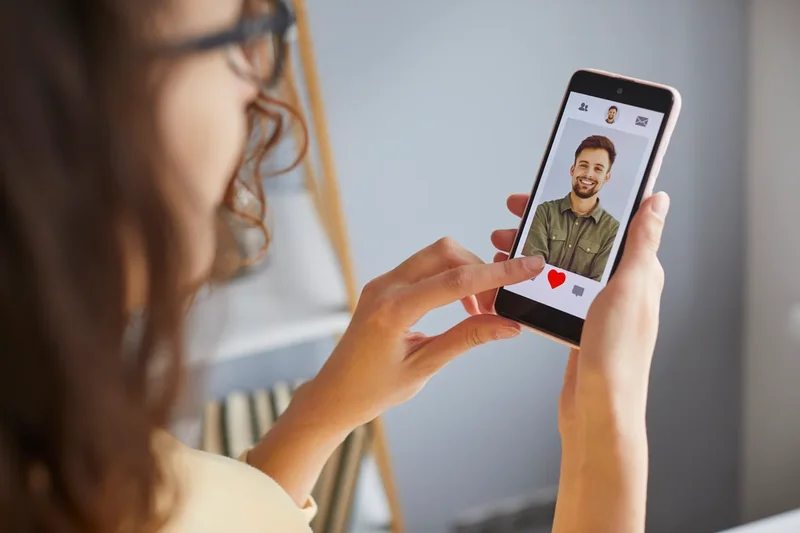
What happens when a human dynamic as old as romantic encounters begins to operate under the rules of a digital platform? (Getty Images/iStockphoto)
The “dating market” before the apps
Relationships have always seemed to belong to the murky realm of chance. Two people meet at a party, in a classroom, or in a university hallway. Often through friends who swear that “you two are a perfect match.” But beneath that fog there are identifiable patterns. Finding someone involves searching, comparing, trying, rejection, reputation, and cost. Initial attractiveness itself requires meeting statistically predictable criteria. Love is traditionally celebrated as something that can’t really be rationalized — as fate. But in practice, there’s a structure at work.
Before dating apps, this infrastructure was limited to relatively narrow social circles. People chose from among classmates, neighbors, friends of friends, party acquaintances — people who might reappear in the same social setting after a possible rejection. Scarcity reduced options but increased the significance of each encounter.
Abundance does the opposite: it expands possibilities, but it also trivializes the available options. Faced with the expectation that someone better might be just one swipe away, a relationship no longer competes only with other people nearby but begins to compete with the statistical imagination of all available people.
It’s not just about casual sex
For years, almost everything said about dating apps oscillated between moral lament and technological propaganda. On the one hand, Tinder was seen as an agent of romantic “decadence”. On the other, as an effective liberation for singles trapped in narrow social circles. It remained to be seen what actually changed as this technology began to increasingly mediate interpersonal relationships.
Much of the literature on dating apps suggests that Tinder is a “casual sex app,” but there are important nuances here. In 2017, Belgian researchers developed a questionnaire to measure the main motivations for its use, called the Tinder Motives Scale. The results of the survey, conducted among more than 3,000 young adults in Belgium, identified 13 main reasons for using the platform. These include curiosity, entertainment, validation, ease of communication, and the search for romantic relationships.
In fact, studies show that, in the United States, online dating has become the primary way heterosexual couples meet. This means that the traditional intermediaries in dating — friends, family, work, and school — have been progressively displaced.
At the same time, a longitudinal study of Norwegian students showed that Tinder users were more likely to form romantic relationships over time. In other words, the app may open doors, but part of this “romantic success” may reflect characteristics of the users themselves, and not just this effect.
But it’s also about sex
However, casual sex remains a major motivation for users of dating apps. They tend to report more partners and a higher likelihood of casual encounters and, in some studies, greater exposure to risky sexual behaviors.
Reviews on Tinder and sexual health indicate that sexual motivations, sociosexual, and the search for casual partners appear repeatedly among the predictors of use and sexual outcomes. These results are relatively consistent in Brazil and worldwide.
Generally, studies are unclear as to whether the app leads to promiscuity or whether it is the more sexually liberal users who seek it out more frequently. On this point, it is worth citing a study published in 2026. Instead of simply comparing users and nonusers, the study investigated the initial spread of Tinder on American college campuses.
Felipe Carvalho Novaes is a Professor, PUC-Rio. This article was first published by The Conversation and is republished under a Creative Commons licence. Read the original article.
To do so, researchers analyzed an impressive 1.1 million responses from the National College Health Assessment between 2008 and 2019. The results indicated that greater exposure to Tinder increased sexual activity, without producing a corresponding increase in stable relationships or a consistent improvement in the quality of those relationships. In this case, the app appeared to accelerate the pursuit of casual encounters more than it did commitment.
Abundance and inattention
There is also evidence that dating apps reshape the distribution of attention — which could help explain why it’s easier to form casual relationships. Other studies on Tinder have already shown that swiping more does not guarantee more “matches”. Furthermore, women tend to receive more likes than men. And men, in general, need to initiate more conversations.
This pattern helps explain why the abundance promised by dating apps is experienced unequally. The market seems open to everyone, but attention is not distributed democratically. As in other markets expanded by technology, small differences in attractiveness, status, communication skills, or timing can lead to significant inequalities in outcomes.
Impacts on mental health
Mental health is where the story becomes less comfortable for any simple thesis. Some of the literature links the use of dating apps to lower levels of self-esteem, anxiety, depression, loneliness, body dissatisfaction, and psychological distress. However, most of these studies are correlational and cannot establish cause-and-effect relationships.
Recent systematic reviews indicate particularly consistent negative effects on body image and more mixed results for mental health and well-being.
At the same time, the 2026 study cited above found no average decline in mental health among the most exposed students. On some indicators, especially among women, there was even an improvement. This contrast suggests that dating apps may cause harm to certain users and, simultaneously, provide average benefits to others — for example, through validation, romantic attention, or a sense of desirability.
The point, therefore, is not to decide whether Tinder has liberated or corrupted our love lives. What the literature suggests is more interesting: these apps transform dating into a perpetual search market, with endless options, more comparison, more exposure, and more unequal outcomes. It seems that greater supply does not lead to greater satisfaction.
But that doesn’t mean dating apps are the villains in this story. They don’t create our desires for sex, love, status, validation, and novelty. They merely connect these desires to a digital infrastructure designed to scale up and reduce costs. Romance doesn’t disappear. It simply comes to compete with the endless possibilities that lie ahead.