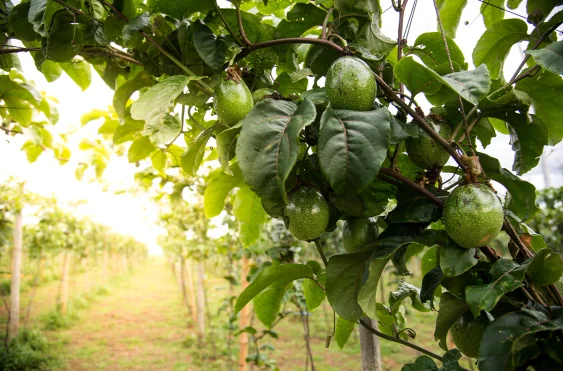
That avocado that you may have smeared on your toast to start your morning was a clone. In fact, the avocados that sit quickly aging on your counter or arranged in piles above signs displaying their ever-increasing price in grocery stores from Los Angeles to Beijing are genetically indistinguishable. And that makes them vulnerable.
Because the Hass avocado variety, the most popular cultivar on Earth, was cloned from a single tree in 1926 then grafted onto root stock around the world, each of the fruits contains basically identical DNA. This lack of genetic diversity means that a single pathogen or environmental perturbation could potentially wipe out entire orchards of avocados in one fell swoop.
So exploring and documenting the diversity of local avocado varieties grown throughout Central America (and there are a lot) could prove the saving grace of the valuable, but genetically homogenous, commercial crop. That’s exactly what researchers led by archaeobotanist Kevin Wann, then a fellow at the Smithsonian’s National Museum of Natural History and now a Ph.D. student at Texas A\&M University, did in 2024.
Wann and his colleagues published a survey of the genetic diversity of dozens of local avocado varieties grown in Nicaragua, Honduras, and southern Mexico today in Plants, People, Planet. The DNA they pulled from leaf samples across this wide swath of Central America, along with the interviews they conducted with local growers, could help secure the future of widescale, commercial avocado agriculture. “These locally grown fruit trees are vital to the longevity of avocados as a species,” Wann said in a statement. “Their high levels of genetic diversity makes them more prepared to face potential shifts in climate or diseases compared to the ones you’d buy at a supermarket.”
Read more: “What’s Wrong with Bananas”
The Hass variety of avocado dominates global sales of the fruit. According to Mordor Intelligence, a market intelligence firm, the Hass avocado market size was more than $16 billion in 2025 and would likely grow to more than $27 billion by 2031. About 80 percent of avocados grown and eaten around the world are Hass.
These tons and tons of avocados all trace their heritage back to a single mother tree that was planted in the California soil in 1926. Rudolph Hass was a postal worker who had dreams of starting an avocado plantation in La Habra Heights, a suburb of Los Angeles on the border of LA and Orange counties. Hass had purchased multiple seedlings from A.R. Rideout, a horticulturist who had a habit of securing seeds from wherever he could, including from restaurants discarding food waste. The story goes that Hass’s children took a shine to one of those trees, telling their father that its fruits were more delicious than the others. By 1935, Hass had patented the variety and ensured that the mother tree was propagated far and wide. Its habit of bearing lots of fruit for an extended growing season made it a commercial goldmine.
But avocados have been grown and consumed for millennia across Central and South America. In fact, Wann and his colleagues found in the DNA of native varieties (or landraces) of avocados grown in Nicaragua, traces of genes found in fruits grown farther south, along the coast of Colombia. The researchers suggested that the genes likely traveled north about 5,000 years ago, as Indigenous people traded many agricultural products throughout the region. “Such an event, as well as ongoing cultural interactions, is supported by the emergence of other South American crops in the Central American Holocene archaeological record,” they wrote in the paper, “including chocolate, cassava, and South American maize.”
And that mother Hass avocado tree that grew in the California sun a century ago? It died in 2002 at the ripe, old age of 76, the victim of a disease called root rot from a fungus-like organism that often afflicts avocado trees. As plant pathogens evolve and spread in the face of a changing climate, capturing all the genetic defenses available to a species becomes paramount. And with avocados, researchers are just starting to uncover the plant’s diversity. “There is a much wider breadth of avocado diversity that science had not yet documented,” said Wann. “We could potentially tap into this genetic diversity to conserve commercial avocado plants that are vulnerable to disease.”
Enjoying Nautilus? Subscribe to our free newsletter.
Lead image: theeraphong / Adobe Stock