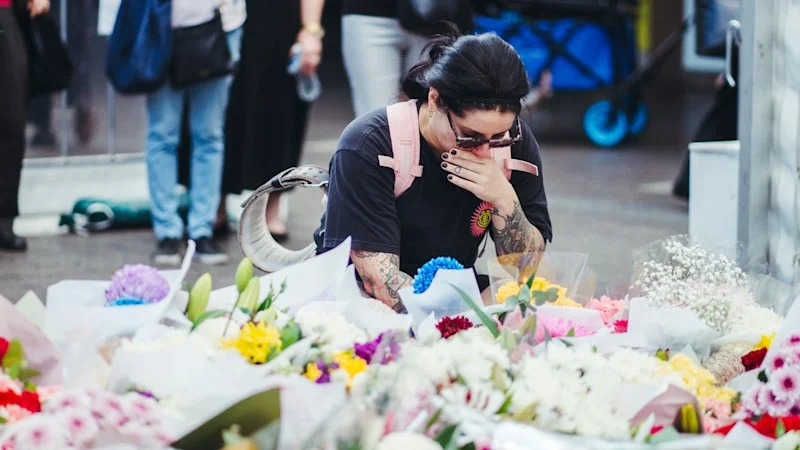
Mental healthcare over the world is characterised by deficiencies and weaknesses, but the Minns government has shortsightedly baulked at addressing systemic problems identified as leading to the Bondi Junction killings.
A homeless Queenslander with a history of mental illness, Joel Cauchi, 40, was shot dead by NSW Police after he began his rampage in the Bondi Junction Westfield shopping centre and stabbed 16 people on April 13, 2024. Six of them died.
A coronial inquest determined that Cauchi, who suffered schizophrenia, was psychotic that day.
The coroner recommended the government house and care for the mentally unwell, referred the killer’s psychiatrist to the watchdog over treatment “failures”, and recommended bravery awards for the heroism displayed by police, victims and witnesses to the tragedy.
The NSW government on Wednesday announced it would accept 11 of the coroner’s 13 recommendations in full.
These included a new health-led response model for mental health emergencies backed by more than $270 million over 10 years, reforms to knife scanning laws after the statutory review of NSW’s wanding powers and improving emergency service communications, training and major incident response arrangements.
However, the government will give only in principle support two of the recommendations, including one that proposed modelling demand for short-term accommodation services in greater Sydney to support those suffering mental health episodes and homelessness, and supporting the establishment and evaluation of long-term accommodation based on existing models.
Even the government admits it not enough.
Mental Health Minister Rose Jackson said the government was funding accommodation initiatives but acknowledged more was required to address demand for mental health services. “I think we’re probably going to need to go beyond that. But I think it’s a really important first step,” she said.
Mental Health Co-ordinating Council chief executive Dr Evelyne Tadros said the Minns government was “all talk and no action”: four-fifths of people requiring psycho-social support in NSW were not receiving it. She described the government’s reluctance to deliver short- and long-term accommodation as “not putting your money where your mouth is”, saying investment in early intervention mental health care was essential to avoiding future crises.
Tadros said some 45,900 people, one third of the total using Specialist Homelessness Services around Australia, have a current mental health issue. Meanwhile, NSW mental health emergency department presentations were up 44 per cent and too many people were already missing out on care beyond crisis, which was evident in Cauchi’s case.
No one wants to stigmatise those living with mental health problems. But there is no escaping the higher risk that comes with a parlous state of mental health services, lack of support and misplaced priorities.
The link between homelessness and mental health has been an ongoing and worsening issue, yet a crisis seems to be the only time it is openly discussed.
The Bondi Junction tragedy was a warning. How many more will take place before government moves to make mental health services fit for purpose?