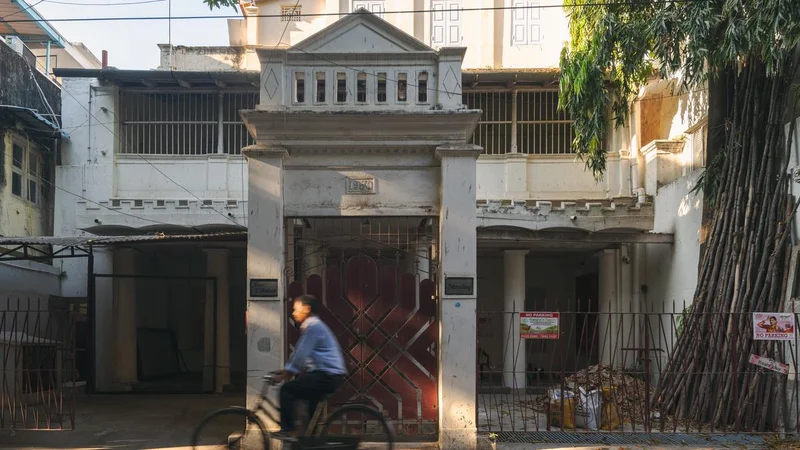
As a young girl, Shreya Krishnan, an architect and urban designer, spent several after-school hours at her grandfather’s house in Pelathope, Mylapore. The house, with its quintessential ornate grilles and sturdy columns, is now more than 150 years old — an example of the neighbourhood’s everyday heritage.
Growing up, she noticed the gradual change in the character of the street that translates to ‘jackfruit grove’. The 50-to-100-year-old buildings in this street full of lawyers had fascinated her as a child. However, they began disappearing, making way for new construction. Witnessing Vedanta Desikar Swamy Street (as it is referred to today), experience an intense transformation, instilled in her a sense of urgency to preserve Pelathope’s heritage while addressing the urban challenges in shaping its future.
These concerns eventually led to the creation of Pelathope Urban Living Lab (PULL) a living lab where residents, local Government representatives, and technical experts collaboratively address urban challenges. As part of this effort, Shreya‘s organisations PULL and SKDO, in partnership with BeFantastic (a tech-art platform) and PLUS (Public Landscape and Urbanism Studio), will be hosting Namma Theru Our Design from August 7 to 9.
“We want to create a vision for society across four themes — ecology, mobility and access, culture and heritage, and livability — covering issues ranging from water management and walkability to preserving everyday heritage and improving public spaces,” says Shreya, adding that the event aims to create a community-led vision for Pelathope over the next five to 10 years.
Over the three-day event, Pelathope will come alive with art, games and storytelling sessions. Kolam workshops, live mural painting, traditional games and hopscotch will take over the streets, while sketching sessions and history-based card games will help participants reconnect with the neighbourhood.
At the heart of the event is the thinnai — the traditional front porch that once brought neighbours together. It will host storytelling sessions, oral history conversations and intergenerational workshops, encouraging families to share memories of Pelathope.
Memory Canopy, an art installation, will be created using sarees donated by women in the neighbourhood, with each saree carrying a cherished memory pinned to it. The programme will also feature expert roundtable discussions bringing experts and residents into conversation about Pelathope’s future.
Ahead of the workshop, the PULL team documented the experiences of residents, street vendors and sanitation workers while archiving oral histories and cultural memories of the neighbourhood. These conversations will form the basis of the discussions during the three-day event.
“People usually have a clear idea of what they want when it comes to livability. However, awareness of culture and heritage is limited, not just in Pelathope but across India. It is time we protected our heritage, because if we do not act now, we risk losing it forever,” says Shreya.
According to her, PULL has been guided by two ideas: viewing Mylapore as a neighbourhood rather than through ward boundaries or other administrative divisions, and creating a framework that integrates cultural heritage into urban development. She points out that while many infrastructure projects benefit residents, they are often undertaken without adequately considering the area’s cultural and heritage significance.
She also notes that although neighbourhood associations often work closely with Government agencies, they may lack access to technical experts needed to address complex urban issues. As a result, interventions tend to be temporary rather than part of a long-term vision. “Rather than merely solving problems, we are envisioning the future of the neighbourhood. Through these discussions, we hope to create a blueprint for what the community wants Pelathope to become,” she adds.
PULL, she says, seeks to bridge this gap by bringing together residents, urban planners and practitioners to collaboratively shape the future of the neighbourhood. “We will highlight some of the urban challenges, such as the overlapping of cultural landmarks with the Metro line, the lack of open and green spaces, poor last-mile connectivity and water stagnation,” says Shreya.
Looking ahead, Shreya hopes to see one pilot project emerge from the workshop within the next six to 12 months, with the community deciding which proposal to take forward through a community vote. For her, however, the ambition extends beyond Pelathope. She believes the model could inspire a broader shift in how neighbourhood planning is approached across India.
Published - August 06, 2026 08:30 am IST