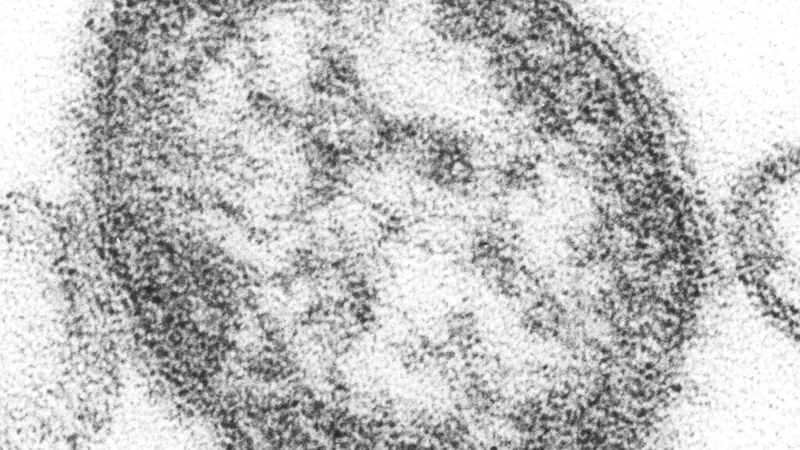
Elimination of measles in the United States in 2000 was a landmark public health achievement. Twenty-five years later, the country has already reported more cases this year than it did in all of 2025, a stark reminder that public health victories can be reversed.
In mid-August, colleagues and I will review the evidence and decide whether the U.S. has maintained measles elimination. In many ways, our roles bookend that history. Several of these colleagues helped lead the national effort that ended endemic measles transmission in 2000. And I now chair the committee that must determine whether that hard‑won status still holds — or whether the country is on the verge of losing it.
To independently certify the CDC’s annual report on measles elimination, the U.S. maintains the United States of America National Verification Committee for the Elimination of Measles, Rubella, and Congenital Rubella Syndrome. (Yes, it’s a mouthful.) After our committee’s review, we will forward the report and our expert opinion to the Regional Verification Commission of the Pan American Health Organization (PAHO). Then, in November, this PAHO committee will announce whether the U.S. has maintained measles elimination.
Confidentiality agreements mean that I cannot share the contents of the 2026 report. But here’s what we will be looking for.
A lot will be familiar. We will review measles rates for the nation. These data are public and show a runaway train. This year is about to exceed any previous year in the last third of a century, with 2,371 measles cases so far. Outbreaks are occurring in most states, with 34 new outbreaks this year alone. Utah’s outbreak, which began in June 2025, has lasted for more than a year so far.
We will look at detailed analyses of each outbreak. The largest outbreaks for the report period have spanned the continental U.S. — South Carolina and Utah, followed by Texas and Virginia. One of the most worrisome is the ongoing outbreak in Utah, which apparently has gone on for more than 12 months, the main criterion for loss of elimination.
Importantly, we will look at how long the chains of transmission lasted. This is usually established with shoe-leather epidemiology. When measles cases are reported, public health workers fan out in the community to interview the various contacts and identify places they’ve been and may have exposed others. They use this narrative information to stitch together chains of transmission. They also try to prevent further cases by offering postexposure vaccination or immune globulin and quarantining people who were exposed to others with measles.
What will be new in this year’s report is whole genome sequencing. In recent years, CDC had done partial genome sequencing to look at the genetic signature of the measles viruses causing the cases and try to understand their evolution, which was the best that they could do. But the technology has advanced to be more comprehensive and detailed. Whole genome sequencing allows much better resolution of transmission chains. Several states, including Utah, Arizona, and South Carolina, have already taken this approach. They uncovered signatures of unseen cases by noticing abrupt “skips” in the virus’s evolutionary trail. By relying on a central lab and standardized methods, the CDC can now track measles across state lines with far greater precision.
In 2025, Canada and the U.S. used partial genome sequencing data to verify their measles elimination status. For Canada, the data were especially important. Seasonal workers brought measles from Mexico, and new cases left with them in the fall and returned with them in the spring. Partial genome sequencing did not find important differences between the fall and spring cases, something that whole genome sequencing may have allowed. PAHO was unpersuaded that these were separate introduction events, and as a result Canada lost its measles elimination status in November 2025. The U.S. and Mexico may be next.
America has been trading measles cases with Canada and Mexico during the recent outbreak. Given the ongoing transmission among the countries, it would appear that measles again became endemic in North America far before it was declared as such. The extensive and ongoing sharing of cases across borders in North America raises an interesting question of whether the definition of measles chains should end at the borders of closely linked countries.
As my colleagues and I review the 2026 measles elimination report, we will marvel at the extraordinary efforts of local, regional, and federal public health to rein in these outbreaks. We will be frankly amazed at the extraordinary level of detail generated by the CDC and other public health agencies. The report will reflect cutting-edge science at the top of its game.
In the end, the question that will be on our minds is: Has the U.S. lost its elimination status? Some clues appear in the U.S.’s public data. The country has had measles cases every week since January 2025. That would be 20 months of weekly measles cases at this point. Of course, maybe genomic data points will save the day. Maybe they won’t.
Regardless of the outcome of our meeting and PAHO’s decision in November, the U.S. clearly has a measles problem, as do Canada and Mexico. Elimination status marks whether a country has stopped sustained domestic transmission. Losing that status would signal a consequential reversal, evidence that the systems and protections that once kept measles at bay no longer do.
We can and must do more than we’re doing to end the extraordinary spread of measles in our country and beyond. The nation needs strong, positive communications to the public about the importance of measles, mumps, and rubella vaccination and promotion of health care providers as trusted advisers on immunizations. A dedicated communication campaign led by the federal government would be usual in past years at this stage. These communications need clear, vocal, and regular support from the highest levels of the U.S. government. Initiatives to better understand and address vaccine hesitancy are also urgently needed.
Measles is a brutal disease that has no medical cure. Parents of children made sickest must wait it out in the hospital, despairingly wondering whether their child will die. That level of risk is indefensible in 2026 — more than 25 years after the United States achieved measles elimination. Kids are suffering and dying from a disease we already know how to prevent, and that failure is entirely ours.
*Noel Brewer is the Gillings distinguished professor in public health at the University of North Carolina. He chairs the U.S. committee that reviews the annual CDC measles reports to verify whether the U.S. maintains or loses measles elimination status. *