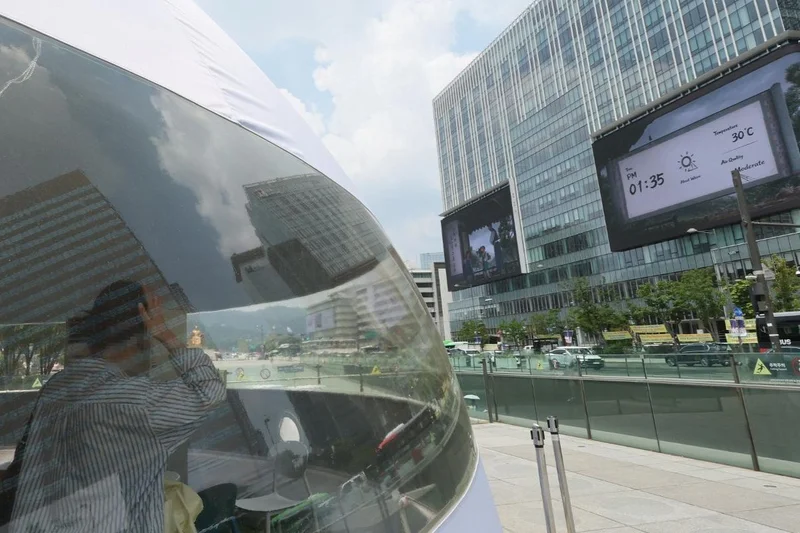
A new type of mobile outdoor shelter Seoul introduced this summer to help people escape the heat has drawn more than 30,000 visitors to Gwanghwamun Plaza alone since June, city officials said Thursday, prompting municipal officials to consider extending the program.
The shelters, called "Haepiso" — a name that combines the Korean words for "a place to escape the sun" and "happy" — are meant to supplement Seoul's existing network of indoor cooling centers by placing air-conditioned rest spots directly along routes where people already walk, such as plazas and parks, rather than requiring them to seek out a dedicated building. Anyone can use them free of charge.
Between June 10 and July 31, the Gwanghwamun Plaza shelter drew 30,405 visitors — an average of about 596 people a day — with usage climbing sharply as the summer heat intensified. It recorded its single busiest day on July 17, when 1,426 people stopped by to cool off.
The Gwanghwamun shelter, built from materials including air-dome fabric and polycarbonate panels, covers 64 square meters and stands four meters tall, with 26 seats, five tables, air conditioners and fans inside.
It opened June 10 near the plaza's Hangeul Fountain before relocating July 2 to the steps in front of the Sejong Center for the Performing Arts, where it now operates daily from 11 a.m. to 8 p.m. Daily average visits rose from about 559 at the first site to about 622 at the second.
A satisfaction survey of 800 users, conducted online via a QR code inside the shelter, found an overall satisfaction score of 95.7 out of 100. Users rated the shelter's basic purpose — providing heat relief — highest, at 97.3, followed by safe operation (94.6), the appropriateness of operating hours (91.6) and staff placement (89.5).
The Gwanghwamun shelter had been due to close Aug. 11, but the city said it is considering extending operations there through the end of August given continued high temperatures and demand.
Building on that response, the city is rolling out Haepiso shelters at 15 locations citywide, including Cheonggye Plaza, several district parks and a spot near Hongik University Station, with 13 sites completed as of Wednesday and the rest expected by mid-August. The shelters vary in shape depending on location, from rectangular structures to dome-shaped ones ranging from 5 to 16 meters in diameter, with operating hours set locally.
"Rather than requiring citizens to travel to find shelter, Haepiso brings cooling, shade and rest directly to the paths people already walk every day," the head of the city's disaster and safety management office said, citing the near-600 daily average visitors and high satisfaction scores as reasons the city would keep close watch on the program's operation and safety.
This article was published with the assistance of generative AI and edited by The Korea Times.