Homelessness is growing the fastest in Canadian communities where rental prices have spiked and vacancy rates have tightened for low-cost rental units, according to a first-of-its-kind national analysis.
The Canadian Alliance to End Homelessness, in a study to be published Thursday, proved a clear relationship between regional rates of homelessness and housing affordability. It helps explain why homelessness has surged in Canada since 2018 and why certain communities have seen a sharper increase than others.
In cities where rental units are the least affordable and least available, such as in Toronto or Kelowna, B.C., rates of homelessness were highest. And the problem is only growing worse, warned the CAEH, which is urging the federal government to take action.
“Many Canadians cannot afford to rent even the cheapest units in their community, and the affordability gap is growing, locking more Canadians out of the market and pushing more people into homelessness,” concluded the CAEH.
Its chief executive, Tim Richter, said the next iteration of Canada’s National Housing Strategy should prioritize support for the lowest-income Canadians, address the rapid loss of existing affordable rental units and double the supply of rentals in the low end of the market.
“But there’s no way that the federal government alone can do it,” said Mr. Richter. “That’s why it’s so important that all levels of government are working together.”
He said it has long been assumed that homelessness is driven by housing-market conditions, but this research is among the first to make that case by comparing changes in the rental market with homelessness rates, using data from 2018 to 2024.
Mr. Richter said the analysis also challenges common assumptions that other factors, such as mental health, substance use and poverty, are the reason behind climbing homelessness rates.
“Could mental illness, addiction, brain injury, physical health, poverty, any number of different things contribute to a person experiencing homelessness? Yes. But the reason why Canada is seeing a surge in homelessness is not because there’s more people with mental illness or addiction, but because of housing affordability,” Mr. Richter said.
“I always say that homelessness is not just a housing problem, but it is always a housing problem.”
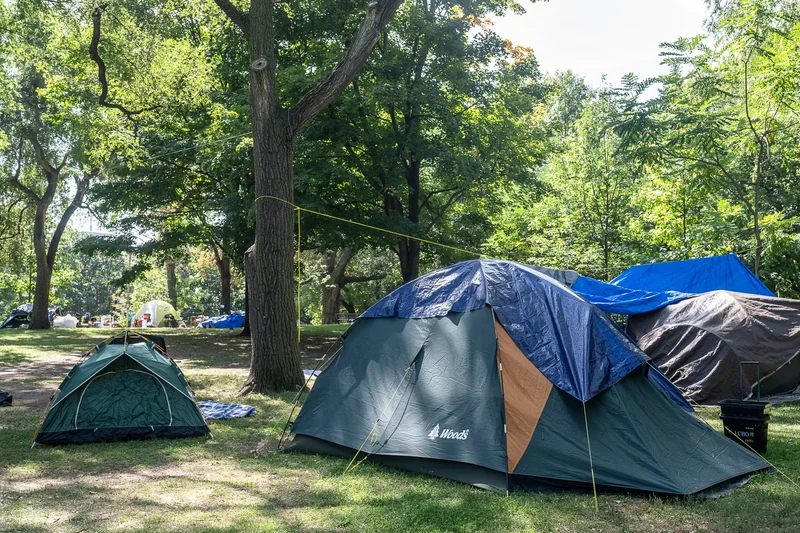
The number of people experiencing homelessness in Canada doubled from 2018 to 2024, according to the 2024 national point-in-time count, which provides a snapshot of the homeless community on the night of the survey. The snapshot also showed that unsheltered homelessness – those living outside – surged by more than 300 per cent over the six years.
The CAEH collected homelessness data from 36 communities that participated in the 2018, 2022 and 2024 point-in-time counts for its analysis. (The 2020 count was postponed due to the COVID-19 pandemic.)
It then compared these rates with data from the Canada Mortgage and Housing Corporation’s rental market survey, which outlines vacancy rates and average rental costs in large and mid-sized communities across Canada. The CAEH focused on the cheapest 25 per cent of rental properties.
In Hamilton, for example, the rate of homelessness grew to 19.2 per 10,000 people in 2024 from 5.94 per 10,000 in 2018. Correspondingly, the rental price for the lowest-cost one-bedroom unit rose to $1,200 per month from $815 over those six years, and the vacancy rate slimmed to 1.2 per cent from 2.3 per cent.
“What we’ve been able to confirm is that what is really driving the change in Canada is the high, increasing cost of rent for the lowest cost units of housing, compounded by surging cost of living and low vacancy,” Mr. Richter said.
The research also found that, while rental housing supply has grown across Canada in recent years, the benefits have not trickled down to those in most need. Rather, the new housing supply has been added to the higher end of the rental market.
The CAEH’s analysis mirrors research in the United States by housing scholar Gregg Colburn and data journalist Clayton Page Aldern, authors of the 2022 book Homelessness is a Housing Problem. The pair sought to explain the substantial variation in homelessness rates across U.S. cities, which Mr. Colburn, in an interview, said was an “exercise in myth busting.”
They tested a range of conventional beliefs on what drives homelessness – poverty, mental illness, weather, public assistance, politics – but none could account for regional variation. Instead, it was vacancy rates and rental costs that provided the most “convincing explanation.”
Mr. Colburn, who helped the CAEH with its research and is an associate professor of real estate at the University of Washington, said the same dynamic is at play in Canada.
“My underlying point would be, if you really want to make a material dent in homelessness in your city, in your province, in your country, ensuring that there’s adequate housing for people with limited income is absolutely necessary,” he said.