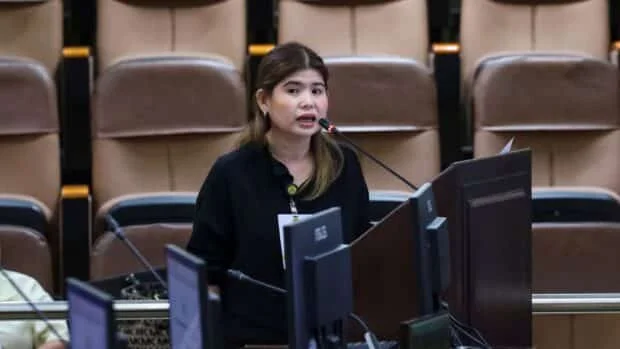
City scholarship overhaul: Budget constraints driving stricter eligibility
CEBU CITY, Philippines — A proposed ordinance that seeks to revise Cebu City’s scholarship program drew scrutiny from council members after its proponents acknowledged that the measure primarily aims to limit the number of qualified applicants because of mounting budget constraints.
Several provisions also sparked concerns of confusing eligibility rules.
During a public hearing on August 4, members of the Cebu City Council questioned whether the amendments to the Cebu City Scholarship Program would actually achieve their stated objective or instead create new ambiguities that could unfairly disqualify students.
Councilor Winston Pepito, the ordinance’s principal proponent, openly said the proposed amendments intend to narrow eligibility rather than expand it.
“We have a problem with the budget. That’s why this amendatory ordinance is not to embrace more. This is limiting,” Pepito said.
He cited instances where students allegedly transferred to Cebu City only during their final years of high school and later qualified for the city’s scholarship program despite completing most of their education elsewhere.
“That was the intention why we introduced these amendments,” he said.
Budget, residency concerns
Scholarship Office Executive Director Shirley Otadoy supported the proposed revisions, saying existing rules allowed applicants who had only recently transferred to Cebu City to qualify for scholarships.
She said the office previously relied mainly on applicants’ senior high school diplomas, making it possible for students who enrolled in Cebu City only during the latter part of high school to become eligible.
To address this, the proposed ordinance requires most applicants from private schools to demonstrate a longer educational history within Cebu City’s public school system.
Under the draft measure:
- Public high school graduates must have completed both junior high school (Grades 7 to 10) and senior high school (Grades 11 and 12) in a public school within Cebu City.
- Private senior high school graduates who studied under government vouchers or institutional scholarships must have completed junior high school in a Cebu City public school.
- Applicants who also attended private junior high school must prove they completed elementary education in a Cebu City public elementary school before becoming eligible.
The ordinance also opens eligibility to private school students who completed elementary through senior high school in Cebu City under academic scholarships or government grants, provided they submit proof of their scholarship and show that their parents or guardians earn no more than ₱250,000 annually.
Council questions restrictive requirements
Several councilors, however, argued that some provisions either contradict the ordinance’s stated purpose or impose unnecessary requirements.
Councilor Philip Zafra questioned the wording of the proposed qualifications, particularly the phrase stating that public high school graduates qualify “regardless of where elementary education was completed.”
He argued that the language appears inconsistent with other provisions requiring certain private school applicants to prove they completed elementary education in a public school.
Zafra also challenged the scholarship office’s reliance on its implementing rules and regulations (IRR).
“The IRR should not go beyond what is provided in the ordinance. The IRR is not the law,” Zafra said.
He stressed that implementing rules cannot impose requirements not expressly authorized by the ordinance itself.
Later in the hearing, Zafra urged the proponents to simplify the qualifications by focusing primarily on senior high school graduates since the scholarship program targets college students.
He also questioned why the draft introduces the term “legal guardian” without defining it in the ordinance.
Proponents open to revisions
Co-proponent Councilor Harry Eran defended the ordinance, arguing that the amendments actually impose stricter qualifications than the existing law.
He noted that the current ordinance simply requires applicants to graduate from a public high school, while the proposed version specifically requires completion of junior high school in a public school within Cebu City.
Eran also acknowledged concerns raised by parents regarding the requirement that some applicants complete all six years of elementary education in a public school.
He said the proponents already consider easing that requirement.
Eran suggested replacing the requirement to complete Grades 1 to 6 in a public elementary school with a less restrictive standard, such as requiring only at least three years in a public elementary school before graduation.
He said the proponents remain open to incorporating further amendments before the ordinance advances.
“Our goal is to safeguard the resources of the city,” Eran said.
The ordinance remains pending before the Cebu City Council and will undergo further revisions before second reading.
Disclaimer: The comments uploaded on this site do not necessarily represent or reflect the views of management and owner of Cebudailynews. We reserve the right to exclude comments that we deem to be inconsistent with our editorial standards.