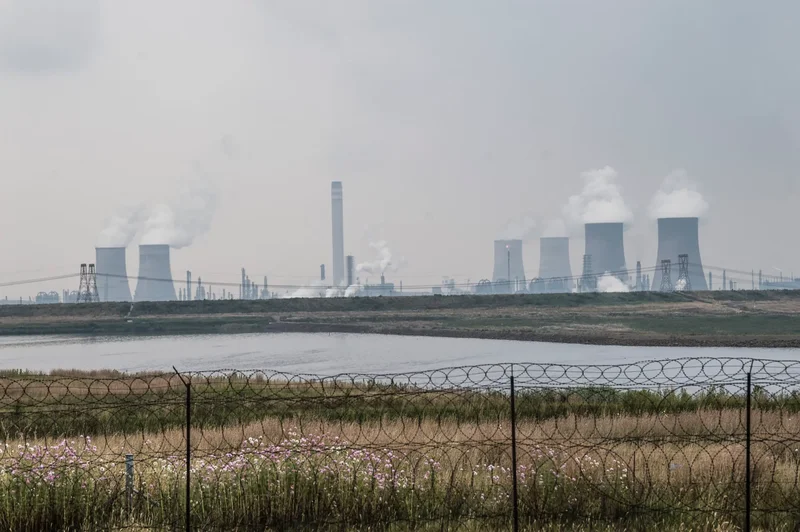
A long-running criminal investigation into allegations that Sasol unlawfully polluted the Vaal River system took a dramatic new turn this week when National Prosecuting Authority (NPA) investigators executed fresh search warrants at the company’s Secunda operations while executives were appearing before parliament.
The warrants, served by environmental management inspectors and the NPA on Tuesday, came as Sasol executives defended the company against allegations first made by whistleblower Ian Erasmus in 2019.
During the briefing, it emerged that investigators had widened their criminal probe to include additional allegations against the company.
The development prompted Sasol to stop answering MPs questions, saying the execution of the warrants and the possibility of renewed criminal proceedings meant it could no longer respond in detail without prejudicing its legal position.
The committee has given Sasol until 25 August to submit written responses to their questions.
The committee had called the meeting to receive updates from the department on its handling of Erasmus’s protected disclosures, including enforcement action taken, investigative steps and reasons for delays in the case.
In March 2021, the Mail & Guardian __reported __that Erasmus, a former Sasol senior process controller, had endured what he described as “years of hell” after blowing the whistle on the company's alleged unlawful disposal of vanadium, diethanolamine and potassium carbonate.
Erasmus, who worked at Sasol from 2005 until 2020, alleges he was forced to resign after raising concerns internally and externally about environmental non-compliance.
In February 2019, Erasmus testified at the South African Human Rights Commission’s inquiry into pollution of the Vaal River, alleging that hazardous chemicals entered the river system because chemical sewer valves at Sasol’s Secunda Benfield units had failed and remained unrepaired despite repeated warnings.
He alleged the broken valves allowed contaminated waste to enter the wrong part of the plant’s wastewater system before ultimately reaching the Klipspruit River. Erasmus also presented evidence showing elevated levels of vanadium in Sasol’s western API dams during 2017 and 2018 based on the company’s own internal analyses.
Sasol has consistently denied the allegations. It was criminally charged in 2022 over alleged historical environmental management failures at its Secunda operations.
According to the original charge sheet, prosecutors alleged the company unlawfully discharged waste containing vanadium, diethanolamine and potassium carbonate into chemical sewer systems flowing to API dams between 2012 and 2019.
They further alleged the waste entered the Klipspruit River system, potentially causing groundwater and environmental pollution and that Sasol had undertaken certain activities without the required environmental authorisations.
Those charges were provisionally withdrawn in July 2025 after prosecutors received additional evidence from Erasmus.
This week, investigators revealed the inquiry had expanded to include allegations relating to Benfield Phases 3 and 4, possible false or misleading information allegedly provided to environmental management inspectors and additional evidence gathered since the original prosecution was provisionally withdrawn.
Addressing MPs, department of forestry, fisheries and the environment chief director for enforcement Frances Craigie revealed that investigators were now examining allegations beyond the original Benfield Phase 1 and 2 facilities to include Benfield Phases 3 and 4.
She also disclosed that investigators were probing whether certain Sasol officials may have provided false or misleading information to environmental management inspectors during the investigation - an offence under environmental legislation that could be added to the criminal case if sufficient evidence is obtained.
Craigie further confirmed that Erasmus entered the NPA’s witness protection programme in April 2024 after requesting assistance through investigators.
She said the investigation had become unusually complex because the Benfield waste valve central to Erasmus’s allegations had already been repaired before investigators were able to access the site.
“The criminal investigation commenced after the Benfield waste valve had been repaired,” Craigie told MPs. “As a result, we could not collect contemporaneous river samples at that discharge point.”
Instead, investigators have relied on historical river sampling data, monitoring reports, company records, witness statements and scientific evidence.
Craigie said investigators had interviewed 38 witnesses, consulted specialist experts and analysed extensive technical and scientific evidence.
Since the case was provisionally withdrawn, investigators have obtained 16 additional witness statements while the prosecutor is considering whether the matter should proceed in the Mbombela High Court.
“The prosecutor is currently evaluating the additional evidence that has been collected while the investigation team is still collecting further evidence.”
She said investigators hoped to place the case back on the court roll by the end of September, although it could extend to the end of the year.
Craigie said prosecutors intended that any future indictment would include alleged contraventions of provisions in the National Environmental Management Act relating to the alleged victimisation of Erasmus after he made protected environmental disclosures
Sasol executive director and vice-president for commercial and legal Vuyo Kahla told MPs the company Sasol’s position had remained unchanged throughout years of engagements with regulators, parliament and other state institutions.
He said the company rejected both the pollution allegations and claims that Erasmus had suffered occupational detriment, remained subject to ongoing environmental oversight, welcomed regulatory scrutiny and had “nothing to hide”, while maintaining the allegations were unsupported by the facts and chronology of events.
Sasol executive vice-president Victor Bester said the Benfield plant’s containment systems ensured contaminated water remained within closed infrastructure before being recycled, treated or disposed of, leaving “no pathway” for Benfield waste to enter the Klipspruit or Vaal River systems.
Kahla said Erasmus had not been dismissed but had left Sasol through a mutual separation agreement, adding that the company supported whistleblowers and that no evidence established a causal link between his disclosures and any alleged occupational detriment.
He noted that Sasol had been ready to proceed with the July 2025 trial and said the company had hoped the allegations would finally be tested in court before prosecutors provisionally withdrew the case.
However, after MPs questioned Sasol about discrepancies between its evidence and Erasmus’s allegations, Kahla said the execution of the warrants meant the company had to limit further comment.
He said the company had been served with the warrants while executives were appearing before the committee and had not yet had an opportunity to study them or obtain legal advice.
The committee reacted with visible frustration.
Committee member Andrew de Blocq said Sasol had arrived saying it wanted to “clear the air” but had instead “drawn themselves into a laager” by refusing to answer detailed questions.
DA MP Wildri Peach said he was “extremely disappointed” by Sasol’s abrupt change in position after the company had maintained throughout its presentation that it had done nothing wrong. He said its subsequent refusal to answer MPs’ questions after learning of the NPA warrants was “extremely disingenuous”.
“If Sasol is innocent and if the information they have presented is truthful, I don’t understand why they can no longer answer questions probing that report. I’m left confused and bewildered. I really find that we have been misled to a large extent.”
ANC MP Noluthando Makasi said Sasol had allowed members to ask questions but was “not prepared to answer a single one”. She added that it was “simply not acceptable” for the company to refuse to respond.
“If they have nothing to hide, I think they need to respond to our questions with the confidence that they’ve displayed when they were making their presentation,” she said.
Kahla said Sasol had attended the meeting “out of respect” for parliament and intended to cooperate but the execution of the warrants had fundamentally changed Sasol’s position because they had not yet studied them or consulted their lawyers.
He insisted Sasol was “not escaping accountability” and would provide written responses after obtaining legal advice.