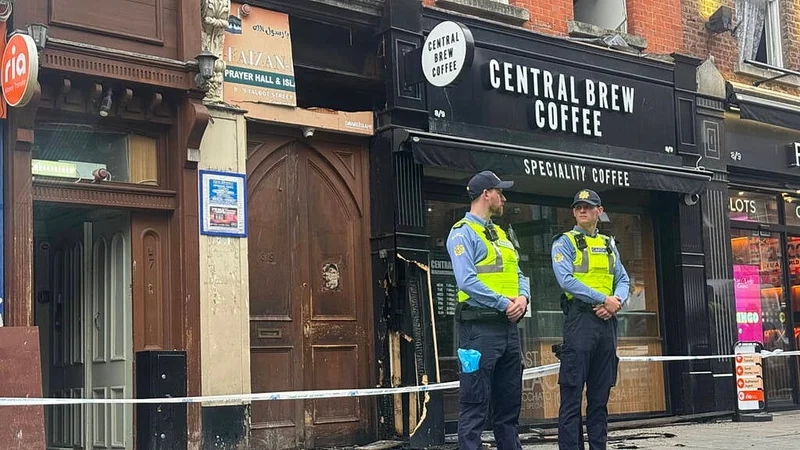
Social media platforms are playing a "significant role" in amplifying anti-Muslim hatred in Ireland, according to a new report from the Hope and Courage Collective.
The Hope and Courage Collective (HCC) is a civil society organisation and NGO that seeks to counter far-right misinformation and hate speech in Ireland.
The report, The Islamophobia Playbook: A Project of Hate, raises "urgent" questions about how social media recommender systems play a role in spreading harmful content during incidents targeting minority communities.
These include vidoes that celebrate violence, call for assaults and murder, and damage to property. Such content remains online despite it being reported to the relevant social media platforms.
The report looks at anti-Muslim incidents since 2026, with a particular focus on the alleged arson attack on the Al Madinah Prayer Hall (Talbot Street mosque) in Dublin.
When analysing a Facebook video showing the aftermath of the attack, researchers found it had been viewed 1.9 million times, approximately 352 times greater than the account's normal audience.
Analysis of more than 10,600 comments and emojis found that one in five contained anti-Muslim hate, support for the alleged attack, calls for further mosque burnings, violence against Muslims, or other forms of incitement.
Scores of comments contained the phrase ‘burn them all”, with over 300 comments explicitly calling for more mosques in
Ireland to be firebombed or burnt down.
Speaking on the publication of the report, Mark Malone, research lead with HCC, said: “The findings of this research are extremely worrying. The public, in particular the Muslim community, needs clarity on how Facebook's recommender systems turn attacks on places of worship into viral content that normalises this event and calls for more violence."
X, formerly Twitter, also appeared to amplify discussion of the mosque attack with more than 112,000 online mentions from 70,000 unique accounts; reaching an estimated 243 million accounts within six days.
Nearly 90 per cent of online discussion originated outside Ireland, "highlighting the increasingly transnational nature of online anti-Muslim narratives".
Malone said: "That level of international amplification should concern anyone responsible for the safety of our online spaces. Ireland is now a source of content for international far-right influencers."
Findings show that social media platforms are failing to apply their own community standards as harmful content is amplified at moments of crisis and remains online today.
Malone added: "Copy and paste statements from Meta about how it does not allow hate speech on its platforms do nothing to address the reality that it does. Meta also needs to specifically answer why it continues to host calls for further attacks on mosques and calls for violence against the Muslim community.
"Fundamentally, Meta must demonstrate transparently how their systems are assessing and mitigating systemic risks created by their own recommender systems."
The HCC has called on Coimisiún na Meán to engage with Meta to publish an incident-specific risk assessment explaining how they responded to the Talbot Street incident.
The report further recommends implementing the Oireachtas Media and Communications Committee recommendation to turn off recommender systems by default, alongside "stronger enforcement of the Prohibition of Incitement To Hatred Act 1989 in response to incidents involving anti-Muslim hate and incitement to violence".