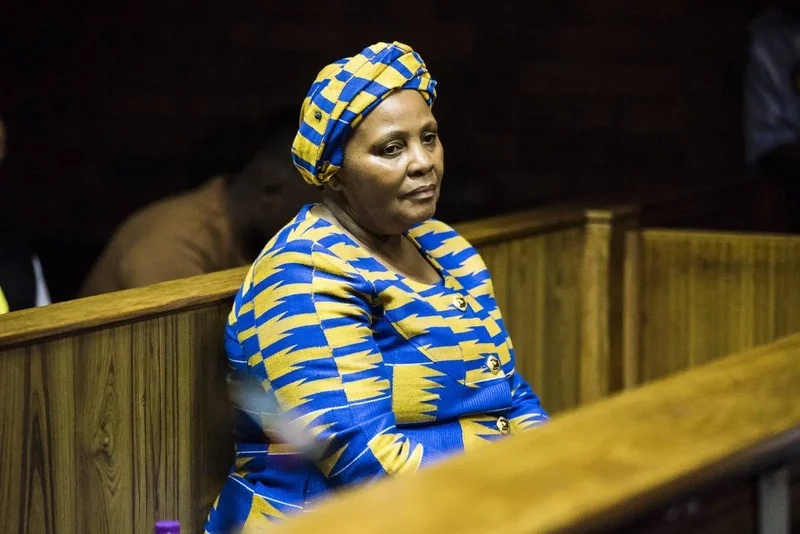
After weeks dominated by the testimony of defence contractor Nombasa Ntsondwa-Ndhlovu, the corruption trial of former defence minister and National Assembly speaker Nosiviwe Mapisa-Nqakula shifted this week to the witnesses prosecutors say corroborate her account.
The Gauteng High Court in Pretoria heard from retired military officers, members of Ntsondwa-Ndhlovu's family and professionals involved in renovations to Mapisa-Nqakula's Bruma home, as the State sought to corroborate allegations that the former minister received about R4.5 million in corrupt payments between 2016 and 2019.
Mapisa-Nqakula has pleaded not guilty to 12 counts of corruption and one count of money laundering. The State alleges she solicited and received about R4.5 million from Ntsondwa-Ndhlovu between 2016 and 2019 in return for using her position as defence minister to benefit the contractor's company, Umkhombe Marine. She denies the allegations.
Rather than introducing new allegations, the prosecution focused on reinforcing the evidence of its principal witness while the defence sought to expose inconsistencies in the accounts of those called to support her version.
Retired Major General Dr Noel Ndhlovu, Ntsondwa-Ndhlovu's husband and former deputy surgeon general of the South African National Defence Force (SANDF), emerged as one of the prosecution's key witnesses.
His testimony centred on the allegation that Mapisa-Nqakula demanded R2 million from Ntsondwa-Ndhlovu to secure his promotion to surgeon general.
Ndhlovu told the court he believed he was the strongest candidate for the post but instead spent about four years on suspension while his wife's defence contracts were investigated. When he returned to work, he reported to an officer who had previously been his junior before retiring from the SANDF in 2025.
Although he did not witness the alleged solicitation, Ndhlovu said he was shocked when his wife disclosed she had allegedly been making cash payments to Mapisa-Nqakula. He testified that he instructed her to stop because he believed the payments were wrong.
During cross-examination, the defence challenged inconsistencies in his recollection, particularly over when he first became aware of the alleged payments, while emphasising that much of his evidence was based on conversations with his wife rather than first-hand knowledge.
The State also called members of Ntsondwa-Ndhlovu's family in an effort to corroborate her account. Her brother, Sabelo Ntsondwa, testified about accompanying her during one of the substantial cash withdrawals and the robbery that followed. Her daughter, Lilitha Ndhlovu and her sister, Andiswa Ntsondwa-Joyi, also described accompanying her to Mapisa-Nqakula's Johannesburg home on separate occasions. While neither Lilitha nor Noel Ndhlovu said they knew money was being delivered, Andiswa testified that her sister told her they were delivering R400,000 because the former minister "constantly demanded money".
The defence seized on an apparent inconsistency between Andiswa's evidence that the cash was carried in a white A4 envelope and Ntsondwa-Ndhlovu's earlier testimony that it had been placed in an FNB money bag. Prosecutors responded that the money bag had been placed inside the envelope, prompting Judge Mashudu Munzhelele to remark that it was the first time she had heard that explanation.
The court also heard from retired Defence Department legal adviser Simphiwe Nkosana, who testified that she accompanied Ntsondwa-Ndhlovu to Mapisa-Nqakula's satellite office at Waterkloof Air Force Base in September 2018. Although she did not attend the meeting or witness any money changing hands, prosecutors allege Mapisa-Nqakula received US$10,000 during that visit.
Attorney Zola Majavu did not testify after raising concerns about attorney-client privilege arising from legal advice he had previously provided to Ntsondwa-Ndhlovu.
The focus then shifted to evidence the State says underpins the money-laundering charge.
Architect Emmanuel Mulaudzi testified that he received cash payments for preparing plans for renovations at Mapisa-Nqakula's Bruma residence.
Interior decorator Nomsa Shabangu told the court she received about R1.7 million, largely in cash, for extensive renovations that included bespoke furniture, underfloor heating, gold-leaf ceilings and luxury kitchen and bathroom upgrades. She also testified that while some purchases were made using Mapisa-Nqakula's bank card, most of the payments she received were in cash.
That evidence underpins the State's money-laundering case. Prosecutors allege the Bruma renovations were funded with money paid by Ntsondwa-Ndhlovu, although the renovation witnesses did not testify to knowing the source of the cash.
By midday on Thursday, the trial had entered its forensic phase when Investigating Directorate chief financial investigator Wynand Wessels took the stand. His evidence is expected to examine financial flows through the bank accounts of Mapisa-Nqakula, her husband Charles Nqakula, Ntsondwa-Ndhlovu and witnesses connected to the Bruma renovations.
The week's proceedings marked the first sustained attempt by prosecutors to move beyond the testimony of their principal witness by presenting corroborating testimony alongside financial evidence. The defence, meanwhile, continued testing that evidential chain through cross-examination.