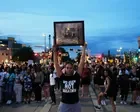
After bystander footage of police killing Corey Ruiz – a 38-year-old Black man in Madison, Wisconsin – spread online, many questioned why the officers were not wearing body cameras, a standard practice for more than 80% of police nationwide.
Police said Ruiz was wielding a knife and injured an officer; multiple bystander videos showed he was shot while already detained and on the ground. Ruiz’s family called for mandatory body cameras in the city, along with charges for the four officers involved. People across the political spectrum echoed the demand for cameras, including Madison’s police chief.
Within days, Madison’s mayor, Satya Rhodes-Conway, announced she would include funding for body cameras in the next city budget.
But local organizers say bodycams are just one element of holding police accountable after harm has already been done; some would rather see community control over policing, and policies that reduce police interaction and address underlying issues, such as mental health services and homelessness support. (Ruiz was unhoused at the time of his death.)
These tensions came to a head on Tuesday after Rhodes-Conway sent police to take down a community memorial and encampment at the intersection where Ruiz was killed after warning protesters about resident complaints. Nearly two dozen protesters were arrested and another 10 given citations within 24 hours; officers and the city’s independent police monitor also got into a physical altercation.
What’s happening in Madison, advocates say, is indicative of how cities are still grappling with what police accountability and intervention should look like six years after millions marched against racist police violence and called for radical changes to policing after George Floyd’s murder.
Organizers who spoke to the Guardian said that by focusing on body cameras, the conversation has strayed from the officers facing consequences, let alone reckoning with how to stop police violence from happening at all. According to the Mapping Police Violence project, 2025 was the deadliest year for police killings since 2013. Even though only 7% of Madison’s population is Black, more than half of the police department’s “use of force” cases were against Black residents last year.
“If we wanna really be able to address issues like the killings and harms and surveillance of Black and brown communities, we need to be thinking about, how do we take power away from these institutions and put it into the community?” said Zon Moua, senior director of organizing at the local community group Freedom Inc.
The debate over police accountability
In 2020, after the police murder of George Floyd in Minneapolis galvanized millions to protest racism and police violence, cities across the country began listening to local community organizers about possible systemic solutions.
Some established more community oversight; others created programs to replace police with mental health workers in crisis situations. While there were calls to defund the police across the country, that demand was quickly overwritten and rejected in the next few years: by the spring of 2022, then president Joe Biden was leading bipartisan cheers to “fund the police” at his State of the Union address, and police funding had actually gone up.
Madison is one of those cities that vowed to do better. It had been rocked by two police killings during what were likely mental health crises: of Paul Heenan, a white 30-year-old, in 2012, and of 19-year-old Tony Robinson, who was biracial and shot dead by police in 2015 on the same Madison street as Ruiz.
Juliana Bennett was a 21-year-old University of Wisconsin-Madison student and racial justice organizer when she was elected to the city’s common council (Madison’s version of a city council) in 2021. She helped launch a mental health crisis response program that sends a community paramedic and a crisis worker to respond to nonviolent 911 “behavior health” calls. The community-led police-civilian oversight board also created the office of the independent police monitor; the two work together to review police misconduct and violence cases and make recommendations on police discipline, use of force and other policing issues such as hiring, training and complaint processes.
At least three bodycam proposals have also come before the common council since 2020, but each time they were rejected or pushed back for further research, because of estimated costs or in favor of a pilot program.
A six-month “feasibility review” on mandating body cameras in 2021 found that “some marginalized communities” in Madison were strongly opposed to the cameras over fears of surveillance, among other concerns. When the city launched a body camera pilot program in 2024, an analysis found the tech did not affect police behavior or community-police relations in the city.
Bennett twice voted against bodycams, citing that one of the people commissioned to perform an independent report was on the payroll of a major body camera manufacturer, and that she would rather the costs proposed for the cameras go toward addressing the city’s homelessness crisis, an underlying issue that can lead to police intervention and an important priority for constituents.
“When serving on the council, it was a little frustrating to me that most of my colleagues were disinterested in making any real substantive changes to policing,” said Bennett, who is now running for gubernatorial candidate Francesca Hong’s state assembly seat.
In the aftermath of Ruiz’s killing, Madison was scrutinized for being the only big city in the state without police bodycams. But research on their effectiveness has been mixed. While body cameras can help with substantiating “use of force” claims against police, particularly in cases brought by people of color, according to a 2025 study, investigations from ProPublica and the New York Times Magazine in 2023 found that the public almost never sees bodycam footage: police departments largely have the discretion to deny requests, redact or edit footage, and refuse to punish officers, sometimes not even following their own “stated policies of transparency”.
“We’re under an illusion that body-worn cameras are a good way to stop police violence from happening in the first place,” said Lauren Bonds, executive director of the National Police Accountability Project. “It’s more that they’re helpful if police violence happens and there’s already a program in place limiting police responses.”
Tensions rise at site of police killing
The 22 July shooting sparked a street protest movement of hundreds of Madison residents and the memorial encampment at the cross streets where Ruiz was shot. Handmade art, chalked messages, bouquets of flowers and signs reading “Justice for Corey” covered the asphalt. A handful of residents slept in tents, weathering the extreme heat, while other community members held cookouts and brought bottled water.
Today there’s little sign left of the gathering place. After Rhodes-Conway ordered the encampment to be taken down on Tuesday, citing complaints from nearby residents, 16 people were arrested, 10 people were given citations and others were pepper-sprayed during the shutdown. Protesters overtook the streets on Tuesday night, leading to another six arrests; police again cleared the intersection by the early-morning hours. Both Bennett and Freedom Inc issued condemnations of Rhodes-Conway’s decision to close the encampment, and questioned why the officer who killed Ruiz had not yet been charged.
The city’s current interim independent police monitor, Aeiramique “Meeka” Glass, also nearly came to blows with nearby police officers at the encampment clear-out. In investigating Ruiz’s killing, Glass has accused the police of denying her evidence and subpoenaed the department. On 4 August, she issued a public statement accusing the mayor’s office, the common council, the city attorney and the district attorney of obstructing, or enabling the obstruction of, the collection of evidence. Glass and the police-civilian oversight board have also called for allocating 1% of the police budget – a little less than $1m – to further bolster the monitor’s office with more personnel; community group Freedom Inc is calling for the board to receive 5% of the police budget.
Meanwhile, local organizers who previously expressed opposition or skepticism to body cameras have been harassed by pro-police conservatives. They said Ruiz’s killing – and the current pace of police violence – suggest that at a structural level, things may not have changed much since the 2020 protests. But they will keep pushing for it.
“With dozens of witnesses, filmed on camera from multiple angles, why are we [talking about body cameras and] not talking about investing in housing and support systems to make sure people like Corey have their basic needs met?” said Bennett.