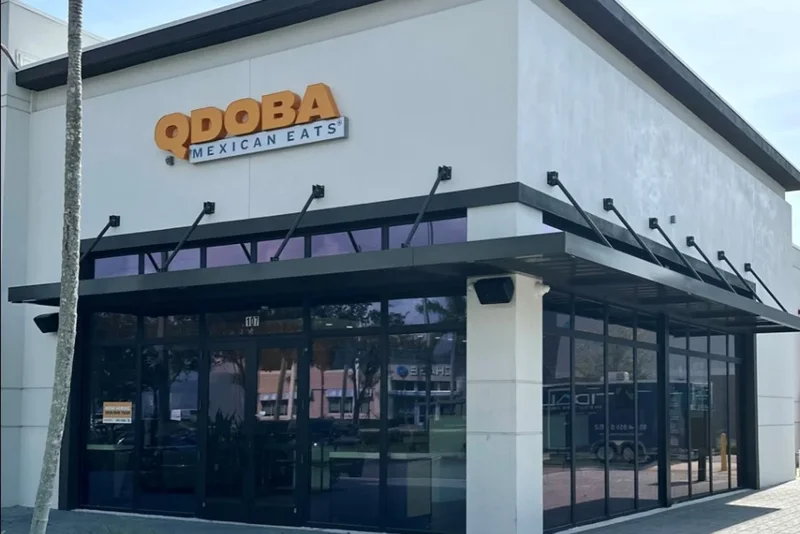
Mexican fast-casual restaurant Qdoba followed Chipotle’s lead and removed jalapeños from its menu as a salmonella outbreak linked to the peppers expands to 27 states.
Data showed that jalapeños from Sinaloa, Mexico, distributed by Coast Citrus Distributors are the source of the current outbreak. There have been no reported deaths and 36 hospitalizations so far, according to the CDC.
“QDOBA is cooperating with public health authorities as they pursue an active investigation into an outbreak of Salmonella Javiana,” the chain said in a statement. “Out of an abundance of caution, we have proactively removed jalapeños from our restaurants at this time.”
So far, there have been 345 reported salmonella infections across 27 states linked to jalapeños, prompting popular Mexican chains Chipotle and Qdoba to stop serving the popular ingredient.
Since Qdoba and Chipotle removed the affected products, the CDC and FDA “do not consider there to be a current ongoing risk from these establishments to consumers in this outbreak,” the CDC said.
Salmonella is a bacterial disease that affects the intestinal tract and causes food poisoning. It’s typically found in the gut of some animals; however, humans can become infected through contaminated food or water.
Symptoms of salmonella poisoning include diarrhea, fever, severe vomiting, dehydration and stomach cramps. Most people who become sick are able to recover within a week.
Infections can be severe in young children, older adults or people with weakened immune systems, who may require hospitalization as a result.
It also takes about three to four weeks to determine if a sick person is part of the outbreak — meaning the true number of people who are infected may be even higher.
The outbreak linked to jalapeños began in June, according to CDC data.
Most of the sick people are located in Colorado and Minnesota, with each state reporting 110 cases.
Other cases have been reported in Alabama, Arkansas, California, Georgia, Illinois, Indiana, Kansas, Kentucky, Louisiana, Michigan, Missouri, Montana, North Carolina, North Dakota, Nebraska, Ohio, Oklahoma, South Carolina, Tennessee, Texas, Utah, Virginia, Washington, Wisconsin and Wyoming.
Coast Citrus Distributors, which primarily distributes to restaurants, agreed to recall the jalapeños linked to the outbreak. Restaurants should check with their food supplier to confirm the source of their jalapeño peppers, the CDC said.
The outbreak linked to jalapeños comes as nearly 100 people in 17 states have become sick in another salmonella outbreak linked to eggs. Those cases occurred between November and the end of June, according to the FDA.
No deaths were reported in that outbreak, but 26 people required hospital treatment.
Health officials say the eggs recalled by Midwest Poultry Services were a likely source of the infection, but those eggs do not account for all of the illnesses.
The company previously recalled nearly 1.6 million dozen eggs produced or distributed from Texas farms between June 6 and July 3. The FDA said the recall covered both white and brown cage-free eggs.
It also comes as the U.S. battles an unprecedented cyclospora outbreak, which has expanded to 15 states with more than 10,000 confirmed cases.
The parasitic illness causes severe gastrointestinal symptoms — including explosive diarrhea.
Some of the cases have reportedly been linked to shredded iceberg lettuce that mega produce supplier Taylor Farms sourced from central Mexico, sources told The Washington Post.
Meanwhile, some patients in Missouri, which has reported more than 1,000 cases, told investigators that they ate Taco Bell before getting sick.
There have been more than 500 hospitalizations and two deaths stemming from the outbreak, according to the CDC. Officials said the two people who died were in Michigan, a state that has been hit hardest by the outbreak, and also had underlying health conditions.
In July, Taylor Farms recalled all iceberg lettuce sourced from central Mexico “because it has the potential to be contaminated with Cyclospora,” the company said.
Officials said the next day that a sample of lettuce from Taylor Farms tested positive for cyclosporiasis but later backtracked and said it was a “false positive.”
The FDA says that the false positive “does not change the basis for FDA’s ongoing outbreak investigation or the overwhelming epidemiological data supporting the current voluntary recall by Taylor Farms.”