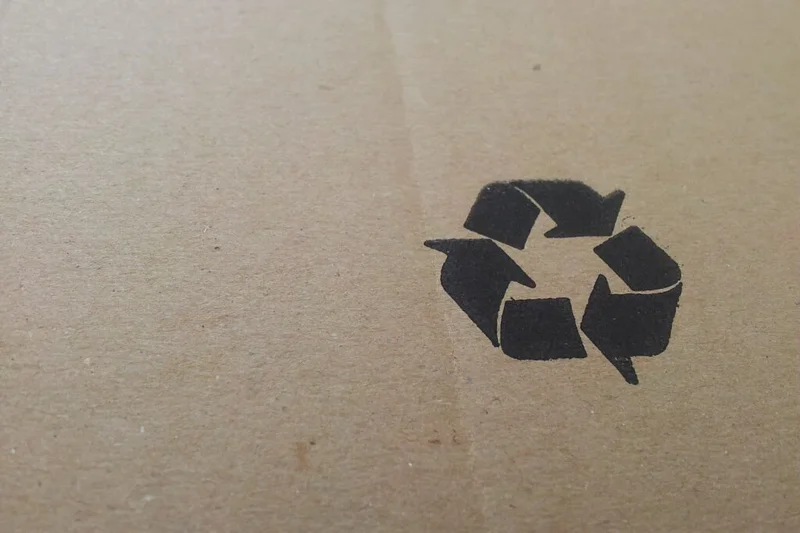
A pioneering California law meant to sharply limit use of the familiar âchasing arrowsâ recycling symbol has been blocked by a federal judge who said it probably violates the First Amendment.
In a preliminary injunction issued last month, U.S. District Judge William Hayes halted enforcement of SB 343 after food, packaging, and retail groups sued, finding that key provisions were âunconstitutionally vagueâ and likely infringed protected commercial speech. Enforcement of the law, passed in 2021, was expected to start this fall.
The decision is a blow to environmental advocates, who had hoped to remove the familiar symbol from a huge array of plastic products, in line with a statewide study showing that only a fraction are widely collected and actually recycled. SB 343 said only goods and packaging accepted by recycling programs serving at least 60 percent of Californians and then actually sorted for recyclingânot collected and thrown awayâcould bear the chasing arrows.
Hayesâ constitutional reasoning surprised supporters of SB 343 because similar arguments against environmental marketing regulations have historically struggled in court.
âThe First Amendment protects free expression, not a corporationâs right to commit consumer fraud,â said Nick Lapis, director of advocacy for the nonprofit Californians Against Waste. âWe see this exact playbook every time the plastics industry is asked to stop misleading the publicâthey suddenly hide behind the Constitution.â
In his decision, Hayes applied a standard four-part test to determine whether SB 343 would unduly restrict companiesâ speech rights. The law passed the first two tests handily, as it regulates âpotentially misleadingâ speech and was intended to serve Californiaâs legitimate interests in reducing consumer confusion and improving recycling rates.
The next tests are where the law ran into trouble. Hayes, siding with the industry trade groups, argued that the legislation would not advance those âlegitimate interests.â Rather than encouraging companies to redesign their products and packaging to comply with Californiaâs real-world recyclability criteria, he said the law would prompt them to remove the recycling symbol altogether. Products recycled at a rate below the 60 percent threshold that the law requires would no longer make it into recycling bins, which could in theory leave more of them bound for the landfill.
Hayes said a less stringent regulation could have better advanced Californiaâs goals. For instance, the state could have passed a law requiring more descriptive qualifiers alongside the recycling symbol. He offered a hypothetical example of a label explaining that an item is âaccepted by recyclers in the greater Los Angeles area but nowhere else in California.â Such a label would provide consumers with more and better information, he argued, but would not be allowed under SB 343.
Heidi Sanborn, executive director of the nonprofit National Stewardship Action Council, said the judgeâs reasoning reflected a fundamental misunderstanding of the problems facing California recycling systems. People are throwing too much stuff into their blue bins, she said. In addition to not actually being recyclable, much of this refuseâincluding plastic bags and other plastic filmsâcan gum up sorting machines, causing operational delays and creating safety risks.
âPeople are wish-cycling, theyâre so desperate to recycle,â Sanborn told Grist. âWe have to pull all this [contamination] out, which is very labor-intensive, and then everybody wants to know why their bills go up.â
Industry groups welcomed the injunction, saying it would prevent California from âcensoring truthful information on packaging.â
Scott Hochberg, general counsel and litigation director for the nonprofit Earth Island Institute, said heâs seen free speech challenges to environmental rules many times before. Big polluters have frequently invoked the First Amendment to oppose regulations that require them to disclose informationâlike their greenhouse gas emissionsâor tone down statements about their sustainability.
âWhatâs relatively new and concerning is when these arguments succeed and states are blocked from implementing common-sense initiatives to protect their residents,â he said.
A lawsuit Hochbergâs organization is pursuing against Coca-Cola illustrates the same debate. It alleges the company presents itself as a âsustainable and environmentally friendly companyâ despite its outsize contribution to plastic pollution. Coca-Cola argued that statements about its sustainability effortsâincluding plastics recyclingâwere protected political speech rather than commercial advertising. A federal judge rejected that argument in 2024.
The companies that sued California didnât make that same distinction; their suit is more like one filed in 1992 that sought to block a California law restricting the use of terms like âbiodegradable,â âozone-friendly,â and ârecyclable.â A judge upheld the law, ruling that it would not stifle free speech because corporations could still use a restricted word or phrase as long as they included qualifiers explaining how, where, or under what conditions it applied.
The injunction against SB 343 leaves California with few easy options. Hayesâ ruling suggests the state faces a difficult road if the case proceeds to trial. Lawmakers could amend the law to address some of the judgeâs concerns, though that may be unlikely given the politics surrounding the issue. California could also appeal the injunction, but the lower court would still have to decide the case on its merits.
Earth Island Institute and Californians Against Waste announced on July 27 that they are joining California as defendants. Hochberg said he hoped to provide the court with more information âabout how the recycling system actually works.â Losing the lawsuit will make it harder for other states to pursue similar labeling regulations, he said.
It could also jeopardize Californiaâs nation-leading extended producer responsibility law, which shifts responsibility for collecting, recycling, and reducing plastic packaging from taxpayers and local governments to the companies that produce it. It relies on the same definition of recycling and is currently being challenged by a separate lawsuit.
Whatever happens next, Sanborn said sheâs ready to work with industry to come up with other solutionsâincluding legislation to clarify labeling rules at the national level. âWe can and should work together to solve this,â she said. âBut you should not have the right to lie to people.â
*This article originally appeared in Grist at https://grist.org/accountability/is-the-recycling-symbol-free-speech-a-judge-just-ruled-it-could-be/. Grist is a nonprofit, independent media organization dedicated to reporting on climate change. *