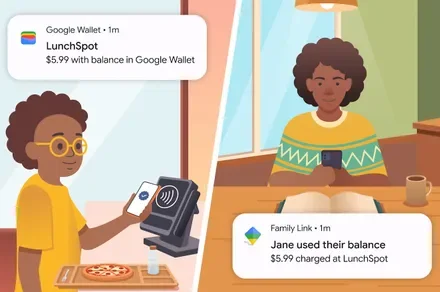
Handing a child their first bit of spending freedom usually involves hard cash or a credit/debit card. But Google wants to make that process a little more convenient with a digital method. Google Wallet is introducing a new payment option, complete with a parental kill switch.
Parents in the US can now establish a dedicated Wallet balance for supervised children and teenagers under 18. Money added to that balance can be spent through an eligible Android phone or Wear OS smartwatch anywhere contactless Visa payments are accepted, without requiring the child to have a conventional bank account.
Parents decide how far the allowance goes
The balance is managed through Google Family Link or the Google Wallet website. It lets parents add funds and even establish other ground rules like a daily spending limit. Other controls include a temporary lock or unlock balance option along with recent purchase transaction history.
Once a child reaches the limit, further transactions are declined until the following day unless a parent changes or removes it. Parents can also receive updates when their child makes a purchase and inspect transaction history through Family Link. If a phone or smartwatch goes missing, the balance can be locked or removed from that specific device without closing the account completely.
Google caps the balance at $4,000, while parents can add up to $2,000 during any seven days. Transfers made into the balance cannot be individually reversed. Recovering excess money requires the family manager to close the balance and receive a refund of the remaining funds.
This is more controlled than adding your own card
Google Wallet already allowed parents to place a supported payment card inside a supervised child’s Wallet. But with Family Link, they can monitor transactions and remove the card without providing native spending limits. Those controls depended on the card issuer.
The new balance gives Google direct control over how much can be spent each day. It also keeps children away from the parent’s main bank balance. This can be useful against impulsive purchases, especially on digital stores (like in-game transactions). Parents also cannot require approval for each individual transaction before it happens.
In practice, this gives children a little more independence to choose what they wish to spend on. Meanwhile, parents still retain enough control to declare an immediate spending timeout when the purchases get out of hand.