The Catholic Church has warned against a rise in “us and them” politics and rhetoric that is dividing communities into opposing camps, urging Australians to reject vilification and rebuild social cohesion as a heated debate rages over migration and national values.
The Australian Catholic Bishops Conference says the country is facing growing social division marked by “incendiary language”, discrimination and violence, warning that political disagreement cannot become a justification for hatred or abuse.
The statement comes as One Nation intensifies its attacks on immigration and multiculturalism, placing migration pressures, housing and national identity at the centre of political debate and forcing Labor and the Coalition to confront growing support for Pauline Hanson’s movement.
Plans for Labor to unveil its own tougher migration rules – following pledges from the opposition parties for drastic intake cuts – were delayed at the last minute for fine-tuning after ministers raised questions.
The bishops’ annual Social Justice Statement, Living the Gospel in Times of Social Division, does not name One Nation or any political party, but warns against a growing tendency for people to define themselves and others through “political allegiance, cultural identity or ideological alignment”.
The bishops argue that robust debate remains essential to democracy but warn political differences cannot become a licence for hostility.
“Politics is a part of life,” the statement says. “So, too, are people expressing firmly held views informed by very different experiences and ideologies,” but warns those differences “cannot excuse hatred, abuse and violence”.
Endorsed by Australia’s 40 Catholic bishops, it points to rising antisemitism, Islamophobia, other forms of racism and the Bondi massacre attack in December, as evidence that social cohesion and community safety cannot be taken for granted.
It also warns that online platforms are amplifying division by reinforcing existing fears and grievances, creating separate versions of reality for different groups.
The bishops’ statement acknowledges Australians are facing genuine pressures, including housing insecurity and cost-of-living concerns, but warns against blaming migrants for broader economic challenges.
“Migration rates are being blamed by some for housing cost pressures and, unfortunately, migrants are being attacked and abused publicly by some,” the traditionally annual statement, dating back to 1940, says.
The bishops say recent divisions have been accompanied by “harsh words, discrimination against people of certain faiths and races and even horrifying violence”.
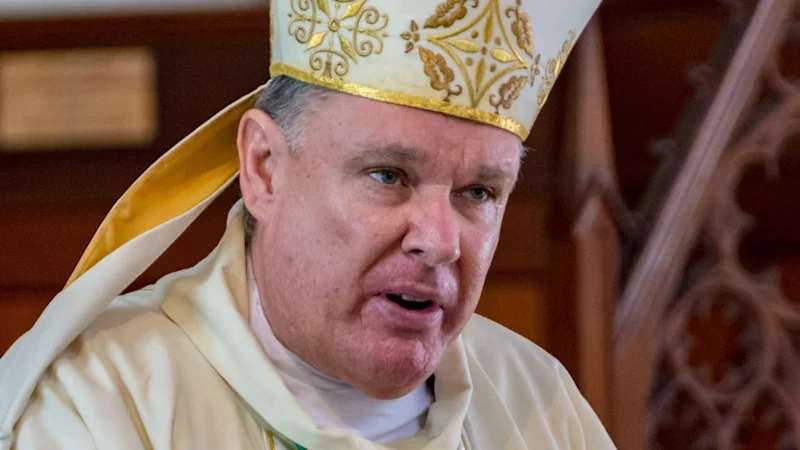
Bishop Tim Harris, chairman of the organisation’s social justice commission, said Australia’s diversity had been a strength but warned social cohesion could not be assumed.
“Genuine listening does not require us to agree on every issue, but it does require recognition of the dignity of those with whom we disagree,” Harris, the Bishop of Townsville, said.
“Australia has been enriched by successive generations of migrants, refugees and First Nations peoples whose stories form part of our national identity. Yet social cohesion cannot be taken for granted. It must be renewed through acts of solidarity, hospitality and mutual understanding.”
Harris’s comments build on a warning he issued earlier this year after Liberal MP Phillip Thompson indicated he was open to working with One Nation. Writing in the Townsville Bulletin, Harris said parties needed to be wary of a “populist agenda” that sought to divide Australians and reduce complex issues to simple answers.
The comments came amid debate within the Coalition over whether it should consider closer co-operation with Hanson’s party amid One Nation’s increase in support in opinion polling.
It drew a rebuke from Thompson, who said the bishop should focus on his pastoral responsibilities rather than political commentary, arguing his priority was working to remove the Albanese government from office.
Harris said he understood people would be critical of any perceived political comments but said the Church had a role in creating spaces for dialogue and inclusion.
“We need to ensure that we support positions that build people up and give them the dignity they deserve,” Harris said. “Yes we are all flawed but from my perspective we must not embrace extremism or populism in any form.”
He said many of the statements from Pauline Hanson and One Nation figures were “jarring” and “bringing out the worst in us”.
Harris said meaningful dialogue did not require agreement on every issue but demanded respect for those holding different views.