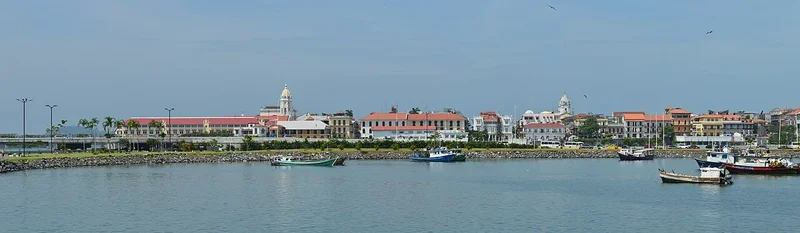
Panama’s Casco Antiguo Launches Five Electric Buses with WiFi and Cameras
Urban Mobility & Heritage
Panama’s historic Casco Antiguo district has welcomed a fleet of five Casco Antiguo electric buses, bringing quieter, cleaner, and more connected public transport to one of Latin America’s most visited heritage zones.
A cleaner ride through a World Heritage site
The new buses operate on the established C982 route, which links the Metro 5 de Mayo station directly to the heart of Casco Antiguo. Operator MiBus received the vehicles from the Panama Tourism Authority (ATP) and put them into service along a corridor that passes the Mercado de Mariscos, Plaza Herrera, Avenida A, Plaza de Francia, and the Teatro Nacional.
Each unit is fully electric, meaning zero tailpipe emissions through the narrow, colonial-era streets. For a district recognised by UNESCO, that shift matters: less noise, less vibration, and cleaner air help protect both the architecture and the daily experience of living or visiting there.
What the Casco Antiguo electric buses carry on board
The buses are not simply a swap from diesel to battery. They arrive with a suite of modern features designed to make the journey safer and more comfortable. Free WiFi is available throughout the vehicle, a practical draw for tourists navigating maps and for residents catching up during the commute.
Security cameras cover the interior, and advanced driver-assistance systems (ADAS) add a layer of road safety. Accessibility is central: low-floor entry, a boarding ramp, dedicated wheelchair and stroller spaces, and tactile Braille signage make the service usable for a far wider range of passengers than older Panamanian buses ever managed.
The money and the fare: why B/.0.25 matters
The fare remains B/.0.25, unchanged from the standard MiBus rate. That is roughly a quarter of a US dollar, keeping the service within reach for domestic workers, students, and small-business owners who move through Casco every day.
For investors and policy watchers, the pricing signals that Panama is testing whether electric public transport can work without fare hikes. If the model holds, it strengthens the case for electrifying more routes across Panama City without squeezing the riders who depend on them most.
What the electric shift means for residents and expats
Residents of Casco Antiguo and the surrounding barrios gain a quieter, less polluting connection to the Metro system. The C982 runs from 4:30 a.m. to 11:30 p.m. on weekdays and from 7:00 a.m. to 11:30 p.m. on weekends, covering long hours that match real commuting patterns.
For the growing expat community in and around Casco, the upgrade removes a small but persistent friction. A reliable, camera-monitored, WiFi-equipped bus makes the short hop to the metro feel less like a gamble and more like a predictable part of city life.
Tourism and the heritage dividend
Casco Antiguo draws visitors for its plazas, rooftop bars, and restored colonial facades. Until now, the bus experience did not match the postcard. The electric fleet changes that, offering a ride that feels closer to what tourists expect in a global heritage destination.
Better connectivity also spreads visitor spending beyond the obvious corners. Stops at the Mercado de Mariscos and Plaza Bolívar make it easier for a tourist to hop off, explore, and hop back on, lengthening stays and broadening the economic benefit beyond a few famous blocks.
A small fleet with a larger Latin American signal
Five buses on one route is a modest start. But in a region where electric bus adoption is led by cities like Santiago, Bogotá, and Montevideo, Panama City’s entry into the space carries weight. It shows that even a compact, heritage-constrained district can be part of the electrification push without tearing up its streets or its character.
For international observers tracking Latin American infrastructure, the Casco pilot is a small but telling data point. It links tourism policy, urban liveability, and the energy transition in a single, visible project that riders can step onto today.
What to watch next
The immediate test is reliability and ridership. If the five buses hold up under Panama’s heat and humidity while keeping to schedule, MiBus and the ATP will have a stronger case to expand the electric fleet to other central routes.
Longer term, the project feeds into Panama’s broader energy and climate commitments. A successful rollout in a high-visibility district like Casco Antiguo could accelerate funding decisions for charging infrastructure and fleet replacement well beyond the historic centre.
Frequently Asked Questions
What route do the new Casco Antiguo electric buses follow?
They run on the C982 Metro 5 de Mayo–Casco Antiguo service. The route connects the metro station to the historic district, passing the Mercado de Mariscos, Plaza Herrera, Avenida A, Plaza de Francia, Calle 2da, Teatro Nacional, and Plaza Bolívar before returning.
How much does it cost to ride the electric buses in Casco Antiguo?
The fare is B/.0.25, the same as other MiBus services in Panama City. There is no surcharge for the electric buses or the onboard WiFi.
Are the new Casco Antiguo buses accessible for wheelchair users?
Yes. The buses feature low-floor entry, a boarding ramp, designated wheelchair and stroller spaces, and tactile Braille signage to assist passengers with visual impairments.
This article was produced by The Rio Times’ automated newsroom system. How we use AI · Report an error
LatAm Markets: Live Signals → — real-time movers, turnover leaders and FX across Latin America.