AI is changing the way professionals communicate about their expertise, prioritizing fluency over precision. This shift risks diluting the accuracy and depth that define true mastery in various fields. As AI-driven chat interfaces reward smoothness, experts must adapt to maintain credibility and clarity. The next challenge lies in balancing AI's ease with the need for precise, meaningful dialogue.
AI & Machine Learning
AI Disrupts How Pros Talk Work

More from AI & Machine Learning
-
macOS App Gemini AI Diagnoses Errors Automatically
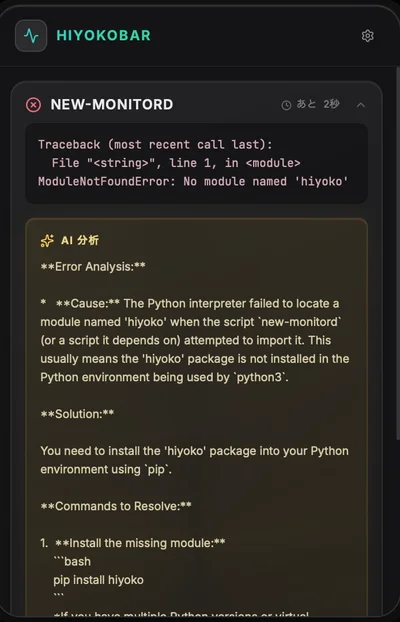
The new macOS menu bar app HiyokoBar integrates Gemini AI to automatically analyze script errors without manual log copying. This innovation saves engineers time by delivering concise diagnoses directly in the menu bar, eliminating context switching. With secure API key storage and a sleek golden AI Insight panel, HiyokoBar turns error monitoring into a seamless experience. The app is now available and gaining attention on Product Hunt.
-
AI Drives UK Datacenters Beyond London

AI workloads are pushing Britain's datacenter expansion away from London due to power shortages and planning limits. Over 80% of the UK's datacenter capacity is around London, but areas like West London are hitting saturation with limited land and grid capacity. The UK government is promoting AI Growth Zones with energy discounts to encourage operators to move to regions like Scotland and northern England, where renewable power is abundant. This shift aims to balance power demands and support AI growth nationwide, even as some projects like OpenAI's Stargate face delays due to high energy costs.
-
Google Unveils Gemini CLI Subagents

Google has launched subagents in Gemini CLI, enabling developers to delegate complex tasks to specialized AI agents working alongside a main session. This innovation allows parallel task execution and reduces context overload, streamlining workflows and boosting performance. Developers can customize subagents with YAML configurations, enhancing control and collaboration. While promising, early feedback points to needed improvements in stability and user experience before widespread adoption.
-
Why AI Projects Stall After Demos

Many AI initiatives hit a wall after impressive demos because real-world conditions expose gaps that demos hide. According to The Hacker News, challenges like messy data, latency, edge cases, and integration issues cause deployments to falter. Governance hurdles around privacy and compliance further stall progress. Teams succeeding in AI deployment test with real data, integrate deeply, and enforce clear policies early on. The future of AI adoption depends on bridging the gap between demo shine and operational reality.
-
Google, Marvell Eye Custom AI Chips

Google is in talks with Marvell Technology to develop two new AI chips focused on inference workloads, aiming to diversify beyond its main partner Broadcom. The chips include a memory processing unit and a new TPU optimized for running AI models efficiently. This move reflects Google's strategy to reduce reliance on a single supplier amid booming AI demand, with no contract signed yet but clear intentions to expand its custom silicon supply chain.
-
AI-Driven Hack Hits Vercel Cloud

Vercel, a popular cloud platform, suffered a sophisticated breach powered by AI tools, compromising some customer credentials. The attack began through a third-party AI tool, allowing hackers to access internal systems with alarming speed and precision. This incident raises urgent concerns about the security of AI integrations and supply chain vulnerabilities in cloud services. Customers, especially in crypto, are urged to rotate credentials immediately as Vercel ramps up defenses and investigates further.
-
Siemens Deploys AI Humanoid in Factory
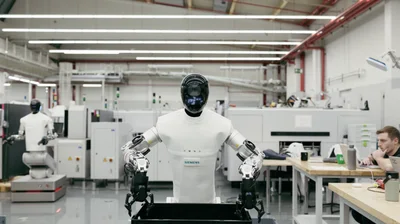
Siemens, in collaboration with Nvidia and UK startup Humanoid, has successfully integrated the AI-powered HMND 01 Alpha robot into live logistics at its Erlangen plant. The humanoid robot autonomously handled over 60 tote moves per hour with a 90%+ success rate during an eight-hour shift, marking a major step for factory automation. This deployment, running alongside human workers and other systems, sets a new standard for real-world industrial AI integration. Siemens plans to use this 'factory-grade model' as a blueprint for future humanoid robot rollouts.
-
AI Token Quotas Inflate Creative Costs

The creative industries are grappling with a surge in AI token quotas, a billing method that counts tokens—units of AI input and output—to charge users. This system, while simple, fails to measure actual productive work, leading to inflated costs and inefficiencies dubbed Token Incremental Burn Syndrome (TIBS). As AI vendors push subscription models locking in users, concerns grow about long-term value and the risk of deskilling human creators. The future hinges on finding better metrics or facing entrenched AI monopolies that dictate creative workflows.
-
AI Struggles with Africa's Language Diversity

Africa's 2,000+ languages pose a massive challenge for AI content moderation, which currently supports fewer than 20. TikTok's Kenya hub reveals how moderators like Bereket Tsegay struggle to understand videos in unfamiliar tongues, leading to inconsistent removals and overlooked harmful content. This linguistic gap sidelines creators and fuels misinformation, while platforms face growing legal pressure under the EU AI Act and Digital Services Act. Efforts by groups like AfricaNLP aim to build better tools, but widespread coverage remains a distant goal.
-
China Narrows AI Gap Despite Lower Spending

The 2026 Stanford AI Index reveals China has nearly closed the AI performance gap with the US, now just 2.7%, down from over 17% last year, despite spending 23 times less on private AI investment. China leads in patents, publications, robotics, and energy infrastructure, while US AI talent migration has plummeted 89% since 2017. This shift challenges assumptions about US AI dominance and raises questions about the sustainability of investment-driven leadership as China’s AI capabilities rapidly advance.