Firefox has introduced a new WebUSB extension that enables direct communication between the browser and USB devices. This functionality requires both installing the browser extension and a native stub program on the user's computer, supporting macOS, Linux, and Windows platforms. The move enhances device interaction capabilities within Firefox, aligning it with modern web standards. Users can expect ongoing improvements as the extension matures and gains wider adoption.
Dev & Open Source
Firefox Adds WebUSB Support
Sources (1)
More from Dev & Open Source
-
Mastering ML Pipeline Patents Fast
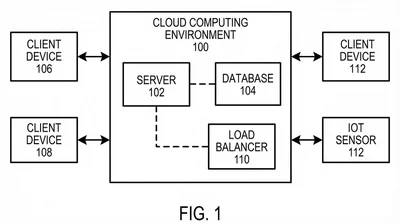
Software engineers often face hurdles when patenting machine learning pipelines due to strict USPTO flowchart requirements. The key is understanding that internal diagrams won't cut it; patent drawings must be black-and-white, formally structured, and precisely numbered to meet legal standards. Emerging AI tools like PatentFig AI now streamline this process by generating compliant flowcharts from plain English descriptions, drastically cutting revision times. This shift empowers engineers to protect innovations efficiently and adapt filings quickly, marking a new era in software patenting workflows.
-
Firefox 150 Unveils Smart Tabs and PDF Tools

Firefox 150 launches with powerful new features including an improved Split View that lets users open links directly side-by-side and reverse tab order. Multi-tab sharing now allows copying multiple URLs at once, streamlining workflows. The built-in PDF editor gains page reordering, copying, and exporting capabilities, enhancing document handling. Linux users benefit from a native emoji picker accessible via shortcut, while security tightens with mandatory local network access permissions. This update marks a significant step in browser versatility and privacy, with more developer tools and instant conversions in the address bar.
-
Creusot 0.11.0 Triumphs at VerifyThis

The Creusot team clinched the Best Overall Team award at the 2026 VerifyThis program verification competition with their latest release, Creusot 0.11.0. This Rust verification tool impressed judges by verifying programs exactly as specified, without simplifications, showcasing its robustness and precision. The release also introduces improvements like explicit binder naming in postconditions and better iterator handling for logic types. Following this success, the team is gearing up for more major features in the next update.
-
tRPC Outshines Apollo Federation

tRPC has emerged as a powerful alternative to Apollo Federation by delivering end-to-end type safety without the overhead of schema definitions, slashing API bugs by 89%. Companies migrating to tRPC report dramatic performance improvements, including a 75% faster cold start and 80% smaller client bundles, which significantly enhance user experience. The streamlined development process eliminates complex schema synchronization and reduces CI/CD pipeline times by 40%. As adoption grows, tRPC is poised to reshape how scalable, type-safe APIs are built in production environments.
-
Casilda 1.2.4 Boosts Wayland Support
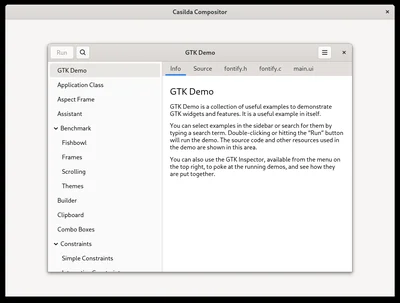
The Casilda Wayland compositor widget for Gtk 4 has been updated to version 1.2.4, introducing fractional scaling, keyboard layout forwarding, and improved popup positioning. These enhancements fix key issues like blurry rendering at fractional scales and cursor size mismatches, making Casilda feel like a full-fledged compositor. With fixes for texture leaks and better Vulkan driver support, this release marks a significant step forward. Developers can access the source on GNOME GitLab and join the community chat for support.
-
Google ADK for Java Hits 1.0 Milestone

Google has officially released version 1.0 of its Agent Development Kit (ADK) for Java, marking a major step forward in AI agent development. This release introduces a new app and plugin architecture, support for external tools like Google Maps and web content summarization, and advanced features such as human-in-the-loop workflows and event compaction to optimize context management. The ADK also supports cross-agent communication via the Agent2Agent protocol, enhancing collaboration across platforms. Developers can now build more robust, scalable AI agents in Java, with the toolkit available on GitHub for immediate use.
-
bpfvet Boosts eBPF Portability Checks
The new tool bpfvet analyzes compiled eBPF object files to determine their minimum kernel version requirements, helper dependencies, map usage, and portability issues. It supports multiple languages producing BPF ELF files and flags direct kernel struct accesses lacking CO-RE relocations, enhancing cross-kernel compatibility. With pre-built binaries for all platforms and JSON output for CI pipelines, bpfvet is set to streamline eBPF development and deployment. Developers can now ensure their eBPF programs run smoothly across diverse Linux kernels.
-
Frontend Complexity: Essential or Excess?

The debate over modern frontend complexity has intensified as developers question whether today's intricate toolchains and frameworks are truly necessary or just accidental baggage. Once simple static sites evolved through AJAX and SPA frameworks like React and Angular, creating a gulf between source code and browser runtime that demands complex build tools. This complexity challenges developers but also enables rich, interactive experiences users expect. The next step may be rethinking frontend architecture to simplify development while preserving functionality.
-
Proxy-Pointer RAG Hits 100% Accuracy Without Vectors

Proxy-Pointer RAG has achieved a groundbreaking 100% accuracy on 66 complex financial queries across four major 10-K filings, including AMD and Boeing, without relying on traditional vector databases. By leveraging document structure through hierarchical section headings and a novel two-stage retrieval process, it outperforms standard vector-based retrieval systems that often fragment context. This approach enables precise, scalable, and cost-effective document retrieval, promising a new era for enterprise AI applications. The full pipeline is now open-source, inviting further innovation and adoption.