Organizations rushing to implement AI chatbots often skip thorough risk assessments, leading to costly failures. A recent Harvard Kennedy School report by Mark Fagan and colleagues highlights the necessity of combining AI risk frameworks with traditional cost-benefit analyses. By enumerating, assessing, and quantifying AI risks, decision-makers can better navigate potential pitfalls and make informed choices. This approach is vital as AI adoption accelerates across public and private sectors.
AI & Machine Learning
AI Risk Calculus: Key to Smart Chatbot Adoption

More from AI & Machine Learning
-
Meta's Bold AI Talent Heist Unfolds

Meta has executed a high-stakes talent raid by hiring five founding members from Mira Murati's AI startup, Thinking Machines Lab, after a rejected $1 billion acquisition offer. This aggressive move, including a $1.5 billion deal for co-founder Andrew Tulloch, highlights the fierce competition in the AI sector. Meta's reshaped AI division, led by Alexandr Wang, aims to leap ahead with new models like Muse Spark. The escalating talent war signals a pivotal moment in AI innovation and corporate strategy.
-
Clarifai Deletes 3M OkCupid Photos Amid Privacy Row

Clarifai, an AI facial-recognition firm, has deleted around 3 million OkCupid user photos and the associated models after the FTC's privacy settlement with OkCupid. The data transfer, dating back to 2014, violated OkCupid's own privacy policy as users were unaware their photos were shared. While Clarifai faced no penalties, the case spotlights ongoing concerns about AI ethics and user privacy. The FTC's limited enforcement raises questions about future protections for personal data in AI training.
-
NY Proposes AI Dividend to Offset Job Losses

New York lawmaker Alex Bores has unveiled a bold plan called the AI Dividend to counteract potential job losses caused by AI automation. The proposal includes direct payments to Americans funded by taxes on AI use and equity stakes in AI firms, aiming to support displaced workers and invest in retraining programs. This initiative responds to concerns over thousands of jobs lost monthly to AI, with Bores pushing the plan as part of his congressional campaign. The next steps hinge on legislative support and the success of Bores' run for office.
-
Amazon Pumps $5B Into Anthropic AI
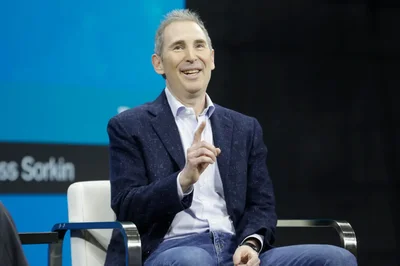
Amazon has invested an additional $5 billion into Anthropic, boosting its total stake to $13 billion. In return, Anthropic commits to spending over $100 billion on AWS cloud services in the next decade, leveraging Amazon’s cutting-edge Trainium AI chips. This deal mirrors Amazon’s recent massive investment in OpenAI, underscoring its strategy to dominate AI infrastructure. Industry watchers anticipate Anthropic may soon announce a new funding round valuing it near $800 billion.
-
Semrush Unveils AI Brand Visibility Metric
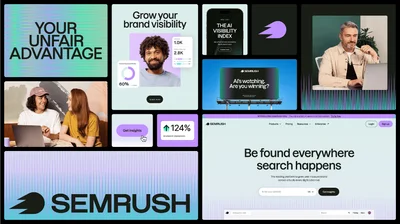
Semrush has introduced its Brand Visibility Framework featuring 'Agentic Search Optimisation' to measure how brands appear in AI-generated search results, traditional search, and autonomous AI agents. This comes amid a 61% drop in organic click-through rates where AI Overviews appear and reveals that 62% of brands remain invisible to generative AI. With AI product revenue soaring 850% to $38 million ARR, Semrush positions itself as a key player in the evolving AI search landscape, just as its $1.9 billion acquisition by Adobe nears completion. The framework aims to redefine brand discovery in an AI-driven world, offering marketers new tools to navigate this shift.
-
LinkedIn's AI Memory Breakthrough
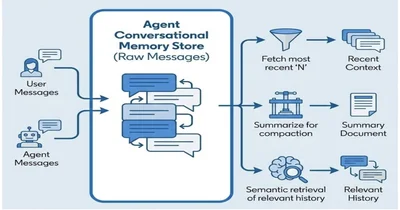
LinkedIn has unveiled its Cognitive Memory Agent (CMA), a game-changing memory system designed to give AI agents persistent, context-aware capabilities. This innovation tackles the stateless nature of large language models by enabling AI to remember and adapt across sessions, enhancing personalization and efficiency in applications like its Hiring Assistant. By layering episodic, semantic, and procedural memory, CMA supports continuous learning and multi-agent coordination, marking a shift toward truly stateful AI systems. The next step involves refining memory management to balance relevance and system performance at scale.
-
LinkedIn's AI Gets Smarter with Memory
LinkedIn has launched its Cognitive Memory Agent (CMA), a breakthrough AI system that remembers and adapts across sessions, overcoming the stateless limits of traditional language models. This memory-driven approach powers smarter tools like the Hiring Assistant by maintaining context and personalizing interactions over time. Engineers highlight CMA's layered memory architecture as key to enabling continuous, coordinated AI workflows. As AI shifts toward persistent memory, LinkedIn's innovation signals a new era for enterprise AI applications.
-
Anthropic’s Mythos Fuels Cyberattack Surge

Security experts warn that Anthropic's new Mythos AI model could supercharge cyberattacks, as AI-enabled breaches jumped 89% in 2025. The average time hackers take to act after breaching systems dropped to just 29 minutes, highlighting a dangerous acceleration. Concerns grow that Mythos might uncover more vulnerabilities than companies can handle, raising alarms about AI agents autonomously exploiting systems. While no perfect defense exists yet, some experts remain hopeful AI can eventually patch historic security flaws and boost global cybersecurity.
-
Cloudflare's AI Stack Powers 93% R&D
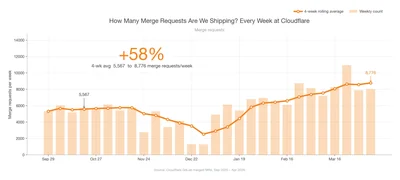
Cloudflare has integrated AI deeply into its engineering workflow, with 93% of its R&D team using AI coding tools built on its own platform. Over the past month, more than 3,600 internal users made nearly 48 million AI requests, leveraging products like AI Gateway and Workers AI to boost developer productivity. This internal AI stack, developed by a dedicated tiger team, not only accelerates code review and onboarding but also runs on the same infrastructure Cloudflare offers publicly. The company plans to continue enhancing these tools, driving further innovation across its engineering teams.