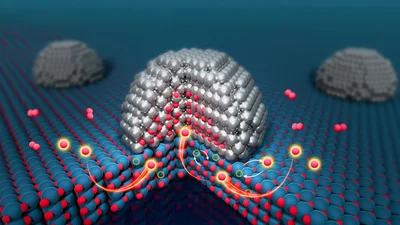
A breakthrough by Prof. Tao Zhang, Prof. Yanqiang Huang, and their team at the Dalian Institute of Chemical Physics has directly observed oxygen moving inside catalysts, not just on their surfaces. Using advanced electron microscopy, they tracked oxygen spillover within Ru/rutile-TiO2 catalysts, revealing a new pathway that could revolutionize catalyst design. This discovery opens the door to harnessing the catalyst bulk for chemical reactions, promising more efficient and controllable catalytic processes. Researchers now aim to develop practical catalysts exploiting this inner oxygen flow.
Science
Catalysts' Hidden Oxygen Flow Unveiled
Sources (1)
More from Science
-
Bees Master Numbers Up to Six
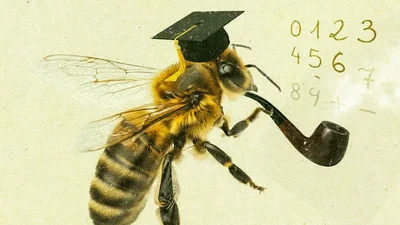
New research led by Monash University reveals that European honeybees can comprehend numbers up to six, grasp the concept of zero, and understand 'greater than' and 'less than' relationships. This challenges previous assumptions that bees rely solely on visual cues, highlighting their unique numerical cognition despite having tiny brains. The findings open new avenues for studying the evolution of intelligence across species and raise profound questions about the nature of cognition in humans versus insects.
-
Curiosity Uncovers Mars' Organic Secrets
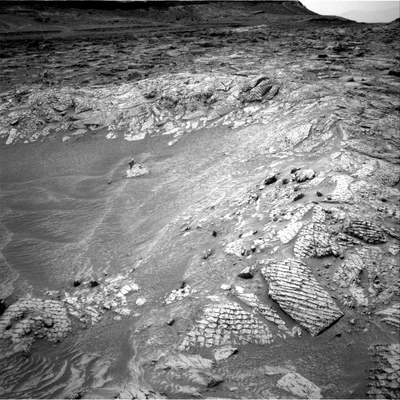
NASA's Curiosity rover has discovered the most diverse set of organic molecules ever found on Mars, including seven never-before-seen compounds. These molecules, found in a 3.5-billion-year-old rock sample nicknamed Mary Anning 3, suggest that ancient Mars had the chemistry to support life. While it's unclear if these organics are biological or geological in origin, the findings boost hopes for past habitability and guide future missions searching for life.
-
Physicists Reverse Quantum Time Arrow
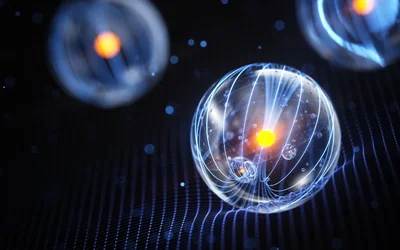
Physicists led by Luis Pedro García-Pintos at Los Alamos National Laboratory have demonstrated theoretically how the quantum arrow of time can be reversed, effectively making events flow backward at the quantum scale. Published in Physical Review X, this breakthrough could revolutionize quantum computing by preventing information loss and combating decoherence. While experimental challenges remain, especially in perfecting quantum measurements, this discovery opens the door to new quantum technologies and energy applications.
-
Neanderthal Toddlers Grew Faster Than Humans
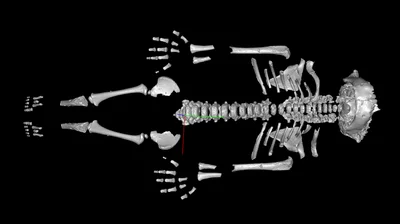
New research on the Neanderthal child skeleton Amud 7, found in Israel, reveals that Neanderthal toddlers grew faster than modern human infants, likely as an adaptation to harsh environments. While their teeth development matched a 6-month-old human, their bones resembled those of a 14-month-old, indicating accelerated early growth. This discovery sheds light on distinct evolutionary strategies between Neanderthals and Homo sapiens. Scientists now aim to study more Neanderthal infants to confirm if this rapid growth was widespread or ecological.
-
Trees Glow Electrically During Storms
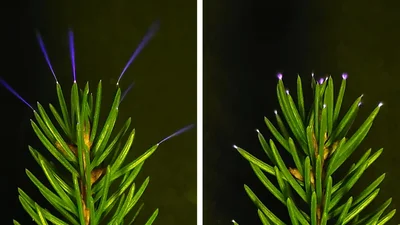
Researchers from Penn State have, for the first time, captured trees emitting a faint electrical glow known as corona discharge during thunderstorms. This phenomenon, observed on sweetgum and loblolly pine trees in North Carolina, reveals tiny bursts of electricity at leaf tips that produce ultraviolet light and play a role in atmospheric chemistry by generating hydroxyl radicals. The discovery confirms decades-old theories and opens new avenues for understanding forest-atmosphere interactions and air quality. Scientists now aim to explore how these electrical events affect tree health and ecosystem dynamics.
-
New Matter State Found Inside Ice Giants
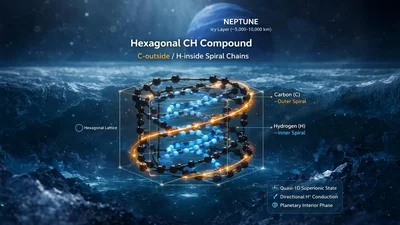
Scientists from Carnegie, including Cong Liu and Ronald Cohen, have discovered a bizarre new state of matter inside Uranus and Neptune. Their simulations reveal a quasi-one-dimensional superionic phase of carbon hydride under extreme pressures and temperatures, where hydrogen atoms spiral through a carbon lattice. This discovery could reshape our understanding of how these planets conduct heat and electricity, influencing their unique magnetic fields. Next steps include further modeling and experimental verification to explore implications for planetary science and materials engineering.
-
Einstein Sculpted in Crystal by Light
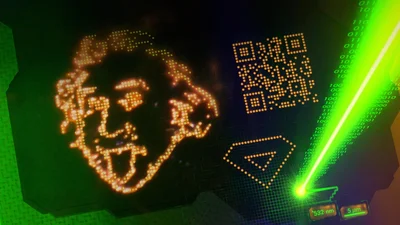
Scientists at XPANCEO, led by Nobel Laureate Prof. Konstantin Novoselov, have used simple continuous-wave light to permanently sculpt a microscopic portrait of Albert Einstein onto an arsenic trisulfide crystal. This breakthrough leverages the crystal's exceptional photorefractive properties, allowing nanoscale optical patterns with huge refractive index changes, surpassing traditional materials. The technique promises advances in photonics, enabling new optical devices like smart contact lenses and secure anti-counterfeiting measures. Researchers aim to refine this light-driven method for next-gen optical technologies.
-
Quantum Chaos Cracked in 2D Growth
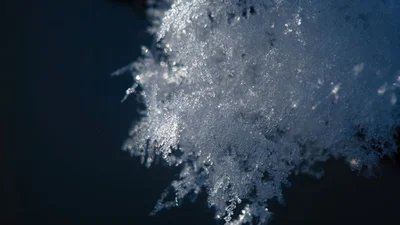
Scientists at the University of Würzburg have finally confirmed that chaotic growth in two-dimensional quantum systems follows the Kardar–Parisi–Zhang (KPZ) equation, solving a 40-year-old physics puzzle. Using a gallium arsenide semiconductor cooled near absolute zero, they tracked polariton growth patterns that matched KPZ predictions. This breakthrough opens new doors for modeling complex, non-equilibrium processes in nature. Next, researchers aim to apply these insights to other quantum and material systems.
-
Curiosity Uncovers Mars' Organic Secrets
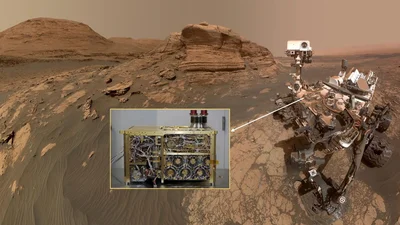
NASA's Curiosity rover has detected over 20 organic molecules in 3.5-billion-year-old clay-rich sandstones in Gale crater, marking a breakthrough in extraterrestrial chemistry. Using its Sample Analysis at Mars (SAM) instrument and a novel TMAH chemical experiment, scientists identified complex macromolecular carbon that could be linked to ancient life or geological processes. This discovery, led by Amy Williams, opens new avenues for future missions like ESA's Rosalind Franklin rover and NASA's Dragonfly to search for biosignatures on Mars and beyond.