The Hubble Space Telescope has captured a breathtaking image of the spiral galaxy M51, revealing intricate details of star-forming regions hidden within clouds of gas and dust. This breakthrough helps astronomers better understand the complex process of star birth across the universe. With complementary data from the James Webb Telescope and ALMA, scientists are poised to unlock even more cosmic secrets. Future observations promise deeper insights into galaxy evolution and star formation.
Space & Exploration
Hubble Unveils Stunning Spiral Galaxy
Sources (3)
More from Space & Exploration
-
SKA’s Data Deluge: 700PB Annually
 research →
The Square Kilometre Array (SKA) radio telescope will generate a staggering 700 petabytes of data per year across two continents, posing immense challenges for data routing and processing. With up to 130,816 baselines in SKA-Low, the computational demands scale quadratically, pushing the limits of current infrastructure. This massive data flow requires innovative solutions in distributed signal synthesis and correlator design. The coming years will be critical to develop and deploy systems capable of handling this unprecedented data volume.
-
Proba-3 Unveils Swift Solar Wind Secrets
 research →
Since July 2025, ESA’s Proba-3 mission has generated 57 artificial solar eclipses, capturing over 250 hours of high-resolution footage of the sun’s corona—equivalent to thousands of Earth-based eclipse observations. This unprecedented data reveals surprisingly rapid solar wind speeds in the inner corona, deepening our understanding of solar dynamics. The findings pave the way for improved space weather forecasting and future solar research missions.
-
Amazon Poised to Acquire Globalstar
 research →
Amazon is closing in on a deal to buy satellite operator Globalstar, aiming to challenge Elon Musk’s Starlink dominance. This move would mark a significant leap in Amazon’s satellite ambitions, potentially reshaping the space-based internet market. Industry watchers expect an official announcement soon, signaling intensified competition in global satellite communications.
-
NASA Maps Night Lights, Reveals Energy Shifts
 research →
NASA's latest satellite imagery unveils dramatic changes in global night lights over the past decade, highlighting intense flaring in US oil and gas fields and shifts driven by rural electrification and energy conservation. These insights not only reshape our understanding of energy use worldwide but also bolster national security efforts, says Miguel Román of NASA Goddard. As the world’s energy landscape evolves, these night-light maps will be crucial for tracking future trends and volatility.
-
Senate Probes Satellite Internet License Delay
 research →
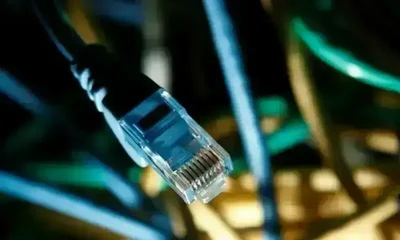
Senator Sarmad Ali has raised concerns in Pakistan's Senate over the prolonged delay in issuing licences for satellite-based internet services. This hold-up is stalling at least five companies eager to enter the Pakistani market, with the Pakistan Telecommunication Authority nearly done but awaiting clearance from the Pakistan Space Activities Regulatory Board. The senator has called on the federal IT minister to explain the reasons behind the delay and provide a timeline for licence issuance. The debate highlights growing pressure to expand internet access via satellite technology in Pakistan.
-
Supermassive Black Holes Set to Collide
 research →
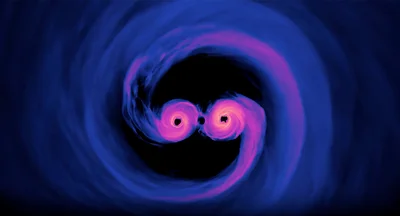
Astronomers at the Max Planck Institute have identified a rare pair of supermassive black holes locked in a deadly cosmic dance, destined to collide. This discovery sheds light on how these giants grow by merging with others, a process central to galaxy evolution. The findings, published in Monthly Notices of the Royal Astronomical Society, open new avenues for studying gravitational waves and black hole dynamics. Scientists now aim to monitor this system closely to understand the final stages of such colossal mergers.
-
Starship V3 Launch Delayed Again
 research →
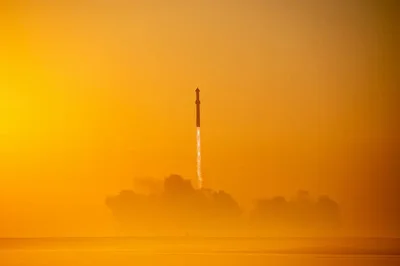
SpaceX's Starship V3, originally slated for a maiden flight years ago, faces yet another delay as 2026 unfolds without the rocket reaching orbit. This setback threatens the timeline for NASA's Artemis III mission, which depends on Starship for lunar landing. With SpaceX's IPO looming, the company is under pressure to deliver a breakthrough soon. Elon Musk has announced a tentative May launch, but questions remain whether V3 can revive the troubled program in time.
-
James Webb Maps Alien Earth Twins
 research →
An international team including University of Bern and University of Geneva has, for the first time, mapped the climate of rocky exoplanets similar in mass to Earth using the James Webb Space Telescope. This breakthrough offers unprecedented insight into the atmospheres of distant worlds, bridging the gap between observation and climate modeling. The findings open new pathways for studying potentially habitable planets beyond our solar system.
-
Asteroid Apophis to Flyby Earth in 2029
 research →
Asteroid Apophis, a near-Earth object, will make an exceptionally close flyby on April 13, 2029, passing just 32,000 kilometers from Earth—closer than many satellites. This rare cosmic event offers a unique chance for scientific study and skywatchers worldwide. Russia’s Skobeltsyn Institute plans to launch CubeSats or small probes to inspect and possibly land on Apophis, aiming to collect surface samples. The mission could deepen our understanding of asteroid composition and planetary defense strategies. Preparations are underway for this once-in-a-lifetime encounter.
-
Microscopic Worms Head to ISS
research →
British scientists have sent a crew of microscopic worms to the International Space Station in a groundbreaking experiment. This mission aims to uncover vital insights into the effects of long-term space travel on living organisms, a key step toward future moon missions and deep space exploration. Researchers hope the findings will pave the way for safer, more sustainable human spaceflight. The experiment's results are eagerly awaited as preparations for lunar expeditions accelerate.
-
Astronomers Locate Universe’s Missing Hydrogen
 research →
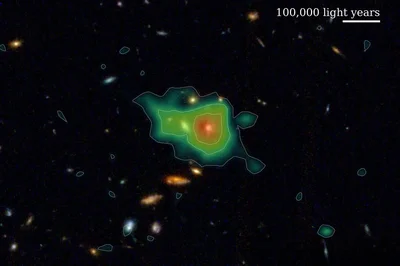
Astronomers have identified the long-sought 'missing' hydrogen that makes up a significant portion of the universe's ordinary matter. This discovery resolves a decades-old cosmic mystery about where much of the universe’s hydrogen had disappeared. Understanding this hydrogen’s location is crucial for models of galaxy formation and cosmic evolution. Researchers now plan to study this hydrogen in greater detail to unlock more secrets of the cosmos.
-
Musk vs Bezos: Moon Lander Showdown
 research →
The billionaire space race intensifies as Elon Musk's SpaceX and Jeff Bezos' Blue Origin prepare to compete in a high-stakes contest to secure NASA's next lunar landing contract. Set for the Artemis III mission, this 250-mile-high challenge will decide which private company will make history by landing humans on the moon first in over 50 years. The winner will not only claim a lucrative contract but also a monumental place in space exploration legacy. All eyes are on NASA's decision next year.
-
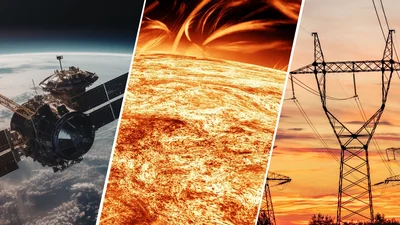
Solar Storm Threat Could Cripple Tech
 research →
A new report warns that a severe solar storm could disrupt satellites, GPS, and power grids, posing a major risk to modern technology. As our reliance on space-based systems grows, understanding and forecasting solar activity becomes critical. Scientists emphasize the need for improved space weather monitoring to prevent widespread outages. The next steps involve enhancing early warning systems to protect infrastructure from these unpredictable solar events.