The landscape of microservices design in .NET has transformed with the release of .NET 10, C# 14, and Microsoft's new Aspire framework. These tools empower developers to build resilient, scalable distributed systems using proven design patterns. According to a 2025 O'Reilly survey, teams leveraging these patterns see a 43% boost in agility, avoiding pitfalls like the 'distributed monolith.' This guide highlights essential patterns like database-per-service, setting the stage for robust production deployments.
Dev & Open Source
.NET Microservices Patterns Revolutionize 2026

More from Dev & Open Source
-
AI Symptom Screening Goes Browser-Based
 research →
A breakthrough in healthcare tech lets your browser run complex AI symptom screening locally, eliminating privacy risks and server delays. Powered by WebGPU and WebLLM, this zero-latency, privacy-first system processes medical queries entirely on your device. This innovation promises faster, safer self-diagnosis tools without cloud dependency. Developers and patients alike can expect more secure, responsive AI health assistants soon.
-
Tracking GitHub Commits Across Projects
 research →
A developer shares a clever system to track all GitHub commits from multiple side projects in one unified timeline, solving the hassle of hopping between repos. This approach tackles GitHub’s repo-centric limitations, making it easier to monitor activity across personal, freelance, and open source work. The method promises to save time and reduce friction for multitasking developers. Next steps include refining this tool and possibly sharing it with the broader dev community.
-
Microservices: Startup’s Silent Killer
 research →
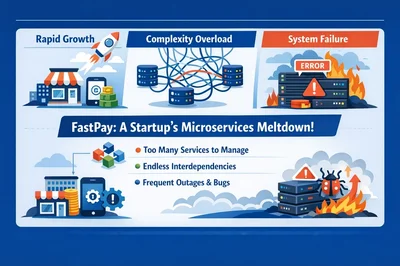
A promising startup’s shift from a monolithic architecture to microservices backfired spectacularly, plunging the team into chaos with complex Kubernetes configs, sluggish service meshes, and broken builds. This cautionary tale highlights how scaling isn’t just about breaking systems apart—without the right resources and expertise, microservices can cripple growth. As AWS’s cell-based approach shows, extreme complexity demands massive engineering firepower and a fitting business model. Startups must rethink before chasing microservices hype or risk the same fate.
-
Mastering OpenClaw Skills Versioning
 research →
Publishing a skill on the OpenClaw Bazaar is just the start. As frameworks evolve and user needs shift, developers must adopt semantic versioning to update skills without breaking existing setups. This approach ensures smooth transitions by clearly communicating changes and handling breaking updates responsibly. With OpenClaw skills following the MAJOR.MINOR.PATCH format, users gain confidence in stability and improvements. Next steps involve embracing these best practices to keep AI agents reliable and user-friendly.
-
Inside the Making of a Personal Blog
 research →
Last week, a new personal blog launched, sparking interest with its unique tech stack and design choices. The author plans a detailed series revealing how the blog was built using Astro, serverless functions on Netlify, and email delivery via Resend. This deep dive offers valuable insights for anyone building content-driven sites without complex infrastructure. Readers can expect a transparent look at decisions and solutions behind the scenes. Stay tuned as the series unfolds technical and design secrets.
-
Apache Software Foundation: Backbone of Open Source
 research →
The Apache Software Foundation (ASF) stands as a crucial guardian of open source projects like Apache Iceberg, Parquet, and Arrow, ensuring their independence from corporate control. Founded in 1995 by a group of developers who created the Apache HTTP Server, ASF provides the legal and operational framework that protects volunteer contributors and secures project longevity. This structure is vital for maintaining the neutrality and sustainability of the tools powering modern data lakehouses. Understanding ASF's role helps users trust the stability of the open source ecosystem. The foundation continues to evolve, supporting new projects and innovations in data technology.
-
Spring Framework 7 and Boot 4 Unveiled
 research →
Spring Framework 7 and Spring Boot 4 bring major improvements, including built-in retry and concurrency controls and faster startup times via modularization. The new HTTP API strategies offer flexibility across diverse server environments, while AI coding tools integration hints at future developer support innovations. Upgrading from Boot 3 to 4 is designed to be smooth, backed by compatibility modules and community tools. Developers should prepare for the final free Boot 3.5 release in June 2026.
-
WebAssembly Revolutionizes Free Browser Tools
 research →
WebAssembly is transforming free browser tools by enabling powerful image compression and editing entirely within your browser, without uploads or accounts. Unlike traditional services like TinyPNG, which require server uploads risking privacy and speed, WebAssembly runs code locally at near-native speeds. This means faster processing, zero data breach risk, and true privacy guarantees. As browser support for WebAssembly grows, expect more advanced, secure tools that keep your files on your device.
-
Why Top Programming Languages Fail Popularity Tests
 research →
A recent debate highlights why technically superior programming languages often fail to gain widespread adoption. The core issue isn't syntax or type systems but factors beyond pure technical merit. A new 'perfectible' language concept aims to evolve its syntax without breaking backward compatibility, a beautiful idea yet likely doomed to fail. This discussion underscores the complex dynamics shaping language popularity beyond just design quality.
-
Linux Kernel 7.0 Launches with Rust Boost
 research →
Linux Kernel 7.0 has officially launched, marking a significant milestone with Rust support moving out of experimental status. This update enhances security by adding ML-DSA post-quantum signatures for module authentication and removes SHA-1 signing. It also improves io_uring filtering and speeds up BTF lookups, continuing the kernel's steady evolution. Users and developers can expect more refined control and performance as the Linux ecosystem integrates these changes.
-
Valve Dev Fixes AMD VRAM Woes on Linux
 research →
Natalie Vock, a Valve Linux developer, has released a fix tackling VRAM mismanagement on AMD GPUs with 8GB or less, improving gaming performance on Linux. The issue caused games to lose VRAM to background apps, degrading gameplay by pushing memory into slower system RAM. Her solution combines kernel patches and utilities, recommended especially for Arch-based distros like CachyOS. This fix promises smoother gaming on lower VRAM AMD cards, marking a significant step forward for Linux gamers. Users can expect wider adoption and integration in upcoming kernel updates.
-
Mastering Terraform Modules at Scale
 research →
As Terraform usage grows, organizing reusable modules becomes critical to avoid version conflicts and duplicated effort. The latest guide from Dev.to highlights best practices like single-responsibility modules, sensible defaults with override options, and choosing between mono-repo or multi-repo strategies. Proper versioning and leveraging module registries ensure teams collaborate smoothly without infrastructure drift. With these patterns, teams can scale infrastructure as code confidently and maintain clarity across projects.
-
Axios Supply Chain Attack Exposes Millions
 research →
In late March 2026, the popular JavaScript library Axios suffered a major supply chain attack when hackers compromised a maintainer’s npm account and pushed malicious versions 1.14.1 and 0.30.4. These versions secretly included a harmful dependency that executed malicious code during installation, putting countless developers and CI systems at risk. This incident highlights the vulnerabilities in open-source package management and raises urgent calls for better security practices. Developers are now urged to audit dependencies carefully and update to safe versions immediately.
-
Amateur Crafts Own Programming Language
 research →
An enthusiast with limited background in compiler design and mathematics shares his journey creating a custom programming language compiler. Without deep expertise in optimization or formal methods, he explores the challenges and motivations behind building a language from scratch. This personal account sheds light on the creative process beyond professional boundaries, inspiring others to experiment with language development. The next step involves refining the compiler and possibly developing a virtual machine to support it.
-
Why Top Coders Stall as Seniors
 research →
In a revealing reflection, a senior developer shares how focusing solely on coding mastery can limit career growth. Working with firms like Helionex and Solectra, they discovered the real demand is for 'Business Translators' who bridge tech and strategy. This shift challenges the myth that coding prowess alone defines seniority. Developers stuck at mid-level should rethink their path to advance.