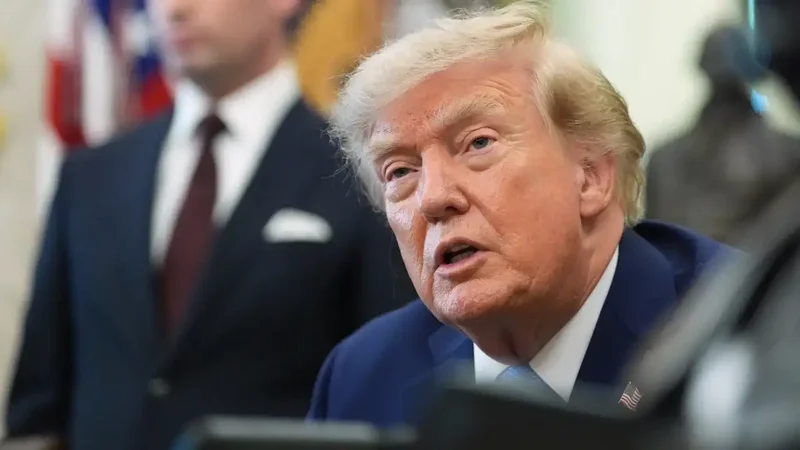
US President Donald Trump on Thursday said that he believes the conflict involving Iran is likely to end soon and claimed that Tehran cannot sustain the war for much longer.
Speaking from the Oval Office in Washington, Trump also expressed optimism about negotiations linked to the Strait of Hormuz and reiterated that the United States would not allow Iran to acquire a nuclear weapon.
âI think the warâs got to end pretty soon. I donât think they can go much longer,â Trump told reporters, suggesting that the fighting had reached a point where Iranâs ability to continue was increasingly limited.
The president said his administration remained deeply involved in discussions surrounding the Strait of Hormuz, a vital route through which a significant share of the worldâs oil supplies passes. While declining to confirm whether a formal agreement was close, he said progress was being made.
âI think we are doing very well. I am involved in the negotiations. I think we are doing fine. It could be soon,â Trump said.
Trump framed the conflict as part of a broader effort to prevent Iran from obtaining a nuclear weapon, warning that such an outcome would have consequences far beyond the Middle East.
âWhen I started the very important excursion into the Islamic Republic of Iran, it was a very important excursion because they canât have a nuclear weapon, otherwise the whole world would get blown up.
Weâre not gonna let that happen. Not only us, not only the Middle East, the whole world would have been. It would have been catastrophic. We had no choice,â he said.
His remarks came amid continued uncertainty over renewed diplomacy between Washington and Tehran following the collapse of a 14-point memorandum of understanding signed in June to halt hostilities.
Iran responded with defiance. Acting Defence Minister Brigadier General Seyed Majid Ibn Reza said the countryâs armed forces were fully prepared to respond to any threat from the United States or Israel.
âEvery day, the signs of the enemyâs declining capabilities become more evident. But our armed forces, backed by the countryâs defence industry, have everything they need to respond to any threat,â he said, according to Iranâs Fars news agency.
Iranâs parliament speaker and chief negotiator Mohammad Bagher Ghalibaf also accused Washington of pursuing what he called âtheatre diplomacyâ.
In a post on X, Ghalibaf wrote, âMassive attack coming⦠wait, never mind, they want to negotiate. Thatâs theatre diplomacy on loop. Using bullying + broken promises + fake news as leverage is a failed strategy. Acknowledge the facts and fulfil your commitments. We donât need more theatre.â
The comments from both sides underscore the deep mistrust that continues to shape US-Iran relations, even as diplomatic channels remain open and discussions over maritime security and regional stability continue behind the scenes.