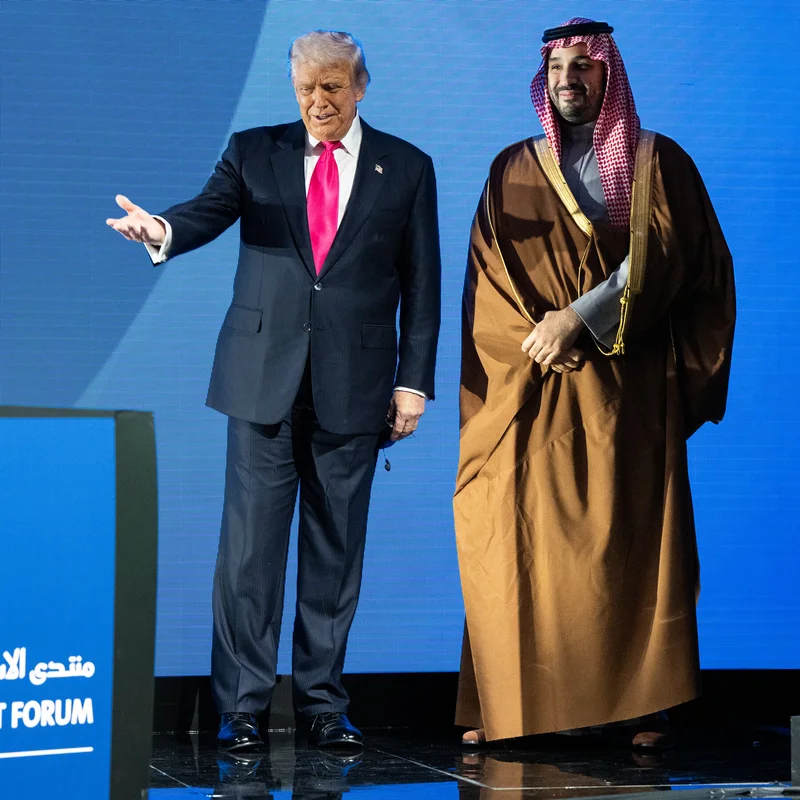
The Trump administration is expected to announce on Wednesday that it has reached an agreement with Saudi Arabia to develop a civilian nuclear program that could lead to the country enriching its own fuel for reactors.
This type of deal is known as a 123 Agreement, pronounced 1-2-3. Such legally binding agreements set out the conditions for nuclear cooperation between the United States and other governments, aimed at preventing the development of nuclear weapons and setting out safety rules. The United States has 26 such agreements with 51 governments and the International Atomic Energy Agency.
Such agreements govern deals for American companies that manufacture and export nuclear material and equipment, and provide a framework for diplomatic negotiations. They also require congressional approval.
Here’s a look at such agreements.
What is a 123 Agreement?
According to the State Department, the agreements are named for Section 123 of the Atomic Energy Act of 1954, which lays out the rules of transfer and storage of nuclear material, though the president can choose to exempt countries from specific requirements.
The guidelines include:
- Countries must ensure the safe transfer of nuclear material and equipment.
- They must adhere to safety standards outlined by the International Atomic Energy Agency.
- Nuclear material and equipment from the United States may not be used for military purposes or in any nuclear explosive devices.
- The United States can demand the return of the material or device if the other country detonates a nuclear explosive device or fails to meet I.A.E.A. safeguards.
- Countries must get approval before enriching or reprocessing any of the nuclear material.
- Countries cannot transfer highly enriched uranium or plutonium without advanced approval from the U.S.
How are such agreements typically reached?
The State Department leads the negotiations for 123 Agreements with interested countries, while the Department of Energy and the Nuclear Regulatory Commission provide technical assistance, according to the State Department.
The State Department then submits an assessment of the country’s request to the president, as well as the director of National Intelligence. It’s then up to the president to sign off on any deal, which must be submitted to Congress for approval.
We are having trouble retrieving the article content.
Please enable JavaScript in your browser settings.
Thank you for your patience while we verify access. If you are in Reader mode please exit and log into your Times account, or subscribe for all of The Times.
Thank you for your patience while we verify access.
Already a subscriber? Log in.
Want all of The Times? Subscribe.