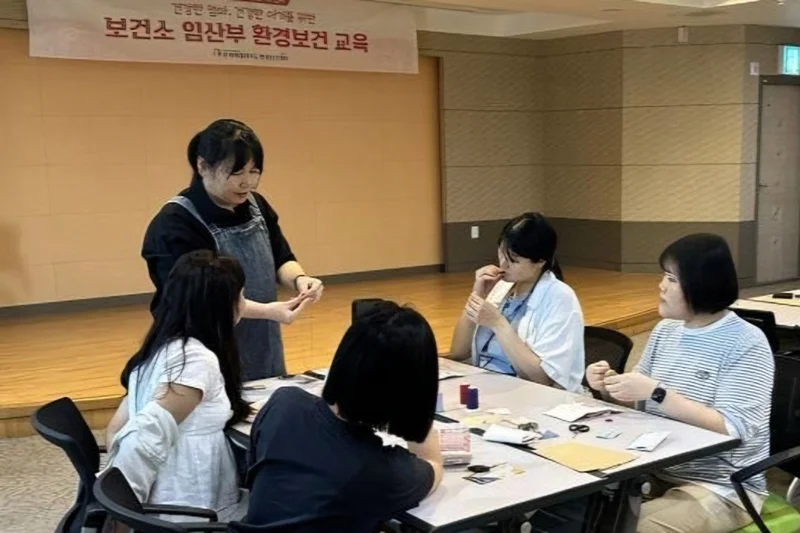
The Environmental Health Center of the Jeonbuk Special Self-Governing Province has provided customized environmental health education to pregnant women and other groups vulnerable to environmental hazards.
Jeonbuk National University said Thursday that the program was organized as part of a project to provide environmental health education and outreach for environmentally vulnerable groups.
The program was aimed at preventing pregnant women from being exposed to environmental hazards in their daily lives and raising awareness of environmental health.
The health center is designated by the Ministry of Climate, Energy and Environment and operated by Jeonbuk National University under a contract with the provincial authorities.
“As pregnant women are particularly vulnerable to environmental hazards, it is important to provide them with accurate environmental health information and support them in adopting healthy practices in their daily lives,” said Kim Yong-hyun, director of the center.
“We will continue to expand customized environmental health education tailored to different stages of life by strengthening cooperation with local public health centers and contribute to creating a healthier living environment for residents of the province,” Kim added.
The university highlighted the significance of the program, which provided field-oriented education in collaboration with maternal and child health programs operated by local public health centers.
The center held three sessions: one at the Gimje City Public Health Center on June 30 and two at the Muju County Health Center and County Hospital on July 29 and Wednesday. About 40 pregnant women participated in the sessions.
According to the university, the education program was designed to take into account the physical and environmental characteristics of each stage of pregnancy.
The program provided pregnant women with essential environmental health information, including the prevention of heat-related illnesses, indoor air quality management and ways to reduce exposure to environmental hazards.
Participants were also given practical tips for preventing and managing environmental health risks that they can apply in their daily lives.
The program also included hands-on activities for participants. In addition to a needle pouch-making activity using upcycled materials, participants took part in meditation and stretching sessions designed to support prenatal care and emotional well-being.
All programs were offered free of charge. They were designed to help pregnant women learn practical ways to protect their environmental health and incorporate these practices into their daily lives.
A postprogram satisfaction survey of participating pregnant women and public health center officials showed high levels of satisfaction with the educational content, lectures and hands-on activities.
Based on the survey findings, the center plans to refine its educational content and offer more systematic and effective customized environmental health education next year.