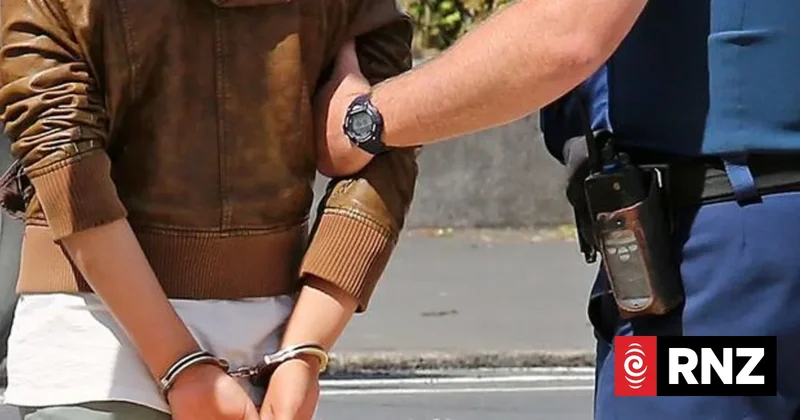
An amendment to the Crimes Act has passed its final reading in Parliament, but is not being welcomed by retailers.
Justice Minister Paul Goldsmith said most of the changes would take effect within a week, including expanded citizen's arrest powers.
This means members of the public could detain someone for any Crimes Act offence at any time of day.
A person making an arrest would be allowed to use restraints "when reasonable," but is also required to contact police and follow their instructions.
The government said it was aimed at cracking down on retail crime and giving security guards more power to hold thieves.
Retail NZ boss discusses new citizen's arrest laws
But Retail NZ chief executive Carolyn Young said the law could do more harm than good.
She said she was concerned that it was not a retail crime prevention tool.
The new law has been passed and was set to be place by next week, she said.
"It allows any individual who believes that there's a crime happening to arrest someone, so the person could be a child, they could be as young as 14 years old, they can be detained and you could use mechanical restraints, in other words you could use handcuffs or something like handcuffs."
That could happen in a range of places under the new law, she said, such as a musical festival, sporting event, a cafe or in a retail space.
The key thing retailers wanted was to keep their staff safe, she said.
"This legislation assumes that business owners and businesses are wanting to intervene physically and get involved with offenders coming in their store."
One example that a retailer had told her recently was where a known male offender produced a hammer to a female staff member after being confronted about stealing stock, she said.
Another member of Retail NZ gave her this example, she said.
"They said what would be expected to occur if all of a sudden there was a situation where a member of the public did an arrest in their store but then the offender had a concealed knife or a weapon which we see a lot of now and they pull a weapon out on someone that's trying to do a citizen's arrest and they get harmed.
"Does that mean that the retail store is at risk, that they're liable for the harm that's caused to a customer even though they didn't want the arrest to occur in their store?"
Retailers want to know how to ensure their staff are safe, she said.
De-escalating a potentially dangerous situation is one of the key principals of retail, she said.
Retail NZ opposed the law at the select committee level, but Young said government was not listening to concerns raised by retailers and police in relation to allowing citizens arrests.
"It's actually putting retail staff in harm's way and you have an obligation under the Health and Safety Act to ensure that your staff are safe and the level of aggression and weapons that we're seeing in store now, if a staff member approached someone offending in their store they are likely to be hurt and we don't want that."
Government and retailers need to be thinking more proactively about how to get good outcomes for everyone, she said.
"How do we ensure we use technology as it continues to move forward and have those sorts of things as part of the solutions that we're looking for, ensuring that we have enough police officers to answer calls."
Police guidance about how retailers should implement the new rules is being drafted but Young said she understood it would only be issued once the bill officially becomes the law which is likely to be some time next week.
"The problem is is that retailers are asking for us to answer a whole lot of questions now, we've gone out to members to give them some broad sense of what they need to do, but we need to see the guidance today so that people can start preparing their staff around what they will or won't do.
"If a retailer wants their staff to do citizens arrest there's certain things they'll have to do to be able to have that to happen, conversely if you don't want your staff to do a citizens arrest you will need to be really clear with them and outline what that process is."
Young said Retail NZ's advice was that staff should not be engaging with violent offenders and they should instead refer back to their deescalation training, to try and get anyone who was agitated or had a weapon out of the store and then to call the police when it was safe to do so and ask for help to come in.