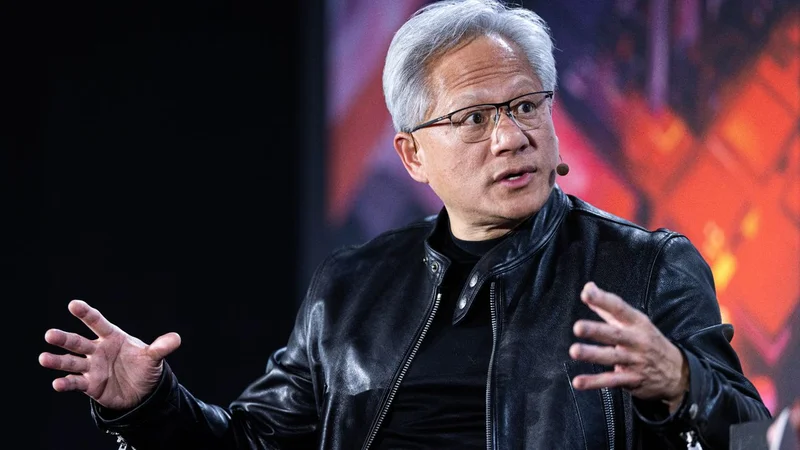
Nvidia CEO Jensen Huang thinks that American companies should be allowed to use Chinese AI models, even as Washington is trying to ban them. When Axios co-founder Mike Allen asked Huang in an interview if Americans companies should be allowed to use Chinese AI models, Huang responded with “absolutely.” The answer comes right after Chinese firm Moonshot AI released a 2.8T open-weight model called Kimi K3, which — although it isn’t as powerful as frontier models like Fable 5 — is comparable to GPT 5.5 and Claude Opus 4.8 while costing just a third of these models.
Go deeper with TH Premium: AI and data centers
(Image credit: Microsoft)
One of the biggest concerns of U.S. leaders have is that these AI models might come with vulnerabilities that the Chinese government can use to attack American interests, but Huang said that this is an incorrect assumption. “There is a misconception that somehow there are backdoors that are somehow connected to China in some way,” said the Nvidia chief. “You download the models, you can fine-tune it, you can enhance it, you can guardrail it as you desire.”
Huang shares the same sentiments about American AI models. Just last month, the U.S. enforced an export restriction on Anthropic’s Mythos and Fable 5, citing security threats — although access was eventually restored after its developer placed a filter to block these tools from identifying software vulnerabilities. OpenAI’s ChatGPT-5.6 received the same treatment, and Washington warned the firm that it should not release its latest model without getting the green light from the government. Huant argues that, instead of restricting access to these powerful models at launch, AI firms should make their models available to all and make them more secure through rapid testing and fixes.
Nvidia's Jensen Huang defends Chinese AI amid Kimi panic - YouTube
But even as he advocated the need for everyone to have access to closed models, Jensen also noted that various industries, such as the sciences and cybersecurity, need open models as well. He claims that these models make AI more secure, as other people can inspect them to look for weaknesses and fix them as required.
“If everything just becomes one single model, one single point of attack, one single source of failure, I think the world is much, much more vulnerable,” Huang said.
As for the market’s negative reaction every time cheaper, open-weight models become available, the Nvidia CEO says that investors misunderstand their impact. Huang said that this happened when DeepSeek arrived for the first time, and it’s happening again with the arrival of Kimi. He says that these open models, which cost less to run, will encourage more people to use AI. So instead of cutting data center demand, these cheaper, more efficient models are actually good for the industry in general because they will drive demand. (And with higher demand, there’s more incentive to build data centers and buy AI GPUs, which is ultimately good for Nvidia.)
Latest Videos From
Follow Tom's Hardware on Google News, or add us as a preferred source, to get our latest news, analysis, \& reviews in your feeds.
Get Tom's Hardware's best news and in-depth reviews, straight to your inbox.