The news circle has been dominated for some time by the visit of Catholic Bishops to President Tinubu to draw the attention of Government to their concerns over the policy direction of the Administration. Speaking to the visit in a television interview, the Archbishop Emeritus of Abuja, John Cardinal Onaiyekan has done Nigeria a good turn by boldly coming out and showing that the President Tinubu’s administration is determined to win the 2027 elections “by all means”. All the indicators are blinking red showing a single-minded determination of the Tinubu Administration to use State resources to undermine the credibility of the electoral process. The problem, according to the Cardinal is that ordinary Nigerians are in distress suffering from the misery and hardship of the harmful policies imposed on the people by President Tinubu.
The response of government has been to launch a campaign of calumny against Onaiyekan. In a statement on Saturday, the Senior Special Assistant to the President on Media and Publicity, Temotope Ajayi, described Onaiyekan’s action as an abuse of privilege. Ajayi said there was something fundamentally inappropriate about Cardinal John Onaiyekan granting a television interview to offer his own account and interpretation of what transpired during the private meeting between the Catholic Bishops’ Conference of Nigeria (CBCN) and President Bola Tinubu. It is strange that in a democracy, visitors to the President are denied the right to complain about his strong disagreement with their analysis. They had gone to see him to articulate a different vision for the country. He had rejected their position. They owed it to Nigerians to explain to them that President Tinubu is determined to stay in power to pursue the same anti-people policies he had been pursuing.
We thank the Catholic Bishops for their candour and commitment to the plight of the Nigerian people. It is clear to all that as the 2027 elections approach, an arsenal of executive, legislative and judicial powers have been mobilised using the abuse of the powers of incumbency to deregister and disrupt opposition parties and politicians. The Electoral Body, INEC, is acting in a partisan and pro-administration manner. The media is under threat. Money and positions are in use to push opposition members into the ruling party.
We must not be prevented from saying the truth that Nigerian democracy is on trial as articulated in a recent Joint Civil Society Press Conference on Protecting Civic Space, Constitutional Freedoms and Democratic Governance by Auwal Rafsanjani and other leaders. They expressed the view that human rights organisations and civil society organisations are gravely concerned by the growing number of restrictive and repressive bills currently before Nigeria’s National Assembly. If enacted, these bills would significantly expand executive control over civic life and further undermine the rights to freedom of expression, peaceful assembly, freedom of association, media freedom, access to information, democratic participation and the rule of law.
| | |
|---|
These legislative proposals are being considered at a time when civic space in Nigeria is experiencing one of its most serious periods of decline since the country’s return to democratic rule in 1999. Since President Bola Ahmed Tinubu assumed office in May 2023, the authorities have increasingly relied on restrictive laws, politically motivated prosecutions, strategic lawsuits, arbitrary arrests, intimidation and judicial harassment against journalists, bloggers, media organisations, human rights defenders, civil society organisations and other individuals peacefully exercising their constitutional rights.
Recent examples include the continuing prosecution of activist and publisher Omoyele Sowore, reprisals against the Socio-Economic Rights and Accountability Project (SERAP), the misuse of the Cybercrimes Act to target journalists and government critics, and repeated attempts to intimidate independent media and civil society organisations. International monitoring has also documented this deterioration. In May 2026, the Committee to Protect Journalists (CPJ) reported 91 cases of journalists being arrested, attacked or otherwise harassed across 13 states and the Federal Capital Territory during the first three years of the current administration.
The timing of these proposals is particularly concerning as Nigeria prepares for the 2027 general elections. Rather than creating an open environment where citizens, journalists, civil society organisations and political actors can participate freely, these measures risk entrenching fear, self-censorship and intolerance of dissent. Independent advocacy, investigative journalism and public scrutiny are not threats to democracy; they are essential safeguards of constitutional governance and accountability.
One of the most concerning Bills is the Foreign Aids (Regulation, Transparency and Disclosure) Bill, 2026 (SB.1034), which would confer sweeping powers on the authorities to monitor, regulate, sanction, suspend and potentially shut down non-governmental organisations, civil society organisations and private entities receiving foreign assistance under the guise of promoting transparency, accountability and the prevention of the misuse of foreign aid.
Civil society also expressed its concerns by legislative proposals seeking to compel social media platforms to establish physical offices in Nigeria or face prohibition from operating in the country. Although presented as regulatory measures, such proposals would substantially increase governmental leverage over digital platforms thus limiting their ability to facilitate public debate, access to information and civic participation.
Conditioning access to Nigeria’s digital market on physical establishment of offices, backed by the threat of prohibition, is neither necessary nor proportionate to any legitimate regulatory objective. Such measures risk facilitating censorship, restricting access to information, discouraging innovation and investment, and encouraging private companies to prioritise political pressure over internationally recognised human rights standards.
Both the Foreign Aids (Regulation, Transparency and Disclosure) Bill and the proposed legislation requiring social media platforms to establish physical offices in Nigeria are incompatible with Nigeria’s constitutional, regional and international human rights obligations. Sections 39 and 40 of the Nigerian Constitution 1999 (as amended) guarantee freedom of expression, peaceful assembly and association, while Section 22 recognises the vital role of the media in holding government accountable.
Nigeria is also bound by the African Charter on Human and Peoples’ Rights, which forms part of Nigerian law through the African Charter on Human and Peoples’ Rights (Ratification and Enforcement) Act. Article 1 requires Nigeria to adopt legislative and other measures to give effect to the rights protected under the Charter, including freedom of expression (Article 9), freedom of association (Article 10), freedom of assembly (Article 11) and participation in public affairs (Article 13).
Nigeria is further bound by the International Covenant on Civil and Political Rights (ICCPR). Articles 19, 21, 22 and 25 protect freedom of expression, peaceful assembly, association and participation in public affairs, while Article 2 requires Nigeria to ensure that domestic laws give full effect to these rights. Under Article 2 of the International Covenant on Economic, Social and Cultural Rights (ICESCR), Nigeria must ensure that its domestic legal framework remains consistent with its treaty obligations.
Any restriction on these rights must satisfy the requirements of legality, legitimate purpose, necessity and proportionality under Articles 19(3), 21 and 22(2) of the ICCPR. The proposed bills fail to meet these standards.
The Foreign Aids Bill is also inconsistent with the United Nations Declaration on Human Rights Defenders. Article 13 recognises the right of everyone, individually and in association with others, to solicit, receive and utilise resources for the peaceful promotion and protection of human rights. Article 3 requires that any regulation of such activities be consistent with the UN Charter and international human rights obligations.
The Administration should immediately withdraw the Foreign Aids (Regulation, Transparency and Disclosure) Bill, 2026 (SB.1034), the Bill requiring social media platforms to establish physical offices in Nigeria, and all other pending bills that unjustifiably restrict civic space, the rights to freedom of expression, association, peaceful assembly, media freedom, access to information and democratic participation. Ensure that all future legislation affecting civil society organisations, digital rights, media freedom or civic participation complies fully with the Nigerian Constitution, the African Charter on Human and Peoples’ Rights, the International Covenant on Civil and Political Rights and other applicable international human rights standards.
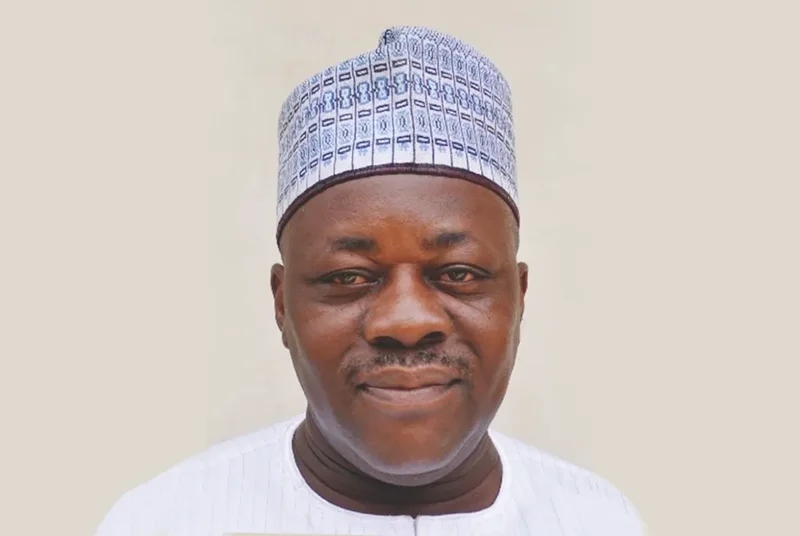
A professor of Political Science and development consultant/expert, Jibrin Ibrahim is a Senior Fellow of the Centre for Democracy and Development, and Chair of the Editorial Board of PREMIUM TIMES.