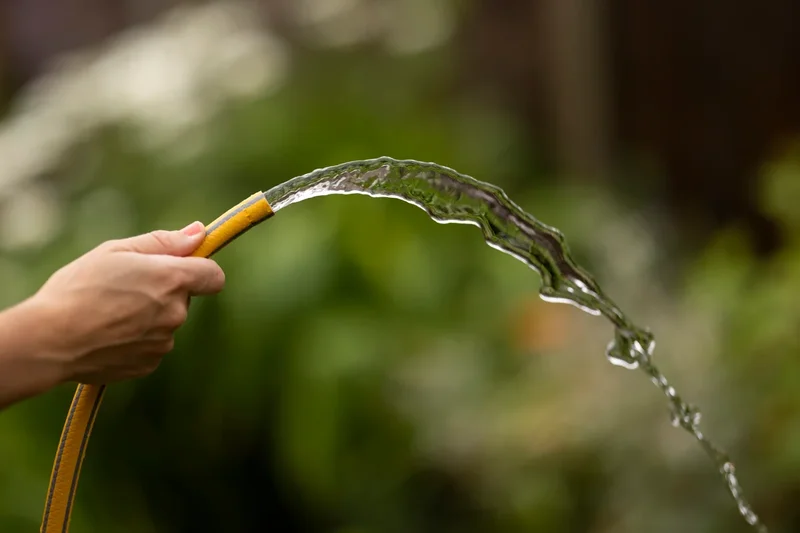
Half of England and parts of Wales are now subject to a hosepipe ban as most of the country is in drought.
South West Water has become the ninth water company to impose water restrictions due to prolonged dry weather that saw the UK record the driest July on record.
The utility firm said that due to below average rainfall and a high demand on supplies, customers in Devon, Cornwall, the Isles of Scilly, parts of Dorset and Somerset should not use hosepipes for watering gardens, washing cars or filling up paddling pools.
The restrictions start from midnight on Saturday, but the water company has urged customers to follow the measures immediately to help protect water supplies.
The temporary ban will not stop residents from using water for drinking, flushing toilets, washing and cooking.
It comes as eight other water companies have already announced a hosepipe ban this summer. Although temporary, there is no official date in place for when these bans will end.
Where are the hosepipe bans?
Nine water companies across England and Wales have imposed hosepipe bans following persistent hot and dry weather.
Affinity Water, Anglian Water, Cambridge Water, Essex & Suffolk Water, South East Water, Southern West Water, Southern Water, Thames Water and Dŵr Cymru Welsh Water are affected by hosepipe bans.
When will the hosepipe bans end?
There is no specific date set for the hosepipe bans to end but water companies have explained that it will be lifted once water sources have recovered back to normal levels.
Southern Water has said it needs enough water in reservoirs, rivers and underground aquifers to meet demand before it can lift the ban.
Anglian Water has also said it needs to ensure “public water supply and the environment are protected” before restrictions are eased.
However, areas will need more than just a few days of rain to bring water back up to normal levels.
“A few days of rainfall won't reverse the effects of many months of hot, dry weather,” Anglian Water explains on its website.
“Our rivers, groundwater and reservoirs need sustained rainfall over a much longer period to recover.
“Any rain is welcome and will help. The sooner water resources recover, the sooner restrictions can be removed,” it added.
But the South East will continue to see little in the way of desperately needed rain, the Met Office has warned.
Met Office science manager Dr Amy Doherty described July as a “truly remarkable month” in the UK’s climate record.
“The combination of record-breaking dryness, exceptional warmth and unprecedented sunshine has delivered one of the most notable summer months in our historical records,” she said.
Why are there hosepipe bans in place?
Back-to-back heatwaves and severely low rainfall has led to official drought conditions being declared and water companies now need to restrict water use.
Almost half of England and the whole of Wales is in drought. Last month, 19 counties across England recorded effectively no rainfall – 1mm or less, Met Office figures show.
England as a whole had just a 10th of the average rainfall for the month, while Wales saw just 9 per cent of the average, with both countries seeing less than half of the rainfall in the previous record dry July in 1911.
June 2026 was the hottest June on record for England, the Met Office has said, with the highest temperature of 38C set in Lingwood, Norfolk, on 26 June. The previous record of 35.6C was set in Southampton in June 1976.
Helen Wakeham, chairwoman of the National Drought Group and director of water at the Environment Agency, said: “Dry weather depletes our water, while the hot conditions mean we use more of it.
“This is a difficult combination, and we are seeing the effects on our farmers, our wildlife, and the amount available for public and business use.
“All sectors are taking action, and we are grateful to the public for following the restrictions, where in place, to make sure there is enough water for everyone this summer.
“We want everyone to stay safe and hydrated during the hot weather but every drop we can save is a drop more for nature and agriculture.”