Recent rumors point to the Google Pixel 11 Pro lineup getting a price hike this year. And that is despite the entry-level models reportedly shipping with less RAM.
Google has a perfectly reasonable explanation for this as well: memory and storage costs have exploded in the last year or so.
But if Google expects people to happily pay $1,300 for a Pixel, it must offer something more compelling than newer hardware and a handful of AI features.
Every phone is getting more expensive this year
And Google's upcoming Pixel phones are no exception
Google has already warned that Pixel prices will go up. The company's vice president of devices and services, Shakil Barkat, blamed a "severe, supplier-driven RAM memory crisis" for this.
The explanation makes sense. Almost every Android phone and consumer device has become more expensive this year.
Even Apple, known for its supply chain management, could not absorb the soaring DRAM and NAND costs forever and significantly raised the prices of its Macs and iPads.
Still, that is Google's problem, not the buyer's.
Leaks suggest the entry prices of the Google Pixel 11 Pro and Pro XL will rise by $100, to $1,099 and $1,299, respectively.
As a consolation, Google will supposedly double the Pixel 11 Pro's base storage to 256GB. But it will also seemingly reduce the RAM from 16GB to 12GB. Only the 512GB storage variant will reportedly get 16GB of RAM.
This would put the upcoming Pixels in a weird spot where they will ship with less memory than their predecessors.
Flagship money raises flagship expectations
Pixel software cannot cover every hardware compromise
The Pixel 11 Pro's higher price tag would be easier to swallow if it delivered an uncompromising flagship experience. That's not the case with Pixels, though.
Despite all the improvements, Google's in-house Tensor chip remains two or three generations behind the best Qualcomm and MediaTek chips in performance and efficiency.
That gap shows up in everyday use, with Pixels failing to deliver the same gaming performance or battery life as the competition.
But then, people don't buy a Pixel for its hardware. They buy it for the software experience.
Pixels feel fast, take excellent photos, and receive new Android features first. Plus, they pack some genuinely useful AI features, like Call Screen, Live Translate, and deep Gemini integration.
Yet, that alone will not be enough to make up for the Pixel 11 Pro's higher price and reduced RAM.
Still, Google has something that most smaller phone manufacturers do not: an enormous ecosystem. It can use that ecosystem to make the Pixel's higher price easier to justify.
Google already owns the answer
A free AI trial alone will not cut it
Google bundles a year of Google AI Pro with its Pro Pixel phones.
It is one of the better-value AI subscriptions on the market, combining higher Gemini usage limits and cloud storage with benefits such as YouTube Premium Lite, Google Home Premium, and Google Health Premium.
While this sounds valuable, another temporary AI subscription won't cut it. Not everyone cares about Gemini, while others already pay for Google One. A trial also means another recurring bill after the free year ends.
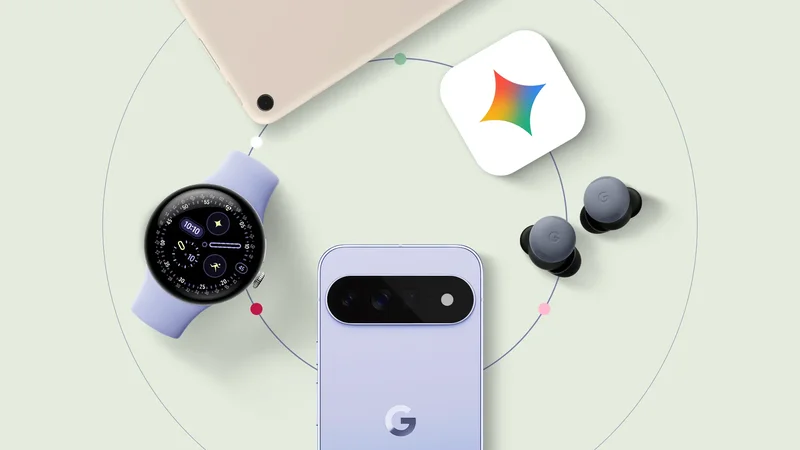
Google can solve this problem by offering a proper device bundle. Instead of relying on Google Store credit and temporary AI subscriptions, it should sell a Pixel 11 Pro XL bundle with the Google Pixel Watch 5 or Google Pixel Buds Pro 2 at a discounted price.
The discount must be substantial enough to make the bundle feel special.
For example, anyone buying a Pixel 11 Pro XL could add the Pixel Watch 5 for $200. Similarly, including the Pixel Buds Pro 2 with the Pixel 11 Pro for little or no additional cost would make the phone a more attractive proposition.
While this may sound generous, this move could help Google in the long term. It would have to sacrifice some accessory revenue in the short term initially. But it would pull more customers into the Pixel ecosystem.
Someone who buys a Pixel Watch will also start using Google Health, Wallet, Maps, and Home. Likewise, a Pixel Buds Pro 2 owner is more likely to use Gemini or YouTube Music.
Such tangible benefits will attract more buyers as they can see and use them every day.
This will do a better job of softening any price increase than another temporary subscription or store credit. Plus, it will help Google pull more users into the Pixel ecosystem.
Google must make the extra $100 count
Google cannot control the rising cost of memory and storage chips. But it can do something about the Pixel 11 Pro's higher price tag to make it look more attractive to buyers.
A heavily discounted Pixel Watch or Pixel Buds bundle will be a good way of doing that.
At $1,099 and $1,299, the Pixel 11 Pro and Pixel 11 Pro XL cannot compete on software and AI features alone. If Google wants flagship money, it must make the wider Pixel experience part of the deal.