Iran, Russia seek deeper cultural ties as Kazan added to Cultural Week program
TEHRAN- Iran's ambassador to Russia has announced that the city of Kazan, the capital of Russia's Republic of Tatarstan, has been added to the list of host cities for Iran Cultural Week in Russia, expanding the event beyond Moscow and St. Petersburg.
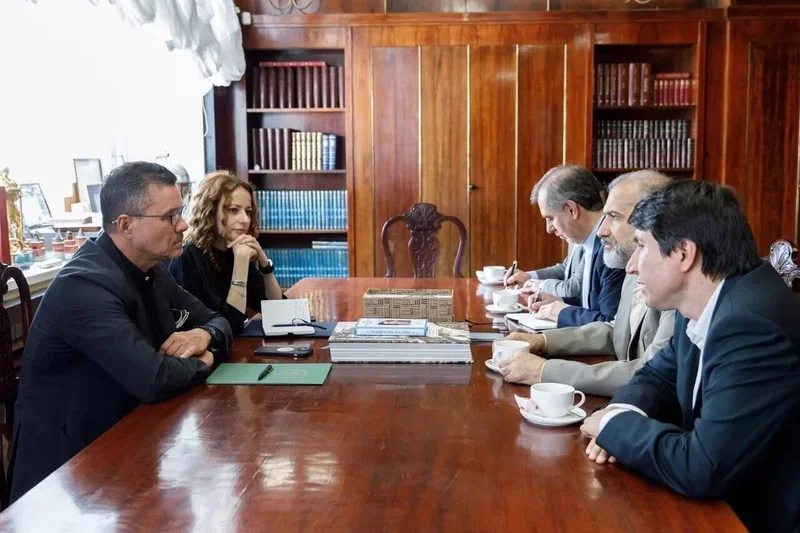
Speaking during a visit to the Russian State Library in Moscow on Thursday, Kazem Jalali said the cultural week, which is scheduled to begin in the near future, will provide an opportunity to deepen dialogue and expand cooperation between the two countries in the fields of culture, libraries, and academic exchange, IRNA reported.
Kazan's inclusion follows earlier plans that named only Moscow and St. Petersburg as hosts of the event. The city was proposed as an additional venue after it was selected as the Cultural Capital of the Islamic World for 2026.
The exact dates of the cultural week have not yet been announced. The event follows the successful staging of Russia Cultural Week in Iran in June 2025.
During the meeting, attended by Iran's Cultural Attaché in Moscow Abdolreza Rashed, Jalali stressed the importance of strengthening scientific and cultural ties between Tehran and Moscow. He also proposed the establishment of joint research working group to rewrite the history of Iran-Russia relations based on archival documents from both countries.
"The history of relations between Iran and Russia has largely been written from the perspective of Western sources," Jalali said, arguing that scholars from both countries should work together to produce a more balanced and comprehensive account of their centuries-long interactions.
He suggested that the proposed working group be jointly coordinated by the Cultural Section of the Iranian Embassy in Moscow and the Russian State Library, bringing together leading Iranian experts on Russia and Russian scholars specializing in Iran.
Referring to the US and Israeli military aggression against Iran, Jalali said an ancient civilization could not be addressed through the language of force. He also thanked the Russian government and people for their support of the Islamic Republic following the attacks, adding that the Iranian nation, despite its rich cultural and artistic heritage, has never sought war.
For his part, Vadim Duda, Director General of the Russian State Library, praised what he described as the resilience of the Iranian people, saying Iran and Russia have preserved their dignity and honor in the face of challenges.
He criticized what he called the West's double standards on democracy and human rights, arguing that it was contradictory to invite a country to negotiations while simultaneously resorting to military action. Duda also welcomed Jalali's proposal for a joint scholarly initiative to produce an impartial historical account of Iran-Russia relations.
Following the meeting, Jalali toured the library's manuscript collection, including rare Persian manuscripts such as copies of “Nizami Ganjavi's Divan”. He also proposed closer cooperation on the digitization and restoration of Persian manuscripts preserved at the institution.
The Russian State Library, located in Moscow, is one of the country's national libraries and is regarded as the largest public library in Russia and Europe. According to Russian officials, it houses around 200 million books and other publications and serves as a leading research and bibliographic center. Established in 1862, the institution has undergone several name changes throughout its history before adopting its current title in 1992.
SAB/