Sign in. It’s quick, free and it’s up to you.
An account is an optional way to support the work we do. Find out more.
HAVE YOU SEEN Holly Willoughby Together? Unlike many middle-aged men, I have.
It’s like watching TV through rosé-tinted glasses: all pastel shades and behind-the-scenes shots of Holly nattering with the crew on the set. It’s also extremely watchable, if you like that sort of thing. In fact, the only thing that’s in any way remarkable about it is that it’s a TV show that isn’t on TV.
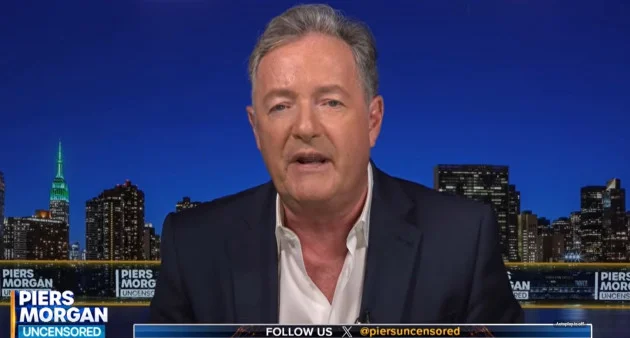
Pretty much the same thing goes for Piers Morgan Uncensored. It looks a lot like mainstream news. There’s dramatic lighting, talking heads and breaking news banners. One minute he’s sparring with a politician, the next he’s arguing with a celebrity, then debating a war with half a dozen contributors joining remotely from around the world. It’s basically an entertaining Teams Meeting, again, if you like that sort of thing.
It looks like cable news, but it costs a fraction of the price and it reaches a global audience that the biggest global television channels would die for.
Both are primarily YouTube ventures, but of course they use every social channel going to promote their hosts and their particular approach to content. While Holly’s foray into YouTube is new, Piers has been at it since 2021. He now has 4.45 million subscribers and has made 2,455 videos. That’s more than one new video every single day for nearly five years. The man is working hard.
And the hard work is paying off. This summer he raised $27 million (around €23.4 million) from investors at a reported valuation of $145 million (€125 million) to expand his YouTube empire. He’s clearly enjoying it. “This is the most fun I’ve ever had,” he recently told the Financial Times, “because I own the train set.”
That’s the sentence everyone in the media should pay attention to. Owning the train set matters more than driving someone else’s locomotive. Morgan isn’t alone in owning his own vehicle. Gary Lineker has transformed Goalhanger from a podcast company into one of Britain’s fastest-growing media businesses. In America, Tucker Carlson, Megyn Kelly and Joe Rogan have all built audiences that rival or exceed many television channels.
These are very different people with different backgrounds. But economically, they’re all doing the same thing. They’re using the online tools of the creator economy to reach the audiences they have garnered over years on traditional media. And they’re making a killing doing it.
The internet, and YouTube in particular, has removed the barriers to entry to reach an audience. Think about your own habits. If you watch Piers Morgan on YouTube, do you think you’re watching YouTube? Of course not. You’re watching Piers Morgan. You’d never say “I’m spending the evening with Alphabet” because we follow people, not platforms.
That’s why so many familiar media personalities are discovering they don’t need to rent an audience from a broadcaster any more. They can reach their own audience via online tools like YouTube, Substack and Spotify. In doing so, they’re owning their own commercial destinies.
Oddly enough, audiences are independently moving away from traditional media outlets. The most recent Reuters Digital News Report found that 47% of Irish people now actively avoid the news at least some of the time, the highest figure ever recorded. Trust in news has slipped to 42%, although Ireland still performs better than many comparable countries. At first glance, it sounds like bad news for journalism.
But another study from Navigator Research in the United States paints a more interesting picture. People aren’t necessarily becoming less informed. They’re becoming less intentional about how they get informed. Many of those who describe themselves as “passive” news consumers still encounter current affairs every day. But nowadays they’re stumbling across news while thumbing through Instagram or doomscrolling through TikTok. News, it seems, is becoming something we find while we’re doing something else. News is no longer the main event.
But this isn’t the case when it comes to actively choosing to be informed by the likes of Piers Morgan or Alastair Campbell and Rory Stewart. The hosts have become the destinations. And these creators aren’t asking their audience to change their routine and to make an appointment at 6pm to watch the news. They’re available whenever you are in your feed.
For years legacy media’s biggest fear was how Google and Facebook created far more effective advertising propositions – and sucked up all the ad spend. But perhaps the bigger risk is that their talent realises they can go it alone. If you already have a reputation, an audience and something worth saying, you no longer need permission from a commissioner or a scheduler. You can build your own business, own your own intellectual property, sell your own advertising, launch subscriptions, stage live events, publish books and licence your content to broadcasters who once employed you.
And that’s exactly what Morgan is doing. After building his audience on YouTube (with the help of Rupert Murdoch’s TalkTV, it should be noted) he’s now selling highlight packages back to television broadcasters in lucrative licensing deals. The broadcasters have become the customers. That would have been unimaginable 20 years ago.
Ireland is such a small market that it’s unlikely this sort of thing will become common here. But there’s still a valid question about how Irish media retains its best talent when the economics of independence improve every year. Because if the creator economy has taught us anything, it’s that the real value in media is no longer the printing press, the television mast or the radio transmitter. It’s the person talking to you that really matters.
Steve Dempsey is a media and technology expert and commentator
To embed this post, copy the code below on your site