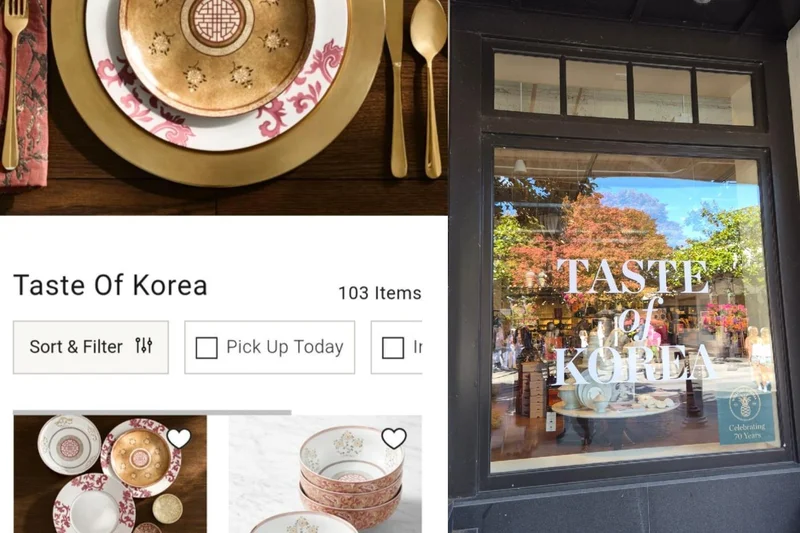
SEATTLE — Williams Sonoma, one of America’s best-known upscale kitchenware and home retailers, has turned its attention to Korean cuisine with a new “Taste of Korea” collection. But Koreans in the U.S. are taking one look at the tableware and wondering where exactly the Korea is.
The retailer’s collection features more than 100 items, from Korean sauces and seasonings to cookware and dinnerware. Front and center is the Lotus Bloom collection, an ornate line of plates and bowls in pinkish-red and gold, alongside similarly elaborate table linens.
For a retailer that has spent decades cultivating an image as an upscale American tastemaker, the decidedly un-Korean look has struck a nerve online, particularly as brands increasingly seek to capitalize on the global popularity of Korean food and culture.
“I saw this huge sign outside the store that said ‘Taste of Korea,’ and as a Korean, I felt so flattered,” Korean creator Bambigirl said in a YouTube video. “K-culture is everywhere now.”
But her excitement quickly faded when she saw the collection.
“What is going on here? It’s not giving Korea at all,” she said. “In Korean culture, we use a lot of white and subtle blue in our dishware. Simple, clean and not too over the top.”
She also took issue with a bamboo steamer displayed alongside Williams Sonoma’s “Taste of Korea” table setting.
“This is not a Chinese dim sum place,” she said.
Similar reactions spilled onto other social media platforms.
“Who else thinks Williams Sonoma really, really, really missed the mark here for Korean fine dining?” one user wrote, arguing that even someone who had watched a few K-dramas, eaten at Korean restaurants or looked through books on Korean ceramic art would be hard-pressed to find anything resembling the collection.
Another Korean commenter joked, “‘Taste of Korea,’ they say. Looks like they went to a Chinese restaurant in Korea!”
“You only can find these kinds of plates when you visit Chinese restaurants in Korea,” another wrote.
The backlash comes as Korean food and culture continue to gain mainstream popularity in the U.S., prompting a growing number of major American retailers and brands to introduce Korean-themed products and promotions.
The reaction to Williams Sonoma’s collection, however, shows that Korean consumers are also paying close attention to how that culture is represented.