Brazil · Politics
Key Facts
—Who is Flávio Bolsonaro. He is a Brazilian senator and the eldest son of former President Jair Bolsonaro, currently campaigning for a 2026 gubernatorial race in Rio de Janeiro.
—What he claimed. He told diplomats that Brazil’s electronic voting machines share origins with machines from Smartmatic, a Venezuelan company, and cited a CIA report on alleged fraud in Venezuela’s 2012 elections.
—The TSE’s response. Brazil’s Superior Electoral Court stated that Smartmatic never supplied voting machines or software for Brazilian elections, and only provided technical support training.
—How Brazil’s voting system works. The electronic voting system is entirely managed by the Electoral Justice, using proprietary encrypted channels for data transmission with no connection to the public internet.
—The political reaction. Ministers of Brazil’s Supreme Federal Court called the remarks grave and absurd, while Flávio’s campaign later said he was not questioning the Brazilian voting system.
Flávio Bolsonaro, the senator and son of former President Jair Bolsonaro, told a gathering of diplomats in Brasília on Tuesday that Brazil’s electronic voting machines share a common origin with equipment from the Venezuelan company Smartmatic, reviving a claim that electoral authorities have repeatedly debunked over the past decade.
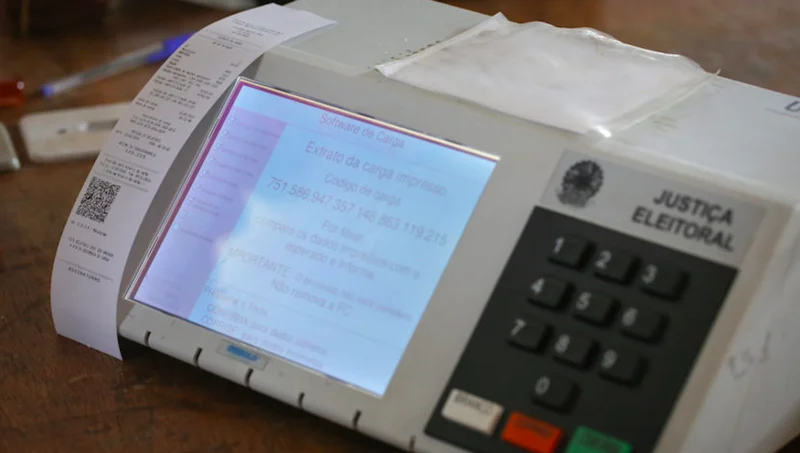
Brazil uses electronic voting machines nationwide to conduct its elections and count ballots.
One-stop reference
Company Intelligence
Every listed company in Latin America — financials, ownership and structure for 1,450+ companies across 26 exchanges, in one place.
RTAsk Rio TimesWhat this means, and what's next›
What Flávio Bolsonaro Said to Diplomats
Speaking at a meeting with foreign diplomats on July 21, 2026, Flávio Bolsonaro asserted that Brazil’s electronic voting machines “have the same origin as the machines of the Venezuelan company Smartmatic.” He also referenced what he described as a CIA report on an alleged fraud plan by the Venezuelan government during that country’s 2012 elections.
In a separate account of the same event, the senator was quoted as saying there were “electronic voting machines that would be used here in Brazil, which would be manufactured there by the company Smartmatic, which is a Venezuelan company.” The remarks immediately drew attention from political observers and electoral officials.
How Authorities Responded to Flávio Bolsonaro
Brazil’s Superior Electoral Court, known as the TSE, issued a formal rebuttal the same day. The court stated unequivocally that Smartmatic does not supply electronic voting machines or software for Brazilian elections, and that the entire voting system was conceived and is managed exclusively by the Electoral Justice.
The TSE explained that Smartmatic’s only involvement was limited to training technical support and operational professionals. The court also emphasized that the system uses proprietary encrypted communication and data transmission channels, with no contact with public networks such as the internet.
Over more than 20 years, the TSE added, the system has been repeatedly tested and has never shown manipulation in vote tallying or any breach of ballot secrecy.
Political Fallout and Campaign Clarification
Ministers of Brazil’s Supreme Federal Court, the STF, reacted sharply to the senator’s statements. Coverage from the G1 news portal reported that STF ministers described the remarks as “grave” and “absurd.” Justice Gilmar Mendes publicly stated that the Brazilian electoral system is “totally reliable.”
Following the backlash, Flávio Bolsonaro’s campaign command issued a note asserting that he was not questioning the Brazilian voting system. The statement claimed he was merely mentioning the CIA report about Venezuelan elections.
The senator is currently running for governor of Rio de Janeiro state in the 2026 general elections.
How Brazil’s Electronic Voting System Actually Works
Brazil’s electronic voting machine is part of a system fully administered by the Electoral Justice, the independent branch of government that oversees all elections. Voters cast their ballots on electronic terminals controlled directly by the TSE, which designs and manages every component of the hardware and software.
Once voting concludes, results are transmitted through proprietary encrypted channels owned by the Electoral Justice. The system never touches the public internet.
The TSE maintains that this architecture has allowed secure electronic tabulation for over two decades, with no proven instance of fraud in the totaling of votes or violation of the secret ballot. The court has published formal denials of Smartmatic-linked rumors in 2017, 2020, 2022, and again on July 8, 2026.
A Long History of Debunked Claims
The allegation linking Brazil’s voting machines to Smartmatic is not new. The TSE has been forced to deny this specific rumor multiple times over the years, issuing official statements in 2017, 2020, and 2022, always reiterating that the company never supplied voting equipment or software for Brazilian elections.
In 2022, the court specifically clarified that Smartmatic never had access to the voting machine program, which is developed and managed solely by the Electoral Justice. The most recent denial came just weeks before Flávio Bolsonaro’s remarks, when the TSE updated its official position on July 8, 2026, labeling the Smartmatic connection as false.
Journalistic investigations have also confirmed that while Smartmatic had minor service contracts in the past, a tender to produce voting machines was actually won by the Brazilian technology company Positivo.
What This Means for Expats and Investors
For foreign residents and investors watching Brazil, the recurring electoral integrity debate carries real weight. Brazil operates one of the world’s largest fully electronic voting systems, and its perceived reliability directly affects political stability and market confidence in Latin America’s biggest economy.
The swift institutional pushback from both the TSE and Supreme Court signals that Brazil’s judicial guardrails remain active ahead of the 2026 general elections. However, the revival of long-denied claims by a prominent candidate like Flávio Bolsonaro suggests that electoral transparency will remain a heated topic on the campaign trail.
For those with business interests or residency plans in Brazil, the episode underscores how closely tied the country’s political climate is to trust in its democratic infrastructure.
Frequently Asked Questions
Did Smartmatic ever supply voting machines to Brazil?
No. Brazil’s Superior Electoral Court has repeatedly stated that Smartmatic never supplied electronic voting machines or software for Brazilian elections. The company only provided training for technical support staff, and a separate manufacturing tender was won by the Brazilian firm Positivo.
How are Brazil’s electronic votes transmitted and counted?
Votes are recorded on machines managed entirely by the Electoral Justice. Results travel through proprietary encrypted channels with no connection to the public internet, and tabulation is conducted under the court’s exclusive control. The TSE states that over 20 years of testing have revealed no manipulation in vote tallying or any breach of ballot secrecy.
What was the political reaction to Flávio Bolsonaro’s statements?
Supreme Federal Court ministers called the remarks grave and absurd. Justice Gilmar Mendes defended the system as totally reliable, while the senator’s campaign later clarified he was not questioning Brazil’s voting process, only referencing a CIA report about Venezuelan elections.