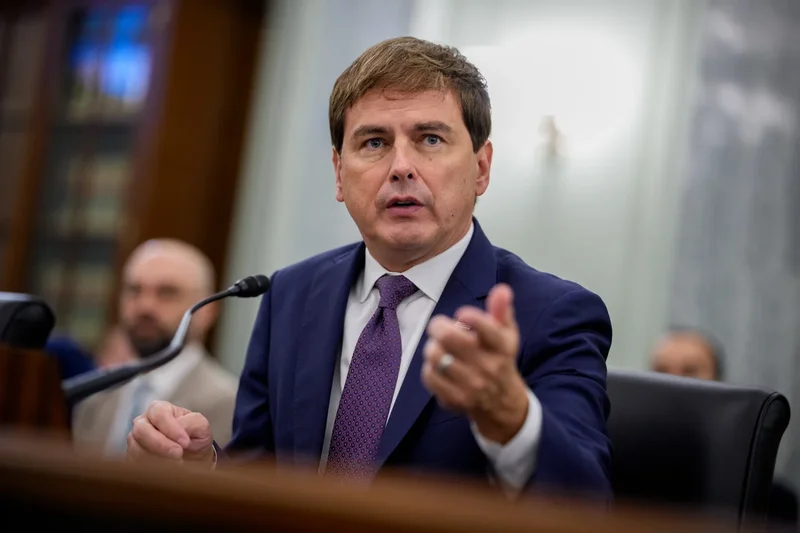
The U.S. Senate has confirmed David Cummins, a senior vice president at Serco, to lead the Transportation Security Administration, a move that aligns with the Donald Trump administration's push to privatize security screening at smaller airports.
Cummins' confirmation was part of a broader 51-47 vote on Friday, which also saw the approval of nominees for the Consumer Product Safety Commission, National Transportation Safety Board, and Surface Transportation Board, alongside Christopher Phelan for the White House Council of Economic Advisers and Cameron Hamilton for the Federal Emergency Management Agency.
The appointment comes after Trump proposed significant cuts to the TSA's annual budget in April, aiming to reduce over $1.5 billion, or approximately 20%, from the 60,000-employee agency responsible for airport security.
Serco, Cummins' former employer, provides engineering, IT, and training services to various government and commercial clients.
A central part of Trump's plan involves mandating that smaller airports utilize private security firms, a measure projected to eliminate more than 4,500 TSA positions.
This initiative marks a preliminary step toward privatizing the agency, which was established in the wake of the September 11, 2001, attacks.
Several airports, including those in Tampa, Des Moines, Iowa, and Charleston, South Carolina, have indicated plans to transition to private security.
Meanwhile, about 20 airports, such as those in San Francisco, Kansas City, and Sarasota, Florida, have already been employing private screeners for years.
The confirmation also follows a period of instability for the TSA. Trump dismissed TSA head David Pekoske on his first day in office in 2025 and did not put forward a replacement for 16 months. Pekoske had been nominated by Trump during his first term and later by President Joe Biden for a second five-year term.
A lengthy government shutdown earlier this spring further exacerbated challenges, leaving 50,000 TSA workers without pay for six weeks and leading to severe disruptions, including airport security wait times extending to four hours or more. The White House's proposal for private screeners has met opposition, with Airlines for America, representing major U.S. carriers, publicly stating its disapproval.