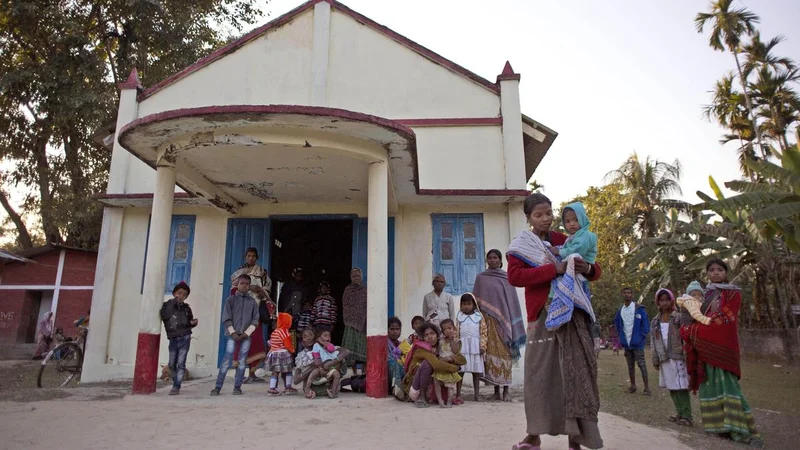
The Assam Christian Forum has opposed the proposed amendment to the Foreign Contribution (Regulation) Act, urging the Centre and the MPs from the eight northeastern States to abandon its “draconian” provisions.
The forum said they should instead amend the existing FCRA 2010 in accordance with the norms of natural justice.
“The proposed amendments pose a severe threat to civil society organisations, churches and institutions that serve the poor, Dalits, tribals and marginalised communities across Assam and the northeast,” the forum said.
The key provisions of the proposed amendment include forfeiture of all movable and immovable assets built in whole or in part with foreign contributions since the original 1976 Act; the creation of a Designated Authority empowered to take over such assets and dispose of them under undefined norms; and the transfer of remaining funds of deregistered organisations to the Consolidated Fund of India.
According to the forum, such an Authority permanently vested with the assets may hand the transferred funds over to any government body or sell them.
“These measures reverse the earlier position under which organisations denied or surrendering registration retained their assets (with remaining funds merely frozen). They go far beyond regulation and amount to punitive confiscation,” the forum said.
Disproportionate punishment
Allen Brooks, the forum’s spokesperson, said on Saturday (August 8, 2026) that natural justice demands that punishment be proportionate to the offence.
“Studies show that of more than 15,000 organisations denied permission to receive foreign contributions in recent years, only about a dozen faced denial for corruption-related offences. The vast majority lost registration for minor technical issues such as delayed reporting or accounting errors,” he said.
“Depriving organisations of assets built since 1976 for such lapses is grossly disproportionate and violates basic principles of fairness. The most that can justly be accepted is the takeover of a specific asset after a transparent process proves corrupt acquisition or construction of that particular asset,” he said.
The forum said the consequences for beneficiaries will be severe. It said many schools, health centres, dispensaries and other institutions in remote tribal areas of the northeast, including Assam, were built partly or wholly with foreign contributions precisely because State infrastructure remains inadequate.
“In large parts of the hills and remote regions, two-thirds of the population still depends on traditional healing systems because government health centres often lack staff, medicines, testing facilities, and electricity. Schools frequently operate with a single irregular teacher, and mid-day meals exist largely on paper. Poor rural transport further isolates communities from the few better institutions concentrated in places such as Guwahati and Shillong,” it said in a statement.
“Civil society groups, including church-run institutions, have stepped in to fill these gaps, providing accessible education and healthcare that the State has a constitutional duty to ensure as fundamental rights. They often charge low fees or none, keep teacher salaries modest, and rely on foreign contributions and local charity because Indian public funding for such work remains extremely difficult to access,” the statement read.
“If the Designated Authority takes over their assets, these organisations will be forced to discontinue services. Poor patients, students and communities will lose access to the very facilities that currently prevent further land alienation, impoverishment and the ethnic tensions that arise from it,” it noted.
Curtailing religious freedom
The forum said the amendment Bill also raises serious concerns about freedom of religion. Provisions allowing State management of churches, mosques, and temples “while maintaining religious character” under government oversight threaten the autonomy of places of worship.
It pointed out that the proposed Bill narrowly restricts judicial recourse to appeals before a district judge or a specified judicial officer within 90 days, denying adequate opportunity for defence.
Instead of the “proposed confiscatory regime”, the Assam Christian Forum called for the amendment of the existing FCRA to ensure a transparent process for denial or cancellation of registration, with a genuine opportunity for the organisation to explain and defend itself; proportionality of penal action; protection of assets built for genuine public service; and development of a robust public-private partnership and grants-in-aid policy.
Published - August 08, 2026 10:49 am IST