Truck Shutdown Threat Returns in South Africa
South Africa · TRADE
Update, 7 August 2026: The dispute has hardened rather than settled. ATDF-ASA national secretary Gugu Sokhela said on 6 August that talks on an 11-point plan covering the employment of foreign drivers had broken down, with no engagements under way.
What is driving the South Africa freight shutdown threat
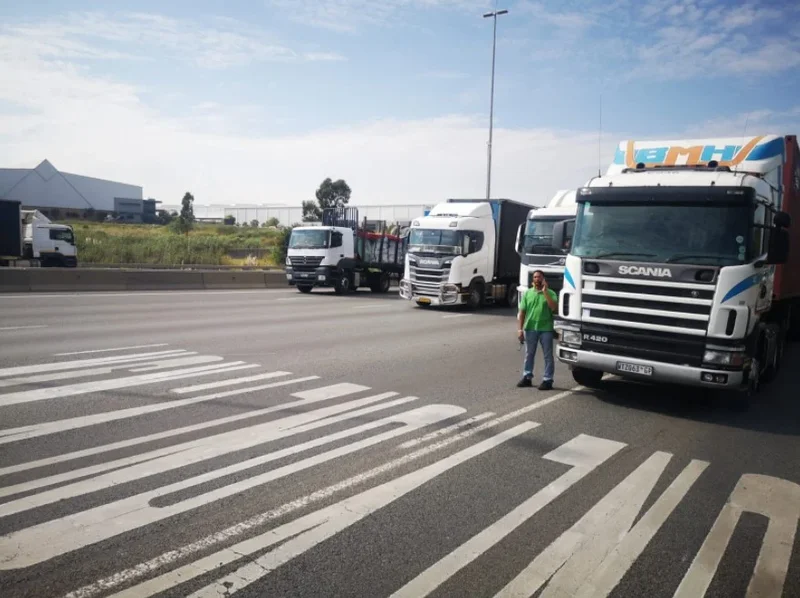
The All Truck Drivers Forum and Allied South Africa (ATDF-ASA) has repeatedly threatened national shutdowns over what it calls the illegal hiring of cheaper foreign drivers at the expense of South African citizens. The group’s secretary-general, Gugu Sokhela, has been cited in 2026 communications warning that the issue remains unresolved despite years of protests and government promises.
In May 2024, ATDF-ASA called off a planned shutdown after handing a memorandum to the National Bargaining Council for the Road Freight and Logistics Industry (NBCRFLI), giving the council seven days to respond. The underlying grievances were not settled, and the dispute has resurfaced repeatedly since then.
The NBCRFLI’s own records show 44,021 registered truck drivers in South Africa, of whom 6,756, or 15.34 percent, are foreign nationals. The ATDF-ASA argues these drivers are employed at lower wages, suppressing pay and displacing South Africans in a country with chronically high unemployment.
The industry pushes back on foreign driver claims
The Road Freight Association (RFA), whose chief executive is Gavin Kelly, has consistently argued that the real failure lies in enforcement, not in the presence of foreign nationals per se. The RFA says some operators hire undocumented workers, fail to register properly, and ignore labour rules with little consequence.
The Department of Employment and Labour confirmed this pattern through joint inspections that found foreign nationals employed as truck drivers alongside wider labour-law violations. These included failures to comply with the Unemployment Insurance Fund, overtime rules, Sunday work provisions, holiday pay, and the Basic Conditions of Employment Act.
In 2022, the government outlined an action plan involving visa enforcement, review of foreign driving licences, operator registration under the National Road Traffic Act, and tighter compliance monitoring. The gap between policy announcements and visible enforcement has kept the dispute alive.
A R480 billion (about US$29.4 billion) sector with regional reach
South Africa’s road freight and logistics sector was worth R480 billion (about US$29.4 billion), Business Day reported in 2023, making it one of the economy’s most capital-intensive and time-sensitive industries. Even limited protests can create outsized disruption by blocking key routes and slowing ports, depots and cross-border flows.
The N3 corridor linking Durban to Gauteng is the country’s most important freight artery, carrying goods from Africa’s busiest container port to the industrial heartland. The N2 along the KwaZulu-Natal coast is equally critical for coastal logistics and cross-border traffic to Mozambique and beyond.
Past shutdowns and blockades have stranded trucks, delayed supply chains and raised operating costs, especially when protests coincide with other pressures such as fuel-price changes or port labour disputes. Reuters reported a major Transnet rail and port strike as far back as 2010 that illustrated how labour action in South African logistics can ripple through rail, ports and fuel pipelines.
Xenophobia and the security dimension
The freight dispute is not only an industrial matter. Human Rights Watch documented deadly attacks on foreign truck drivers in South Africa in 2019 and warned that foreign drivers were being targeted in violent xenophobic incidents.
Later reporting continued to describe intimidation, assaults and vigilante-style roadside actions against foreign truckers. This history means any escalation carries a credible risk of violence and retaliation on both sides, adding a public-order dimension to what is already a volatile labour standoff.
The Department of Employment and Labour has acknowledged the tension, issuing statements on road blockades and clarifying that foreign professional driving permits would not authorise driving South African-registered trucks once amended regulations took effect. Those regulatory changes were flagged in 2020 and 2021 but have not resolved the underlying conflict.
The regional and geopolitical stakes
South Africa’s role as the region’s main port, road and rail hub means any sustained freight disruption has consequences far beyond its borders. Neighbouring states depend on South African routes, ports and commercial infrastructure for their own imports and exports.
The dispute sits inside a broader wave of anti-immigrant politics in southern Africa, where undocumented migration, unemployment and labour precarity are being fused into a security narrative. South Africa’s influence is being tested by the fact that neighbouring countries can and do retaliate economically or politically when actions are seen as hostile to migrants or cross-border workers.
In great-power terms, the issue sits against a backdrop of fragile global logistics. South African freight is affected not only by domestic unrest but also by external shocks to shipping, fuel and trade routes, making the country more vulnerable to broader geopolitical turbulence. This dynamic is explored in our pillar on Africa: The New Scramble.
What to watch as the South Africa freight shutdown threat unfolds
The immediate risk is a repeat of the pattern seen in May 2024, when a shutdown was called off at the last moment after a memorandum handover but grievances remained unresolved. The ATDF-ASA has shown it can mobilise quickly, and the N3 and N2 remain vulnerable to blockades.
Investors and logistics operators should watch for any formal shutdown notice from ATDF-ASA, statements from the NBCRFLI or the Department of Employment and Labour, and reports of road blockades in KwaZulu-Natal. The speed of government enforcement action against non-compliant operators will be a key indicator of whether the dispute escalates or cools.
The longer-term question is whether South Africa can reconcile its labour-market pressures with its role as a gateway economy that depends on cross-border flows. A resolution that satisfies domestic drivers without triggering regional retaliation remains elusive.
Frequently Asked Questions
Why are South African truck drivers threatening a freight shutdown?
The All Truck Drivers Forum and Allied South Africa (ATDF-ASA) argues that companies illegally hire cheaper foreign drivers, displacing South African workers and suppressing wages in a sector worth R480 billion (about US$29.4 billion).
How many foreign truck drivers are working in South Africa?
National Bargaining Council for the Road Freight and Logistics Industry records show 6,756 foreign nationals among 44,021 registered truck drivers, representing 15.34 percent of the total.
Which roads would be affected by a South Africa freight shutdown?
The N3 and N2 highways in KwaZulu-Natal are the main targets, as they are critical corridors linking the port of Durban to inland markets and neighbouring countries.
Sources
This article was produced by The Rio Times’ automated newsroom system. How we use AI · Report an error
LatAm Markets: Live Signals → — real-time movers, turnover leaders and FX across Latin America.