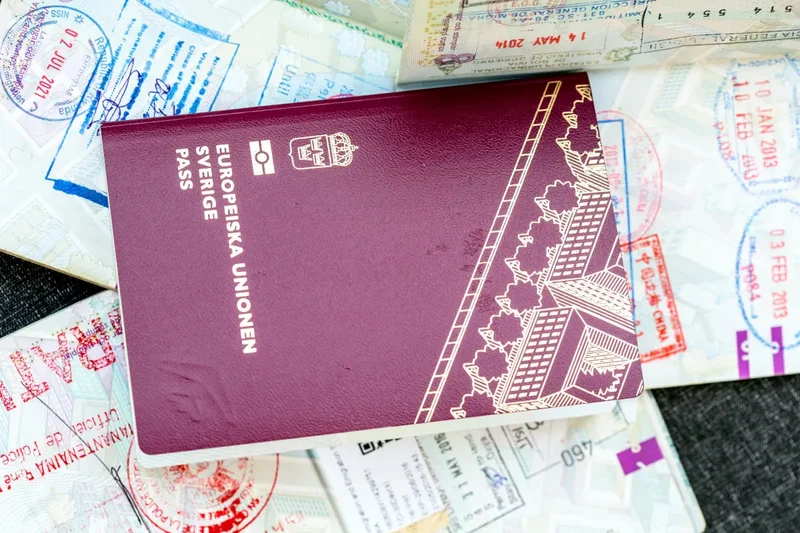
The number of people awarded Swedish citizenship fell by more than half in June after new stricter rules came into force, new statistics from the Migration Agency have shown.
On June 6th, strict new citizenship rules came into force in Sweden. The changed law includes longer residency requirements, passing tests in Swedish civics and the Swedish language, and expanded income requirements – among other elements.
Because the law was passed without transitional rules for the hundred thousand people in the case backlog, anyone with an application remaining in the queue after June 6th 2026 risked rejection on the basis of rules that didn't exist when they applied.
Only 1,646 were granted citizenship in June, down from 3,970 in May, the new statistics showed, a month-on-month fall of 58 percent.
At the same time, 3,259 applicants were refused citizenship, taking the rejection rate to 66 percent. This is well above the 35 percent rejection rate for the first six months of 2026 as a whole.
However, when compared to the 1,501 granted citizenship in June 2025 – when awards were constrained by the recent introduction of a requirement that citizenship applicants appear for in-person meetings with the authorities – the number of citizenships granted was actually up slightly.
Which countries are worst affected?
Syrians, Afghans, Eritreans, Poles, and Indians – the five nationalities which together account for over a third of citizenships granted in 2026 – saw the biggest falls in awards.
Only 114 Syrians, 66 Afghans, 75 Eritreans, 96 Poles and 75 Indians were granted Swedish citizenship in June,
down from the 539, 243, 233, 171, and 219 citizenships citizens of these countries were awarded respectively in May.
A spokesperson for the Migration Agency said that a higher rate of the rejections was not the only reason for the fall in citizenship awards.
"There are several factors that influence this," she said. "To begin with, June is a holiday month, which means that fewer applications are processed overall. The introduction of the law also means that a number of new requirements need to be investigated, which takes time.
"At the start, therefore, fewer people can be granted citizenship as their cases simply have not had time to be completed yet. In addition, many applicants need to complete a knowledge test to show that they meet the new requirements. No such test has yet taken place."
Which countries were least affected?
There was a rise in the number of Nordic citizens awarded Swedish citizenship month-on-month. The number of Norwegian citizens receiving Swedish citizenship rose from 15 to 81, while for Danish citizens, the number rose from 27 to 62, for Finnish citizens from 25 to 167, and for Icelandic citizens from 2 to 18.
This allowed Finland to leapfrog Syria as the country with the most nationals becoming citizens in June.
The Migration Agency spokesperson explained that the new law which came into force on June 6th has ended the possibility for non-Nordic nationalities to receive citizenship via notification, meaning staff handling such cases had only had the Nordic cases to work on.
"For this reason, many Nordic citizens received their decision in June because there were few other cases in this category," she said.