On May 03, over 22 lakh students appeared for the NEET UG 2026 examination, which was conducted across 5,432 centres in 565 cities, in 13 languages. Days after the exam got over, the National Testing Agency (NTA), responsible for its conduct, came to know that a PDF containing hundreds of questions had been shared among students prior to the exam, with several of those questions matching the actual paper.
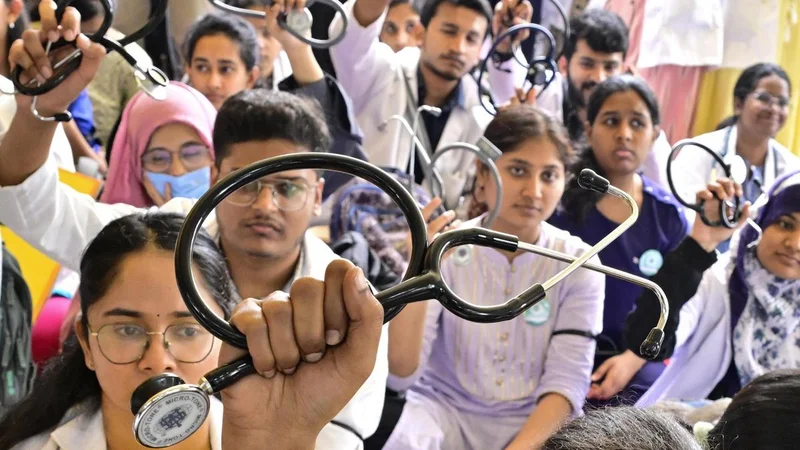
Soon after the news spread, hundreds of students took to the streets and questions mounted over the security of the country’s biggest medical entrance examination. This led the Centre to hand over the investigation to the Central Bureau Of Investigation (CBI).
Almost three months after the paper leak, the central agency filed a chargesheet against 13 accused persons on July 28 in the special fast-track court established by the government to handle this case.
The chargesheet revealed that the NEET paper was not just leaked but the confidential questions were allegedly passed from insiders to intermediaries, coaching operators and candidate brokers. The stolen material was copied, printed, sold and distributed for monetary gain.
Main accused
The CBI’s case centres on three main accused individuals identified as NTA subject experts and public servants: Manisha Gurunath Mandhare, P.V. Kulkarni and Manisha Sanjay Havaldar. The central agency alleged that confidential examination material was removed from NTA custody by these accused and subsequently passed into an organised distribution chain.
Ms. Mandhare was an expert in biology, while Mr. Kulkarni served as an expert in chemistry on the NTA. Ms. Havaldar, on the other hand, was a Physics expert on the NTA panel. The CBI alleges that the trio had access to the full questions by being involved in multiple stages of setting up the question paper.
The other accused include Tejas Harshadkumar Shah, COO and Physics faculty member at Dr. Abhang Prabhu Medical Academy in Pune; Shivraj Raghunath Motegaonkar, Managing Partner of Renukai Career Centre (RCC) in Latur; and Dr. Manoj Bhagwanrao Shirure, owner of Siddhivinayak Hospital in Latur.
Manisha Sanjay Waghmare, a private individual, acted as the central broker connecting candidates to the NTA experts. Dhananjay Nivrutti Lokhande served as a middleman based in Pune. Shubham Madhukar Khairnar was a distributor based in Nashik, while Yash Yadav, another distributor, linked the Nashik network to Rajasthan. This also includes the Biwal family from Jaipur: Mangilal Biwal, his brother Dinesh Biwal, and his son Vikas Biwal collectively ran the final leg of distribution to NEET candidates in the Sikar area.
How did the alleged leak work?
The chargesheet describes multiple interconnected channels rather than a single hand-to-hand leak.
For the Biology questions, the CBI alleges that Ms. Mandhare used her access as an NTA expert to disclose questions to selected students through special coaching classes that she runs. The questions she dictated matched those of the actual examination.
The chemistry trial involved Mr. Kulkarni and several intermediaries. The chargesheet states that leaked chemistry questions were passed to individuals outside the immediate NTA circle and eventually reached coaching networks and candidates. In one such network, the CBI found the accused in possession of 36 images, including five duplicates, containing 132 handwritten questions. These questions were allegedly written by Mr Shivraj Motegaonkar. The initial comparison found 111 questions that matched the NTA question sets.
The Physics trial allegedly involved Mr. Havaldar and Mr. Tejas Shah. The chargesheet states that Shah received handwritten Physics questions, paid Mr. Havaldar ₹25,000, and gave him a box of mangoes. He then destroyed the notebook containing the questions. A digital forensic examination later recovered images of the handwritten material from seized phones.
The network then moved into a more conventional distribution-and-sales operation.
The chargesheet describes a chain involving Dhananjay Lokhande, Shubham Khairnar, and Yash Yadav, followed by the Biwal family in Rajasthan. In one channel, leaked material was allegedly procured in Pune, transported to Nashik, printed and photocopied, and then circulated to prospective candidates. The investigation alleges that Khairnar paid for and resold material, while Yash Yadav became another link to buyers in Rajasthan.
The Biwal family allegedly played a major role in the final distribution. Investigators say Mangilal Biwal obtained leaked PDFs through Telegram, arranged printing and distributed copies to candidates. His brother, Dinesh Biwal, assisted in printing, photocopying and distribution, while Vikas Biwal arranged prospective candidates, forwarded their details to Yash Yadav, and supplied leaked Biology and Chemistry material for money.
The CBI also recovered conversations discussing prices, including an alleged negotiation from ₹12 lakh to ₹10 lakh for a paper and arrangements for different quantities of questions.
How did CBI crack the case?
The central agency tracked the accused from the bottom to the top. First, the Sikar family was taken into custody, which eventually led CBI to the top NTA experts. This process involved a combination of witness statements, searches, seized phones and laptops, WhatsApp and Telegram records, call-detail records, bank transactions, CCTV footage, handwriting examination and forensic analysis.
Searches were conducted across several States and dozens of electronic devices were seized and sent for forensic examination.
One important piece of evidence was CCTV footage from an office in Pune showing the printing of handwritten Physics questions in the presence of Mandhare and Havaldar. In Rajasthan, CCTV footage from a computer shop allegedly showed Mangilal and Dinesh Biwal getting leaked material printed, after which the digital files were deleted.
The chargesheet also notes the absence of useful CCTV footage inside the NTA’s confidential section because the available backup covered only about 20–25 days, while the relevant examination work had been completed earlier. This meant that investigators had to rely heavily on digital, financial and documentary evidence.
What charges have been filed?
The CBI has charged all 13 accused with criminal conspiracy under the Public Examinations (Prevention of Unfair Means) Act, 2024, which deals with cheating and organised attempts to compromise a public examination.
The three NTA subject experts—who, according to the CBI, had access to confidential examination material—face additional charges relating to criminal breach of trust and criminal misconduct by public servants. The allegation is essentially that they misused their official position and access to confidential material.
The other 10 accused face charges relating to receiving and dealing with stolen property, referring in this case to the allegedly leaked examination questions, as well as cheating. The CBI alleges that they knowingly received, circulated or sold the leaked material and helped candidates obtain an unfair advantage.
One of the charges also relates to destroying or concealing evidence, where the CBI alleges that evidence connected to the leak was deliberately removed or destroyed.
The court is expected to take cognisance of the chargesheet on August 10.
Published - August 08, 2026 05:16 pm IST