Click here for more articles by Kormedi.com.
A heat wave with temperatures approaching 40 degrees Celsius has continued across Korea.
President Lee Jae Myung said during a recent meeting with senior secretaries and aides that the current heat wave is “effectively a national disaster situation,” stressing that the government should maximize the level, scope and speed of its policy response to protect people’s lives and and ensure public safety.
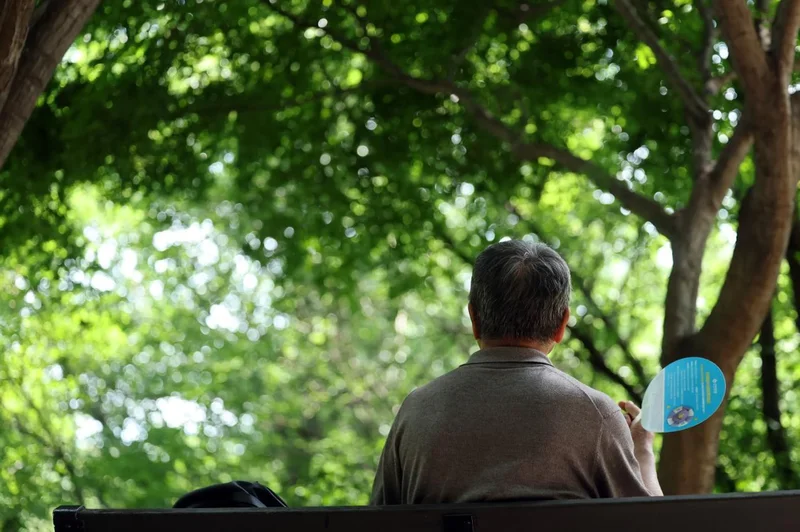
In a related development, an interesting study from the United States found that mortality rates in large cities may decrease as the area covered by tree shade increases.
A research team at Northwestern University Feinberg School of Medicine tracked changes in the city of Chicago, Illinois, from 2011 to 2021. The researchers examined data including tree canopy coverage, peak summer temperatures and the number of deaths.
The study found that increases in annual tree canopy coverage were associated with lower mortality. A 1 percent increase in shaded area was associated with an approximately 9.8 percent decrease in overall mortality.
By cause of death, a 1 percent increase in tree canopy coverage was associated with a 9.2 percent reduction in cardiovascular disease mortality. The associations were even greater for respiratory diseases, at 11.3 percent, and mental disorders, at 16.4 percent.
The researchers’ simulations showed that if the city of Chicago planted an additional 14,000 trees each year, it could increase the proportion of shaded areas by 0.03 percent, which was associated with preventing approximately 105 deaths annually.
Conversely, in the hottest parts of Chicago, mortality rates rose sharply as tree coverage declined.
The researchers noted that “because this was an observational study rather than an experiment, it is difficult to establish a causal relationship.” However, they explained that tree shade can significantly reduce urban temperatures, heat stress and exposure to air pollution, while encouraging physical activity and improving stress levels and mental health.
A similar pattern emerges in Seoul, where surface temperatures are lower in areas with more trees
The National Institute of Forest Science, under the Korea Forest Service, recently analyzed the relationship between the proportion of urban forest coverage and summer surface temperatures across Seoul’s 25 autonomous districts.
The analysis found that areas where trees covered more than 30 percent of the district had lower average temperatures than areas with less tree coverage. The difference became more pronounced as the proportion of land covered by trees increased.
According to the institute, Seoul has significant disparities among its districts in terms of urban forest coverage.
Gangbuk District ranked among the highest, with trees covering 62.3 percent of its area, followed by Jongno District at 61.1 percent, Gwanak District at 57.4 percent, Eunpyeong District at 52.2 percent and Dobong District at 51.3 percent. In these districts, trees cover more than half of the area.
By contrast, Yeongdeungpo District had the lowest urban forest coverage, at just 5.8 percent. Gangseo District and Seongdong District also barely exceeded 10 percent, at 10.2 percent and 10.8 percent, respectively.
Trees absorb water through their roots and transport it to their leaves, where it is released into the atmosphere through evaporation. This process, known as transpiration, has a cooling effect on the surrounding environment.
Because evaporation absorbs heat from the surrounding area, transpiration can help partially alleviate the urban heat island effect. Tree shade also helps block solar radiation.
“Not only large-scale urban forests but also a single tree or a small patch of forest can help mitigate the effects of heat waves,” Je Sun-mi of the National Institute of Forest Science’s Urban Forest Research Center said.
This article from Kormedi.com, Korea’s top health care and medical portal, is translated by a generative AI system and edited by The Korea Times.