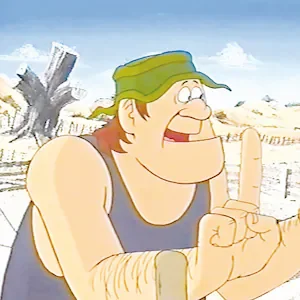
Footrot Flats' Wal played a key part in the educational process as New Zealanders cast their first vote under MMP in 1996.
Every three years New Zealanders troop to the polling booths, mark their papers, and go home glowing with civic virtue. Almost none of them stop to ask the only question that matters: what, precisely, did that vote just do?
Because let us be honest about what elections have become. Theyare popularity contests. The leaders’ debates are scored like boxing matches. The pollsters track “preferred Prime Minister” as though we were electing a president rather than a Parliament. Millions of votes are cast on the strength of a smile, a quip, an easy manner in front of a camera – charisma standing in for substance. And those who resist the cult of personality mostly retreat into something no more thoughtful: the tribal party vote, cast the same way their parents cast it, to make up the numbers in the House. Neither camp is thinking. Both are performing a habit.
Two votes and an anomaly
New Zealand’s electoral machinery makes matters worse, in ways most voters have never bothered to examine. Under MMP we each cast two votes: a candidate vote for the local member, and a party vote that determines the composition of Parliament. The candidate vote, at least, is honest. You can weigh the individual – record, character, connection to the community – and choose.
The party vote is another matter entirely. Through the bizarre workings of the party lists, MMP delivers into Parliament a cohort of members over whose identity the voter has no say whatsoever. The party apparatchiks rank the list; the arithmetic does the rest. Come the morning after the election, your party vote has installed in the legislature people you have never heard of, would never have chosen, and cannot remove. They answer to the party machine that ranked them, not to any electorate. Call it what it is: an anomaly – a standing defect at the heart of our democracy that severs, for a substantial portion of the House, the link between the voter’s choice and the legislator’s seat. We have simply learned not to notice.
Personalities, policies and the blank cheque
But set the mechanics aside. What else are we voting for? The received wisdom says voters weigh policies as heavily as personalities – that behind the theatre there is sober assessment of competing programmes for the country.
Very well. Then what are we to make of a party that refuses to show its hand? A party that will not release the detailed thinking behind its policies, that deflects every hard question, that tells the electorate it will simply have to wait and see? That is not discipline. It is contempt. And it is precisely the stance Labour has adopted under a leader short on charisma and shorter still on candour – a man whose answer to scrutiny is a schoolboy’s sulk and a promise that the details will come later.
A party that demands power while concealing its intentions is asking the voter to sign a blank cheque. A vote cast on those terms is not an informed democratic choice. It is an act of blind faith, and it deserves to be treated as such at the ballot box.
The deeper truth: every vote is a vote for law
Yet there is a deeper layer still, and it is the one no campaign will ever mention.
Every policy – every promise, every pledge, every bullet point in a manifesto – must be implemented, and implementation means legislation. That is what Parliaments do. They make law. All the soothing rhetoric about “delivering for New Zealanders” translates, in practice, into bills, regulations and statutory powers.
And here is what voters do not realise, or choose not to: every piece of legislation takes a bite out of the liberties and freedoms we currently enjoy. Sometimes the bite falls on a small section of society – an industry, a profession, a class of property owner. Sometimes it falls on all of us. But there is no such thing as a law that touches no one. A statute granting an entitlement to one group imposes an obligation on another. A statute regulating an activity narrows what was yesterday permitted. A statute creating a new agency creates new powers of inspection, compliance and enforcement. Law is never neutral towards freedom. It can only redistribute it or reduce it – and it almost always reduces it.
Follow the logic to its end and the true nature of the electoral transaction stands exposed. When you vote, you are not choosing a face for the six o’clock news or a colour for the electoral map. You are voting for more law. You are authorising a legislative programme that will, statute by statute, extend the reach of the state into the lives of its citizens. Each Parliament adds to the pile; virtually none subtracts from it. The result, compounded over decades, is a state greater and more intrusive than the one before it – built brick by legislative brick with the tacit consent of voters who never grasped that this was what they were signing up to.
Voting with open eyes
None of this is an argument against voting. It is an argument against voting stupidly. The candidate vote demands genuine scrutiny of the individual. The party vote demands clear-eyed recognition of its list-borne consequences. Policy promises demand detail – and a party that withholds it should be punished for the insult, not rewarded for the mystery.
Above all, every voter should walk into the booth knowing what the vote actually purchases: not a personality, not a party colour, but a programme of legislation – and with it a shift in the boundary between the citizen and the state. That boundary moves in one direction only, unless voters force it back. The real question on the ballot paper is not “whom do you like?” It is “how much more law, and how much more state, are you prepared to authorise?”
That is what we are really voting for.
Catch up on the debates that dominated the week by signing up to our Opinion newsletter – a weekly round-up of our best commentary.