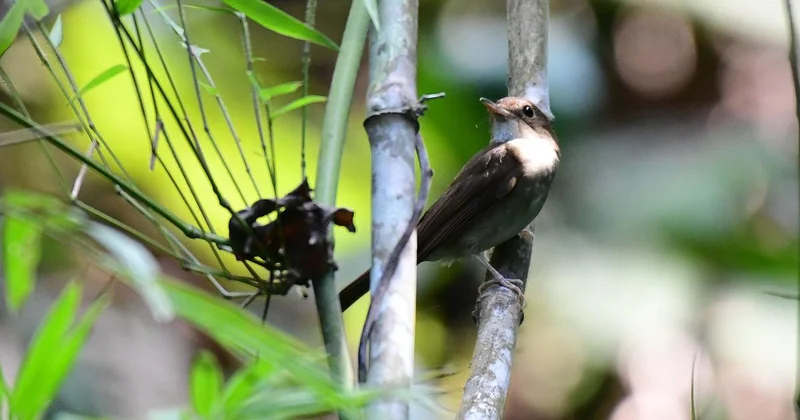
At a recent dinner party, the conversation veered towards the Rs 91,000-crore Great Nicobar project and, much to the host’s discomfort, opinions flew thick and fast. “Development without destruction” and “ecologically sensitive zone’ were some of the buzzwords that were exchanged. It ended on a cogitative note when a guest innocently wondered what the animals in this dense, isolated ecosystem would say about the Great Nicobar project if they could talk.
I would like to think Tansy Troy somehow overheard this conversation.
The Great Nicobar Journey, an eco-adventure novel written by educationalist, activist, and poet Tansy Troy, looks at the Great Nicobar project from the point of view of the thousands of animals and birds on the island. The project is set to roll out over the next 30 years to transform the island into a major strategic and economic outpost for India. But what does the diverse, often endemic fauna have to say about that?
Chalo sansad
The book opens with a conference attended by birds, animals, amphibians, and reptiles. The Nicobar Treeshrew presides, and everyone from the Long-tailed Macaque and Civet Cat to Omura’s Whale and Saltwater Crocodile gather to listen with an intent to save their homeland. This unlikely crew of creatures decides to take an arduous journey from Nicobar to Tamil Nadu by raft and then on foot all the way to New Delhi’s Sansad Bhavan.
Their version of “Chalo Sansad” has only one purpose: to speak to India’s lawmakers about scrapping a project by putting forward their views on how it would harm their habitat. Along the way, they gather reinforcements and make new friends. From endangered and hunted pangolins to tigers searching for food close to human habitation – allies willing to risk their lives to go on the journey with them. From a small crew of animals from Nicobar, they grow into a formidable force when animals from across India and tribal communities with the knowledge of understanding animal speak join them.
This is a book for children, and in its own special way it offers young readers an avenue to understand the issues plaguing the nation. It keeps the interest and excitement level high, as the author introduces exotic animals that will pique the reader’s curiosity. As an educationalist and the editor of The Apple Press, an eco journal for young people, Troy has immense understanding of how the young think, but what were the challenges and responsibilities of writing about such a divisive topic for children?
“I must admit to never having felt there was any sense of division at all. Here we have an example of one of the last pristine biospheres on planet Earth at a time when we, as a species, are on the very edge of survival. There doesn’t seem to me to be any other logical solution except to care for and nurture such a unique environment, which happens to be part of India’s great natural wealth. I didn’t find it a challenge to write about this situation for young people since this is their future on planet Earth we’re talking about. Most young people I meet are extremely wise about this irrefutable scientific truth. As to responsibility, I have always seen my main responsibility as one to Earth herself,” she said.
Timely and contentious
Climate fiction, or cli-fi as the cool kids are calling it, has dealt with issues children can see, like smog in A Cloud Called Bhura by Bijal Vachharajani, to topics in the news like homes lost to development in Where I Belong by Nandita Da Cunha and Kripa, or even to people’s movements and social marginalisation in Year of the Weeds by Siddhartha Sarma. The Great Nicobar Project deals with a proposed project by the government of India, a topic that is both timely and contentious. It is sure to capture the attention of informed readers.
Even though this book is about a contentious topic, there is a calmness to it. Though their home is being threatened, the animals walk through the length of the country peacefully. Prey and hunters walk together for a common cause. Animals mourning lost family members and those fighting to stay alive as civilisation hunts them down walk together, carrying their stories with courage and hope. Troy says that whenever she has encountered wild animals, she has had the sensation of being in the presence of mighty calmness.
“Truly wild creatures and places, in my experience, exude a deep sense of calm. Even when a butterfly comes and rests lightly on your person, you feel it. Even when a bird sings to you from the balcony rail. I would love it so much if, as a species, we could reflect back this immense calm. I think it is time for us to all listen to this advocacy which the wild ones exhibit constantly for all our sakes. This is what I have tried to convey through the voices of the characters in The Great Nicobar Journey.”
“We realised our quest generations ago.
Now we have come to alert you, avert you.
Advise you to take this moment to pause.”
These portentous words are lyrics from a song the animals sing when they reach Sansad Bhavan. The Great Nicobar Journey does not ask readers to blindly choose sides, but at a time when emotions and tempers run high, the book and the voices of the animals ask them to do something far more valuable – it nudges them to listen. By giving the fauna of Nicobar a voice, it reminds us that every development project has stakeholders who will never have a seat at the negotiating table. Long after you have read the book, the image of animals peacefully walking across the length of India is haunting and lingers. At a time when everyone is eager to march towards Parliament, The Great Nicobar Journey encourages children to ask whose voices are still missing from big conversations.
The Great Nicobar Journey, Tansy Troy, Talking Cub.
We welcome your comments at letters@scroll.in.