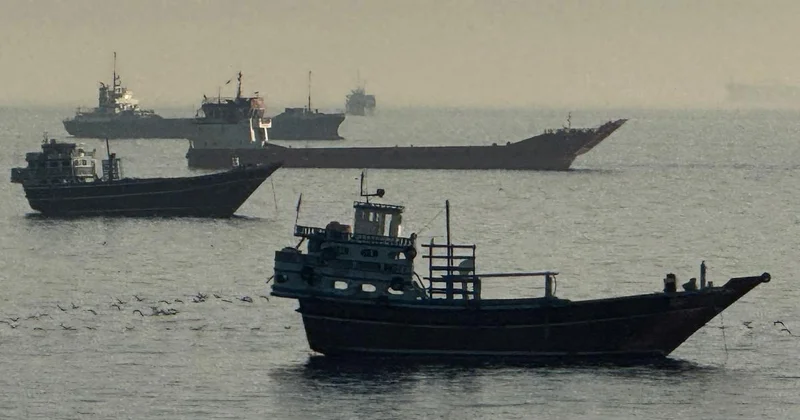
New Delhi has repatriated 4,048 Indian seafarers from West Asia since a conflict broke out in the region on February 28, PTI quoted Union Shipping Minister Sarbananda Sonowal as saying on Saturday.
“We have extended help to their families as well,” Sonowal said at an event in Mumbai.
His statement came in the wake of a series of attacks on commercial vessels in the Strait of Hormuz amid renewed tensions between the United States and Iran.
On July 30, the Union government informed Parliament that 16 Indians have been killed during the conflict. Ten of them were seafarers.
Eight of the deaths were reported in Oman, four in the United Arab Emirates, two in Kuwait, and one each in Saudi Arabia and Iraq, said the Ministry of External Affairs.
The US and Israel had launched an attack on Iran on February 28, claiming that Tehran’s action posed an existential threat to Israel. Iran retaliated by striking Israel and US military bases in the region, targeting major cities in Gulf countries and ships.
Israel has been claiming that Iran is close to obtaining a nuclear weapon, which could alter the regional security balance. Tehran has long maintained that its nuclear programme is for civilian purposes.
So far, two peace talks held between Washington and Tehran have collapsed.
The first round of talks that were held in Pakistan’s Islamabad collapsed on April 12, but the ceasefire in the region had largely held for nearly two months.
On June 15, the US and Iran arrived at an interim agreement to stop the fighting and reopen the strait for commercial vessels. They also held talks in Switzerland aimed at reaching a final peace deal within two months.
However, on July 8, Trump said that the ceasefire was “over”.
As a consequence, the Strait of Hormuz, the narrow waterbody connecting the Gulf to the Arabian Sea, remains effectively blocked for most international commercial vessels, triggering a global energy crisis. About 20% of global petroleum supply passes through the maritime chokepoint.
On July 15, New Delhi directed shipping companies not to deploy Indian seafarers on vessels travelling through the waterway.
US President Donald Trump said on August 2 that his country’s military and Israeli forces will halt attacks on Iran as “the perimeters of a deal” had been agreed upon.
The new deal “would include the immediate, complete and total” opening of the Strait of Hormuz and an end to “Iran’s nuclear threat”, Trump said in a social media post.
However, Tehran said on Sunday that it would not open the strait until the US met all the conditions it has set out, including compensation for war damages, reported AFP.
On Saturday, Iran’s security chief Mohammad Bagher Zolghadr said that Tehran would only open the waterway if the US agreed to end the “war and aggression against Iran and its allies in Lebanon, Palestine, Yemen and Iraq”.
The US military should also lift its counterblockade of Iranian ports, demanded Zolghadr.
Edited by Sneha.
We welcome your comments at letters@scroll.in.