Hato Hone St John braces for another call spike after record-breaking ambulance demand
Hato Hone St John is asking people to avoid calling an ambulance unless they absolutely need one, as it faces one of its busiest days ever.
The ambulance service declared a major incident response on Sunday and activated its Emergency Operations Centre for the first time since Covid-19, citing extreme pressure from seasonal illness.
Saturday was St John's busiest day on record, receiving 2562 calls through 111, a 34 percent increase from a typical day. The service's daily calls record was also broken three times last week.
By Sunday, the ambulance service had received 16,008 calls for the week, breaking a record set just a week earlier.
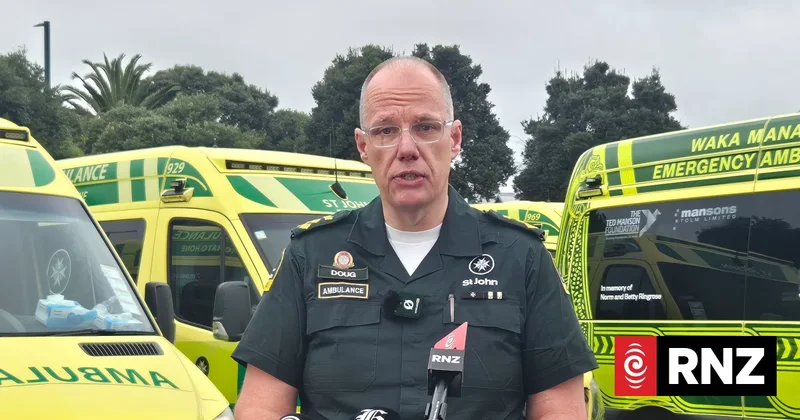
St John director of ambulance operations Doug Gallagher said they were asking those who could to see a GP or call Healthline to ensure they could respond to patients, including those with life-threatening conditions, who needed an ambulance as quickly as possible.
"Our message to the public is clear. Only call 111 if you have a genuine health emergency, such as chest pain, trouble breathing, or you're not able to wake a person up."
While patients with broken bones, those who had fallen, and those not in life-threatening pain could expect to wait several hours for an ambulance, Gallagher said response times for the sickest patients remained within safe limits.
But he said Mondays were typically their busiest days.
"Often, patients with chronic conditions are trying to manage themselves at home ahead of seeing their GP or primary carer on Monday.
"If they had been able to access primary care through some of the facilities that are available on weekends, that may have prevented their condition from getting to a point where on Monday, when they're being seen by their GP, they're actually needing to have an ambulance called."
He said ambulance staff were under significant strain, and staff were skipping breaks to keep up with increasing workloads.
"It does happen, and we have some quite robust procedures around that and times when we can break a break in order to respond to an emergency, but also when we can't break a break.
"Our staff, because they're driving, do have to meet the requirements of the NZTA [New Zealand Transport Agency] driving rules, which do put in place a set number of breaks."
He said they were having discussions with Health NZ about ensuring the service and its staff could cope long-term.
"We're very thankful for the additional resourcing that Health NZ, our purchaser, has put into the ambulance service in the last four years.
"We are back again talking to them for our next contract for the next four years. Those discussions are beginning, and we're hoping to have things firmed up by early October."
Health NZ community and primary care funding director Martin Hefford said the ambulance system had responded appropriately to the significant amount of need they were experiencing.
"Health NZ supports Hato Hone St John's decision to activate the major incident response to ensure they have the structures in place to manage current high demand.
"Activating the major incident response gives Hato Hone St John a clear national structure for coordinating decisions and resources at pace.
It also supports closer coordination with Health New Zealand.
It said some hospitals' emergency departments [EDs] were also seeing increased demand, compared with the same time last year.
On average, the number of patients coming to EDs was up 0.4 percent last month from July 2025.
"While there are districts experiencing higher increases in demand, the overall picture remains well within our planning expectations and is not unexpected," Hefford said.
"Emergency Departments are busy, as is usual at this time of year. We have winter plans in place to respond to these demands.
"Health NZ are working closely with St John to support patient flow through hospitals and other services and to ensure people receive the right care, at the right time."
Both St John and Health NZ reiterated that anyone requiring emergency care should continue to call 111 or come to ED.