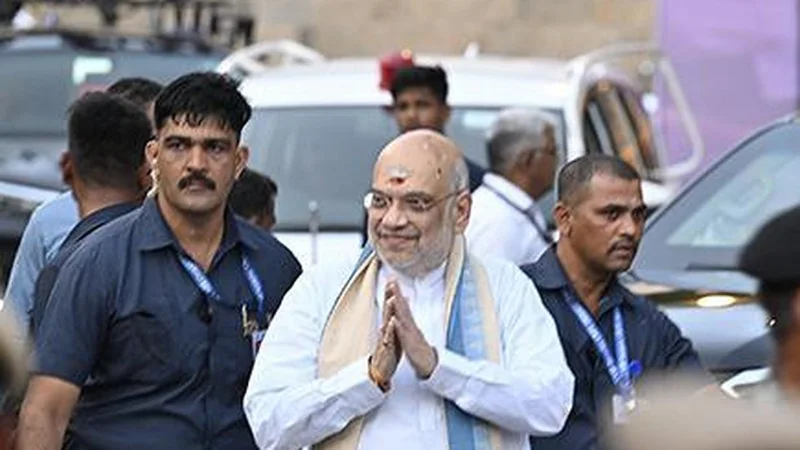
The Chief Minister of Mizoram, Lalduhoma and several Christian institutions on Sunday (August 9, 2026) took to social media to appeal to the Centre and Union Home Minister Amit Shah to roll back the Foreign Contribution Regulation (Amendment) Bill, 2026, and send the legislation to a Joint Parliamentary Committee (JPC) for further consultation. The government is likely to consider the appeal despite an earlier plan to discuss the passage of the Bill in the Lok Sabha on August 12, 2026, sources said. The monsoon session of Parliament concludes August 13.
Among the organisations that made synchronous appeals on YouTube, Facebook, and WhatsApp are the Catholic Bishops Conference of India (CBCI), the National Council of Churches in India (NCCI), and the Council of Churches in Mizoram. Since July 5, 2026, the Christian groups and Mr. Lalduhoma and Meghalaya Chief Minister Conrad K. Sangma have held at least four meetings with Mr. Shah to express their objection and concerns with reference to the provisions of the Bill, which they say is against minorities, and the Christian community in particular.
Mr. Lalduhoma said on Facebook that he met Mr. Shah on August 6, 2026, along with members representing all Christian denominations, in New Delhi, and placed their concerns and suggestions regarding certain provisions of the Bill.
“In the spirit of democratic consultation, we respectfully appeal to the Union government to refer the Bill to a JPC. This would provide an opportunity for concerns and suggestions from different parts of the country, and across stakeholders, to be carefully examined and considered before the legislation is finalised,” Mr. Lalduhoma said. He hoped that the Union government would give due consideration to the request in the larger interest of inclusive, transparent, and consultative policymaking.
The CBCI, the apex body of the Catholic church in India, also made a similar appeal. Mr. Shah, on July 10, assured the CBCI that the Bill was not against Christian NGOs, which receive a little under 15% of the total foreign donations.
“As long-standing partners in nation-building through education, healthcare, and humanitarian service, we respectfully appeal to the Government of India to reconsider and roll back the FCRA Amendment Bill 2026. While we fully support transparency and national security, certain provisions present significant operational challenges for genuine, grassroot charitable organisations. We humbly request that the Bill be referred to a JPC to facilitate structured dialogue with civil society and faith-based leaders, ensuring we can work together toward balanced solutions that protect both regulatory integrity and essential community service,” Jonathan Lalremruata, advisor to the CBCI told The Hindu.
Reverend Asir Ebenezer, general secretary, NCCI, who met Mr. Shah at the Parliament House complex on August 6, said in a video message on Sunday (August 9, 2026) that a comprehensive review of the FCRA Act, which came into effect in 2010, is also required
“We have made many representations to the Government of India, latest on August 6. We again appeal to the Home Minister to recommend that the Bill be held back back until all stakeholders have a fair opportunity to sit and put together a system that will make all accountable — those who are registered under the FCRA as well as the regulatory authority. This will provide the NDA (National Democratic Alliance) government to make amendments to the FCRA Act, 2010. We hope the Home Minister and the Union government will heed this last minute appeal of the Christian community,” Mr. Ebenezer said.
One of the key provisions in the FCRA Bill, 2026, which was introduced in the Lok Sabha on March 25, 2026 but could not be passed following an uproar against it by Opposition parties, is the appointment of a ‘designated authority’ to take over, manage, or dispose of assets created from foreign funds when an NGO’s FCRA registration is suspended, cancelled or not renewed. This authority will have the powers of a civil court and can order the transfer or sale of assets owned by NGOs to either the government or any other body.
Published - August 09, 2026 11:16 pm IST