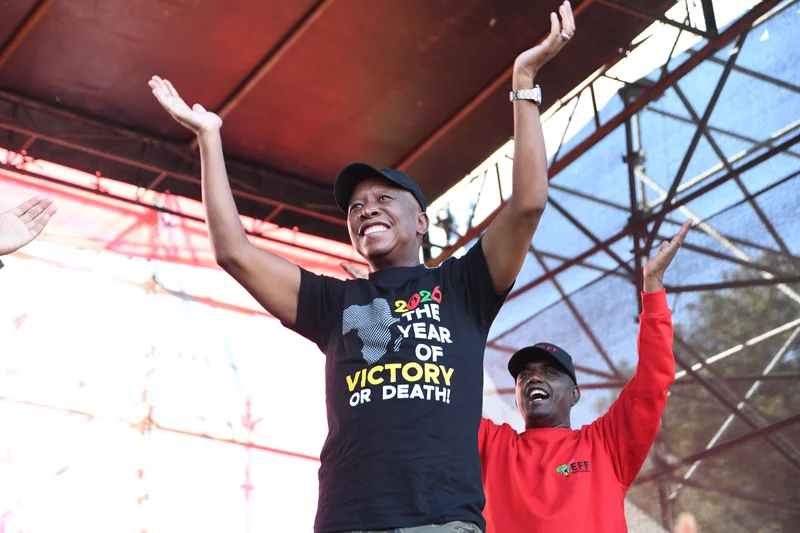
Forget the slogans. Forget the promises. We asked one simple question: will this make your town or city work better? We read the EFFâs 2026 local government manifesto to see what it proposes on the issues that matter most to residents.
The party describes local government as being in a âdeep and worsening crisisâ and says municipalities have become vehicles for corruption rather than service delivery. Its answer is to rebuild municipal capacity, bring services back in-house, invest heavily in infrastructure and use municipalities to drive economic development. Throughout the EFFâs manifesto runs one consistent theme: âMunicipalities must serve communities, not private interests.â
The party has been in government for 12 years and is ending its second phase of representation in municipal councils. Its big campaign is to inÂsource labour and services, but party members have benefited richly from tenders and municipal contracts, numerous reports have shown. It diagnoses the crisis in local government well, but takes no responsibility for its involvement where it is part of coalition governments.
Turn on the taps
The EFF says reliable water begins with rebuilding municipal infrastructure. It promises to ârepair, expand and maintain water infrastructure, including pipes, reservoirs and treatment plantsâ while eliminating water losses caused by leaks and poor maintenance. It also commits to prioritising water infrastructure in historically under-served communities and to employing engineers, plumbers and technicians directly rather than relying on contractors.
Verdict: Nice idea, but where the EFF has been in government, it has failed to effect efficient water service delivery.
2. Keep the lights on
Electricity is treated as part of the wider infrastructure crisis. The manifesto promises to rebuild municipal technical capacity, maintain electricity infrastructure and employ permanent municipal teams instead of outsourcing services. It singles out Âprevious EFF-led interventions, including extending free electricity to households in Ekurhuleni and securing free basic electricity for indigent households.
Verdict: The EFF doesnât make the Âbalance between cancelling electricity debt and imploding municipal finances. Its manifesto makes debt cancellation a big part of its promise.
3. Fill the potholes
Roads feature prominently. The EFF proposes a âmass infrastructure rebuilding programmeâ covering roads, bridges, traffic lights, road signage and storm water systems. It promises to terminate outsourcing of road maintenance and establish permanent municipal teams to maintain local infrastructure. Public transport is linked to economic development, with industrial parks and special economic zones connected to accessible transport networks.
Verdict: A useless promise. Where the EFF has had its hands on the levers of transport power (like Joburg and Ekurhuleni), roads and public transport systems have been run into the ground. It has not done anything to deal with the condition of taxis, which are still coffins on wheels.
4. Sort out the st**
Sanitation is one of the manifestoâs core commitments. The EFF promises to upgrade sewer systems and wastewater treatment plants, eliminate sewer spillages and expand sanitation infrastructure. Informal settlements would be upgraded with roads, storm water systems, sanitation and secure tenure as part of broader human settlements planning.
Verdict: Itâs uncertain whether it has the capacity to deliver here, but itâs good that sanitation is high on its agenda.
5. Light up our streets
The manifesto links safer communities with better-maintained infrastructure. It promises to maintain street lighting, traffic lights and public facilities as part of routine municipal maintenance. The EFF also cites its record in Johannesburg, where it says it established the JMPD Tactical Reaction Unit to combat crime in the inner city.
Verdict: The EFF head of public safety in Joburg quit his job and was never effective. The city is in near complete darkness at night (except where business has stepped in) and street lighting as a major driver of womenâs safety has never been a priority.
6. Clean up our towns
Illegal dumping, refuse removal and public spaces receive repeated attention. The manifesto promises permanent municipal teams responsible for public facilities and infrastructure, and highlights previous EFF interventions removing illegal dumping sites in Tshwane. The party argues municipalities should rebuild their own capacity instead of relying on contractors for basic services.
Verdict: Good ideas â why didÂnât it implement them in the past 10 years?
7. Help us hustle
Economic development is one of the manifestoâs strongest themes. The EFF wants municipalities to become âcentres of production, employment and economic activityâ. It proposes township and rural industrial parks, municipal-owned production facilities, support for SMMEs and cooperatives, local procurement, shared workspaces and infrastructure development as a major source of employment. The manifesto also calls for municipalities to employ engineers, artisans and techÂnicians directly.
Verdict: These are good ideas.
8. A home for everyone
Housing is one of the most detailed sections. The EFF promises time-bound plans to clear housing backlogs, serviced sites for qualifying households, upgrading and formalising informal settlements, expanding affordable rental housing, completing abandoned housing projects and accelerating title deed delivery. It proposes land audits to identify unused land and hijacked buildings that could be returned to productive use.
Verdict: The focus on land expropriation as a tool for youth advancement is worth watching. Many EFF leaders have been caught in enrichment schemes that involve the alienation of municipal land.
9. Break the nyaope curse
The manifesto contains relatively little discussion of drugs and addiction. It points to its record in Johannesburg, where it says it converted a centre in Poortjie into a treatment centre for substance abuse victims, but broader municipal strategies on addiction receive comparatively limited attention in the commitments available.
Verdict: The partyâs MMC for health and social development in Johannesburg, Ennie Makhafola, has started 24-hour clinics, which is lovely. May there be more.
10. Give us a city worth living in
The EFF presents municipalities as developmental institutions responsible for rebuilding public life. The manifesto promises better public infrastructure, sports and community facilities, while repeatedly arguing municipalities should regain the capacity to plan and deliver services themselves. Earlier achievements cited include reopening a public swimming pool in Gugulethu and improving clinics in Joburg.
Verdict: Again, the gap between promise and practice is large. Cities need parks, recreation, good libraries. They are not rocket science, but give so much joy and leisure to ordinary people.
Will the EFF play nicely with others?
Coalition politics is acknowledged rather than explored in detail. The EFF says it has âoccupied a unique position in local governmentâ by influencing governance without necessarily controlling municipalities. It argues its councillors have used coalitions to expose corruption, prevent wasteful spending and demand accountability. The manifesto, however, sets out no detailed coalition framework or preferred governing partners.
Verdict: The EFF has used its influence and many local councillors are deeply service-bound. In several areas, they run soup kitchens and are engaged in an ethos of servant leadership. Sadly, as a partner in governing coalitions, the party has often been transactional and extractive. DM
This story first appeared in our weekly DM168 newspaper, available countrywide for R35.