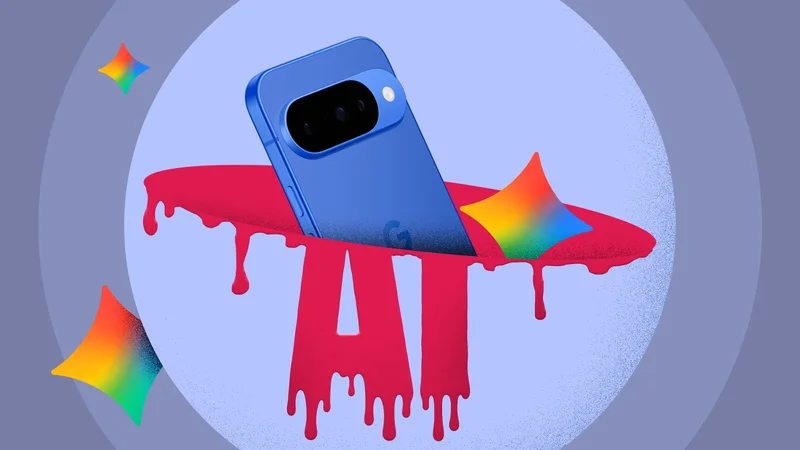
If you've been following Google's Pixel smartphones over the last few years, you've probably noticed one recurring theme.
Nearly every headline feature revolves around AI. From AI-powered image generation and photo editing to writing tools and spam filtering, the conversation almost always comes back to artificial intelligence.
Some of those features are genuinely useful while others feel more like tech demos, but one thing is clear: It's been a long time since practical software innovation and experimentation were Google's biggest priorities.
Practical innovation is what made the Pixel special
Features like Now Playing and Active Edge became part of my routine
Lately, I find myself thinking back to the early years of the Pixel.
What drew me to the lineup wasn't AI. It was Google's willingness to experiment with interesting hardware ideas and pair them with software features that solved real, everyday problems.
The Pixel brand felt better when Google wasn't neck-deep in AI and was instead focused on improving the experience of using your phone in practical, meaningful ways.
One of the best examples of this is Now Playing. The feature is a staple of Pixel phones and identifies music playing around you. Further, it can show you the title and artist name directly on the lock screen. And the best part is that it works completely offline.
Before on-device AI was a thing, Google figured out how to compress a database with waveforms of the top 10,000 most popular tracks so that your phone could recognize music even without internet access.
It's a feature I've used hundreds, if not thousands, of times. Be it while sitting at a café or when traveling a thousand miles from home, if a track catches my fancy, I can glance at my phone without launching an app like Shazam.
The built-in history means that when I get back home, I can scroll through the music I discovered and play it through my streaming app of choice. It's helped me discover some of my favorite artists.
How about a throwback? Remember Active Edge? The feature launched with the Pixel 2 and allowed you to launch Google Assistant by squeezing the sides of the phone. It sounded like a gimmick, but I was hooked within a day of using it.
I remember using it while doing chores around the house. No need to press a button or use wake words to call out. Google even let you adjust the sensitivity to avoid accidental activations.
It was great, and we just don't see that style of innovation anymore.
The features weren't trying to be features for the sake of it. They actually solved problems users like me faced every day, and that's what made them great.
AI should enhance the Pixel's features, not define it
Google's focus on everyday conveniences was far more memorable
I'm not saying that Google's AI focus has been in vain. Of course not. Pixel phones have introduced a litany of features that have become standards on other devices too.
These AI-powered features solve genuine problems. Be it Call Screening for, well, screening calls, or transcriptions via the Recorder app. Magic Eraser democratized the ability to clean up a photo after the fact.
The difference is that those features solve very specific problems.
Transcribing a meeting is a problem that most people don't have every day. Similarly, it's nice to remove a trash can from a photo, but it's just not something I need or use daily.
Features like Active Edge, on the other hand, were used multiple times a day.
Let me ask you a question. How often do you generate images on your phone? When was the last time you summarized notifications?
The answer will explain why none of these features feel quite as iconic or hit as hard as when we first saw Now Playing in action.
While there's no going back from the AI-led future, it's that everyday, solution-oriented innovation and problem-solving that I want to see more of from Google.
Even if it uses AI, my opinion is that AI is at its best when it empowers users instead of becoming a hyper-specific product in itself.
Google shouldn't shy away from its AI ambitions, but perhaps fewer and more thoughtful additions are the answer.
After all, the phones that made me stick through the early years of Google's Pixel lineup weren't exactly technological marvels. They removed little frictions and frustrations from my day without making me switch up my smartphone usage habits.
That's the Pixel I miss and want to see more of.
Google should remember what made the Pixel special
The Pixel earned its reputation for its clean software, but equally because Google eschewed hardware supremacy for a problem-solving approach. It was never about chasing the next big trend, and arguably, still isn't.
AI is undoubtedly reshaping the future of smartphones, but that mindset is what I want to see make a comeback.
AI-everything shouldn't be the end goal. Instead, if Google can leverage AI to enhance everyday usability, the same way it defined the early Pixel years, I feel the Pixel phones will come out stronger.
After all, a great smartphone is about improving daily life instead of cramming in as many AI features as you can.
Google Pixel 10 Pro XL
-
**SoC** - Google Tensor G5
-
**RAM** - 16GB
-
**Storage** - 256 GB / 512 GB / 1TB with Zoned UFS / 1 TB with Zoned UFS
The Pixel 10 Pro XL packs all the same features you'll find on its less expensive siblings, along with a few exclusive features like a 6.8-inch display and faster charging.